
Font size
 Worksheets
Uniform Circular Motion Quiz
Total questions: 208
Worksheet time: 4hrs 49mins
Can an object be accelerated if its speed remains constant?
Can an object be accelerated if its velocity remains constant?
Explain the law of conservation of angular momentum.
Derive an expression for rotational kinetic energy.
Derive centripetal acceleration when speed is uniform and relate centripetal acceleration with angular velocity.

A tennis ball on a string is spun clockwise around a circle. After the string breaks, which path will the tennis ball follow?
Path I
Path II
Path III
Path IV
•A student on an amusement park ride moves in a circular path with a radius 3.5 m once every 8.9s. The student moves at an average speed of
0.39 m/s
1.2 m/s
2.5 m/s
4.3 m/s
Is the centrifugal force a real force acting on your body in the gravitron?
Yes, you are pushed outwards from the center
No, it just feels like you are being pushed out, but no force is actually pushing you outwards
Maybe...
Bigfoot is always the answer

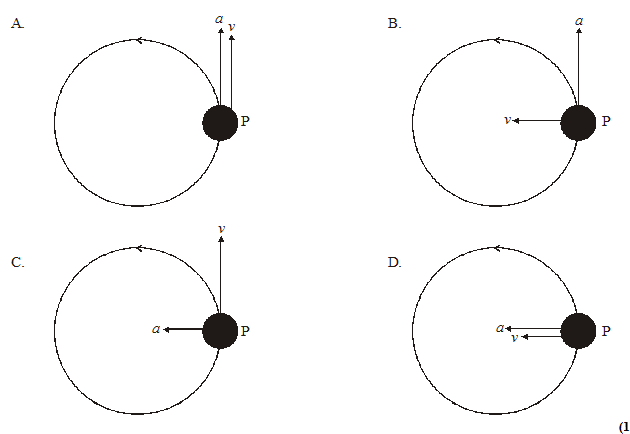
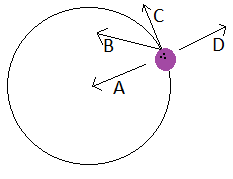
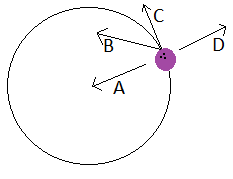
A body, B, is moving at constant speed in a horizontal circular path around point P. Which diagram shows the direction of the velocity (v) and the direction of the centripetal force (Fc) acting on the body?
1
2
3
4
•What is the centripetal acceleration of a toy ball on the end of a 1.44 meter long string if it is moving at 12 meters per second?
0.12 m/s^2
8.33 m/s^2
0.173 m/s^2
100 m/s^2
•What is the centripetal acceleration acting on a 2000 kilogram airplane if it turns with a radius of 1000 meters while moving at 300 meters per second?
180,000 m/s^2
0.3 m/s^2
90 m/s^2
600 m/s^2
•What is the centripetal force acting on a 2000 kilogram airplane if it turns with a radius of 1000 meters while moving at 300 meters per second?
90000N
600N
1.8x10⁵N
1.77x10⁶N
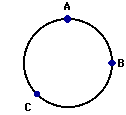

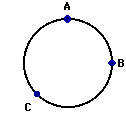
in the direction of the object's motion
in the opposite direction of the object's motion
towards the center of the circle
towards the outside of the circle
What is the velocity of an object launched straight up at its highest point?
zero
equal to its vx
½ its maximum value
equal to gravity
Which hits the ground first if they start at the same height: a dropped ball or a ball launched with a
horizontal velocity?
the launched ball
the dropped ball
they both hit at the same time
Find th y-intercept
Find the positive x-intercept
Replace x with 0 and evaluate.
Find the x-coordinate of the vertex

At what point is vx= 0 m/s?
A
B
C
D
None of these points

What do you need to find?
positive x-intercept
y-intercept
x of the vertex
y of the vertex
The fact that an apple and a watermelon, dropped simultaneously from the same height, would hit the ground at the same time indicates that
you don't like apples or watermelons.
greater masses have greater acceleration.
lesser masses have greater acceleration.
acceleration is independent of mass.
Select all the electromagnetic waves from the list. Choose more than one answer.
Visible Light
Sound
Ultraviolet
Water
Microwaves


In this diagram, which is the angle of incidence?
Angle A
Angle B
Angle C
Angle D

When a compression interferes with another compression, what occurs?
They counteract and the wave stops.
They combine to create a larger compression.
They combine to create a rarefaction.
None of the above.

What is a natural vacuum which sound cannot travel through?
Water
Air
Liquids
Outer space
Choose the correct formulas for lateral magnification
Z=−a−ff
Z=−f−aa′−f
Z=fa′−f
Z=a−ff
Z=−fa′−f

what type of mirror is this
concave
convex
translucent
plano

If the scale bar measures 60 mm and the actual size it represents is 30 μm , what is the magnification?
20X
5,000X
150X
2,000X

Serena measured the image of one of the bacterial cells to be 32 mm. If the magnification of the image is 8,000X, what is the actual size of the bacterial cell?
4 μm
0.004 μm
256,000 μm
0.25 μm

what type of mirror is this
concave
convex
translucent
plano

What simple machines are in this image
Wedge and pulley
Lever and wheel/axel
screw
incline plane
none of the above

What simple machine is in this image
Wedge
Lever
screw
wheel and axel
Incline plane
If you use a crowbar to get the lid off of a bucket, what simple machine are you using?
inclined plane
pulley
wheel and axle
lever


What simple machines are in this image
Wedge and pulley
Lever and wheel/axel
screw
incline plane
none of the above


What is the SI unit of acceleration?
m·s2
m2/s
m/s2
m/s
What is the speed of an object at rest?
0.0 m/s
9.81 m/s
1.0 m/s
9.8 m/s
Acceleration is defined as
the rate of change of velocity.
the change in velocity.
rate of displacement.
the rate of change of displacement.


Which of the following depict the speed of the bowling ball?


What would the force between them be if the distance between them were doubled?
What would the force between them be if the distance between them were divided by 2?
What would the force between them be if one of the masses were doubled?
What would the force between them be if both of the masses were doubled?
Two object each have masses of 9,000,000 kg and are 1 meter apart from each other. What's the force of gravity between them?
5402 N
6320 N
7541 N
7945 N
Two objects each have masses of 4500 kg and are .03 meters apart from each other. What's their force of gravity?
.3 N
.7 N
1.1 N
1.5 N


What type of tide would this arrangement of earth-moon-sun create?


What do we call the type of tide with small tidal ranges that happen when the sun and moon are at right angles to each other?
Why does a spring tide create much higher tides than normal tidal ranges?
Because the moon and sun are combining their gravitational strength
Because the moon is in its spring position, causing it to create more force
Because it happens during springtime when the water is the lightest
Because this is when the moon grows in size and goes super saiyan

Which of the following formulas is the correct equation for the law of Universal gravitation?
F=d2GM1M2
F=mg
F=m1m2Gd2
F= F=d2KQ1Q2
Find the distance between two objects whose masses are m1 = 4,500 kg, and m2 = 8,700 kg; if the gravitational force between them is F = 2.0 x 10⁻⁸ N.
130565.25 m
361.34 m
0.19575 m
0.783 m
Which of the following does not apply to the moment when Spring tides happen?
during new moon
during full moon
when the moon and the earth are alligned with the sun
during quarter moon
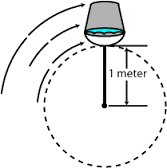
The wheel of a bicycle is 0.5 m in diameter, and makes 6.5 rotations in 3.00 s as the bicycle rolls along the bike path. The angular speed of the wheel is
1.4 rpm
1.7 rotaions per second
2.2 rotations/second
0.67 rpm
The wheel of a bicycle is 1.0 m in diameter, and makes 3 rotations in 3 s as the bicycle rolls along the bike path.
What is the linear speed of the wheel at a distance of 0.200 m from the center of the wheel? use 3.14 as pi.
1.3 m/s
1.5 m/s
2.46 m/s
6.28 m/s
A merry go round makes 18 rotations in 2 minutes. What is its angular speed in rpm?
3 rpm
6 rpm
9rpm
12 rpm
A coin rolls across the floor at an angular speed of 3 rotations/second. What is its speed in degrees per second?
360 degrees/second
720 degrees/second
1080 degrees/second
1440 degrees /second
A child sits 0.75 m from the center of a merry go round. The merry go round makes one revolutions in 4 seconds. What is the child's linear speed? (Use 3.14 as pi, and Round your answer to tenths)
1.9 m/s
1.2 m/s
12.6 m/s
720 degrees.
The earth orbits around the sun.
Rotation
Revolution
The sun appears to rise in the east and set in the west.
Rotation
Revolution
The earth spins on its axis.
Rotation
Revolution
A 2.0 kg rock is moving in a 0.5 m horizontal circle every 0.25 s. Which of the following does the rock experience?
no net force
a centripetal acceleration
only the acceleration of gravity
motion due only to its inertia
When dealing with circular motion, the time that it takes to make one revolution of the circle is called the:
rotation.
orbit.
period.
segment.
Why does an object experiencing uniform circular motion have an acceleration?
because it ir changing speed
because it is changing direction
because it is moving n a straight line
because it has mass
An object in uniform circular motion is always moving ________________ the circle.
away from
toward
parallel to
tangent to
In uniform circular motion, which two variables point toward the center of the circle?
the centripetal force and the acceleration
the velocity and the mass
the period and the mass
the time and the radius

Neglecting air resistance, how would the horizontal acceleration and velocity of the hammer change if the thrower releases the chain?
The horizontal acceleration and velocity of the hammer would be along the Vtang vector.
The horizontal acceleration and velocity of the hammer would be inward toward the thrower.
The horizontal acceleration and velocity of the hammer would be straight down by gravity.
The horizontal acceleration and velocity of the hammer would be continue in a circle.
A car moves with a constant speed of 17 m/s on a circular track of 200 m radius. Calculate the acceleration of the vehicle. HINT: a = V2 / R
1.45 m/s2
0.76 m/s2
1.98 m/s2
2.34 m/s2
A 250 kg motorcycle goes around a 20.0 m radius turn at 19.0 m/s. What is the centripetal force on the motorcycle? HINT: f = MV2 / R
2396.6 N
4512.5 N
5006.8 N
5656.7 N

The _______________________ supplies the centripetal force requirement for the car to move in a horizontal circle. Without it, the car would turn its wheels but would not move in a circle (as is the case on an icy surface).
friction force
centrifugal force
normal force
applied force
A ball was swung at constant speed in a horizontal circle on the top of a level lab table. Which of the following was the direction of the acceleration on the ball?
The acceleration was inward along the radius of the circle.
The acceleration was outward along the radius of the circle.
The acceleration was tangent to the circle in the direction of the ball's motion.
D.The acceleration was perpendicular to both the ball's motion and the tabletop.
What is “Centripetal Force”?
Centripetal Force is a force that acts on a body moving in a circular path and is directed toward the center around which the body is moving.
Centripetal Force is the resistance to motion of one object moving relative to another.
Centripetal Force are attractive or repulsive forces between particles that are caused by their electric charges.
Centripetal Force is the force of attraction between all masses in the universe; especially the attraction of the earth's mass for bodies near its surface.
Two trucks each have a mass of 3000 kg. The gravitational force between the trucks is 4.00 × 10⁻⁵ N. One truck is then loaded with 1000 kg of rock. What would be the new gravitational force between the two trucks? (G = universal gravitation constant = 6.67 10-11 Nm2/kg2
5.32 × 10⁻⁵ N
4.75 × 10⁻⁵ N
5.75.00 × 10-5 N
6.50 × 10⁻⁵ N

In this diagram, what do the red arrows represent?
the acceleration vector
the velocity vector
the centripetal force vector
the force of gravity

moving or tending to move toward a center...
centripetal force
centrifugal force
Tangent
Curvature

the process or act of turning or circling around something
Curvature
Rotation
Radius
Orbit
What's the centripetal acceleration of an object traveling 2.3 m/s around a circle of diameter 0.6 m?
5 m/s2
17.63 m/s2
10 m/s2
8.81 m/s2
A 10kg car travels at a constant speed of 20.0 m/s around a horizontal circular track. Which diagram correctly represent the direction of the car's velocity (v) and the direction of the centripetal force (Fc) acting on the car at a particular moment?


Centripetal force is an acceleration of an object moving in circular path whose direction is _________________________of the circular path and whose magnitude is equal to the square of the speed divided by the radius.
towards the tangent
towards the centre
towards the minimum point
towards the maximum point
In uniform circular motion, the magnitude of the _______________________of an object is constant but the __________ is continually changing.
speed, acceleration
speed, direction
acceleration, speed
acceleration, velocity
________________________ defined as the number of revolutions (cycles/rotations) completed in one second.
frequency
period
distance
centripetal acceleration
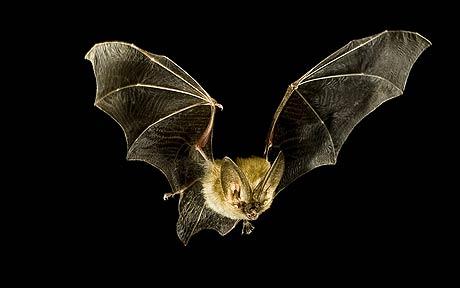
Bruno the bat has a mass of 0.58 kg and flies at a speed of 0.8 m/s in circle of radius 0.5 m. What is his acceleration?
0.25 m/s2
1.3 m/s2
1.6 m/s2
0.74 m/s2

A toy car is following a circular path with a constant speed of v=3 m/s . If the radius of the circular path is 1 m, find The centripetal acceleration of the car
30 m/s2
3 m/s2
9 m/s2
6 m/s2
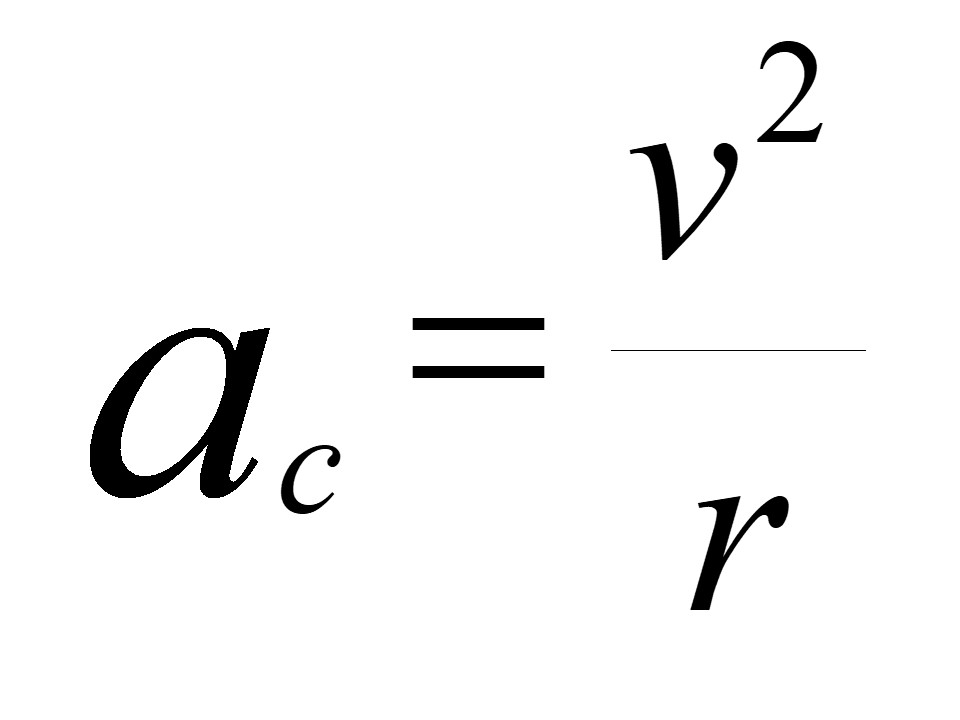
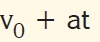
what is the centripetal acceleration formula?


A) No, if the speed is constant then the acceleration is equal to zero. B) No, an object can accelerate only if there is a net force acting on it.
C) Yes, although the speed is constant, the direction of the velocity can be changing.
D) Yes, if an object is moving it can experience acceleration
The linear velocity is always _____ to the line of a circle.
outwards
towards the center
tangent
faster
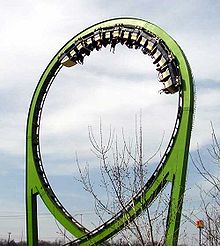
Where is the net force when the rollercoaster is at the top of the loop?
Towards the sky
Towards the Right
Towards the left
Towards the center of the circle
What's the centripetal acceleration of an object traveling 2.3 m/s around a circle of diameter 0.6 m?
5 m/s2
17.63 m/s2
10 m/s2
8.81 m/s2
What is the equation for centripetal force?
v = 2πr/T
a = v2/r
F = mv2/r
F = ma
A satellite is orbiting the Earth at a speed of 1200m/s, find the radius of revolution if the Time period is 35000s
1200
67km
6700Km
35000

During its trip a car of mass 1500kg is traveling around a corner as shown in the picture. The car rounds a corner of radius 100m at a speed of 15m/s. Find the centripetal acceleration
22.5m/s
2.25m.s
15m/s
32.5m/s
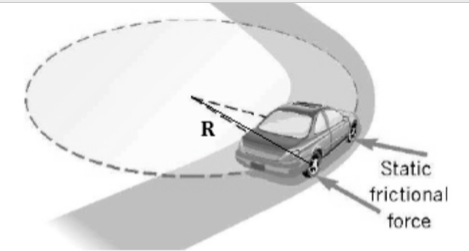
During its trip a car of mass 1500kg is traveling around a corner as shown in the picture. The car rounds a corner of radius 100m at a speed of 15m/s. Find the centripetal force acting on the car.
300N
15000N
3375N
15N
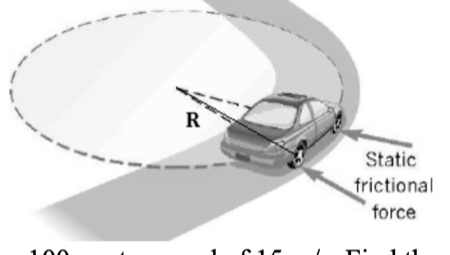
During its trip a car of mass 1500kg is traveling around a corner as shown in the picture. What actual force is equivalent to the centripetal force in this situation?
Tension
Friction
Centrifugal force
gravity
Bruno the bat has a mass of 0.58 kg and flies at a speed of 0.8 m/s in circle of radius 0.5 m. What is his acceleration?
0.25 m/s2
1.3 m/s2
1.6 m/s2
0.74 m/s2
A race car completes three laps of a circular track with a radius of 35 m in 9.0 seconds. Determine the speed of the car.
3.9 m/s
73.3 m/s
24.4 m/s
1.0 m/s
You are moving a ball in a circle using 72 N of centripetal force. What would the force be if you doubled the radius of the circle.
18 N
36 N
72 N
144 N
What's the centripetal force of a .2 kg yoyo spun in a circle with a radius of .7 meters at a velocity of 3 m/s?
2.05 N
2.57 N
2.90 N
3.13 N
A particle moves in a horizontal circle of radius 0.60 m with a constant speed and a period of revolution of 0.02 s. The frequency of the revolution is (a) .
A particle moves in a horizontal circle of radius 0.60 m with a constant speed and a period of revolution of 0.02 s. The linear velocity of the particle is (a) .
An object is moving round a horizontal circle of radius 0.80 m, at a constant angular frequency of 20 rpm. The centripetal acceleration of the object is (a) .
A 1.3 m long fishing line rated as "10 lb test" that can stand a force of 10 lb (44.48 N) is attached to a rock of mass 0.5 kg. The maximum speed at which the rock can be rotated without breaking the line is (a) .
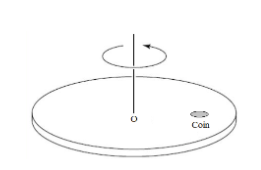
The figure shows a coin on a turn-table is rotating at 1.0 r.p.s. The coefficient of static friction between the coin and the turn-table is 0.50. The maximum distance of the coin from the centre O of the turn-table for it to move in a circle is (a) .
You are moving a ball in a circle using 72 N of centripetal force. What would the force be if you doubled the radius of the circle.
18 N
36 N
72 N
144 N
What's the centripetal force of a 0.2 kg yoyo spun in a circle with a radius of .7 meters at a velocity of 3 m/s?
2.05 N
2.57 N
2.90 N
3.13 N
Which vector represents the direction of the acceleration of a ball traveling in a circular path?
A
B
C
D
Which of the following vectors depict the velocity of a ball traveling in a circular path?
A
B
C
D
What would the force between them be if the distance between them were doubled?
Two objects are attracted to each other with 36 N of gravitational force.
What would the force between them be if the distance between them was reduced to half its original distance?
9
18
72
144
What would the force between them be if one of the masses were doubled?
What would the force between them be if both of the masses were doubled?
What's the acceleration of gravity of a planet with a mass of 1 x 1025 kg and a radius of 5x10⁶ meters?
.267 m/s2
2.67 m/s2
26.7 m/s2
267 m/s2
Two object each have masses of 9 x 10⁶ kg and are 1 meter apart from each other. What's the force of gravity between them?
5402 N
6320 N
7541 N
7945 N
What's the centripetal acceleration of a 0.2 kg yoyo spun in a circle with a radius of 0.7 meters at a velocity of 3 m/s?
8.23 m/s2
10.54 m/s2
12.86 m/s2
17.39 m/s2
What's the centripetal force of a 0.2 kg yoyo spun in a circle with a radius of 0.7 meters at a velocity of 3 m/s?
2.05 N
2.57 N
2.90 N
3.13 N
The drum of a washing machine rotates 1800 times in 3 minutes. What is the period?
0.1 s
0.2 s
0.3 s
0.5 s
A 10kg car travels at a constant speed of 20.0 m/s around a horizontal circular track. Which diagram correctly represent the direction of the car's velocity (v) and the direction of the centripetal force (Fc) acting on the car at a particular moment?
Is it possible for an object moving with a constant speed to accelerate? Explain.
A) No, if the speed is constant then the acceleration is equal to zero.
B) No, an object can accelerate only if there is a net force acting on it.
C) Yes, although the speed is constant, the direction of the velocity can be changing.
D) Yes, if an object is moving it can experience acceleration

A pilot experiences centripetal acceleration of 2g's (2 x 9.8 m/s2) while maneuvering a loop at a speed of 400 m/s. What is the radius of the loop?
203 m
8163 m
80,003 m
23 m
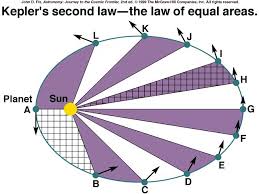
Where would the planet be moving fastest?

What is true about the area between points A-B and the Sun, and the area between points H-I and the Sun?


Which would have the greater linear velocity the outer horse on a carousel or the inner?
Outer
Inner
Both have the same velocity
Depends on the mass of the horse
Why do the inner horse and outer horse have different velocities?
The outer horse has to travel a greater distance in the same amount time as the inner
This is untrue the inner horse travels faster because it it does not have as far to go as the outer
This is not true. The horses travel at the same speed because they are connected on the carousel.
The outer horses are smaller so they can travel faster.

Which of the following planets has the greatest orbital period?
Mars
Earth
Venus
Mercury

A hamster runs on his wheel causing it spin around 10 times every 2.5 seconds. What is the frequency of the wheel?
0.25 Hz
4 Hz
25 Hz
Not enough information
The formula to determine circumference is:
2πr
πr2
2 1bh
34πr3

