Wayground logo

Free Printable Worksheets

Font size

S
M
L
XL
Worksheets

Cell Transport Review

Total questions: 20

Worksheet time: 14mins

Name
Class
Date
1.
What organelle of the cell produces energy?
a)
Mitochondria 
b)
Golgi Body 
c)
Vesicle 
d)
Vacuole 
2.
What kind of transport does not require energy?
a)
Active 
b)
Vacuole 
c)
Passive 
d)
Na/K Pump 
3.
The process where only water is allowed to pass through the cell membrane from a high to low concentration.
a)
meiosis
b)
respiration
c)
diffusion
d)
osmosis
4.
The movement of molecules from an area of high concentration to an area of low concentration.
a)
Osmosis
b)
Respiration
c)
Diffusion
d)
Active Transport
5.

The cell uses __________ to transport waste out of the cell.

a)

passive transport

b)

diffusion

c)

endocytosis

d)

exocytosis

6.

White blood cells engulf (take in), digest, and destroy invading bacteria using ________

a)

passive transport

b)

endocytosis

c)

exocytosis

d)

osmosis

7.
What does “high concentration area” mean?
a)
Spread out
b)
Tightly packed together
c)
Uncrowded
d)
Spacious
8.
Which diagram best shows the end result of diffusion?
a)
F
b)
G
c)
H
d)
J
9.

Why are diffusion and osmosis important to cells?

a)

It allows them to take in materials/substances without using energy.

b)

It allows them to reproduce.

c)

It allows them to absorb sunlight.

d)

It allows cells to use all energy.

10.
Which way will the water molecules move during osmosis?
a)
Out of the cell, so the cell shrinks.
b)
Out of the cell, so the cell swells.
c)
Into the cell, so the cell shrinks.
d)
Into the cell, so the cell swells.
11.

When the smell of perfume spreads throughout a room, it is an example of ....

a)

passive transport

b)

diffusion

c)

active transport

d)

osmosis

12.
This cell organelle helps organisms maintain homeostasis by controlling what substances may enter or leave cells.
a)
vacuole
b)
nucleus
c)
cell membrane
d)
cell wall
13.
Semi-permeable mean to allow
a)
all materials across the membrane
b)
only some materials across the membrane
c)
no material to cross the membrane
d)
to allow only water across the membrane
14.
What are two types of passive transport?
a)
endocytosis and exocytosis 
b)
cookies and milk
c)
equilibrium and osmosis
d)
Osmosis and diffusion
15.

What is the term to describe maintaining internal balance in the cell? 

a)

Diffusion

b)

Homeostasis

c)

Osmosis

d)

Active transport

16.

Which of the following pictures shows a higher concentration?

a)
b)
17.
Uses ATP (energy)
a)
Passive Transport
b)
Active Transport
18.
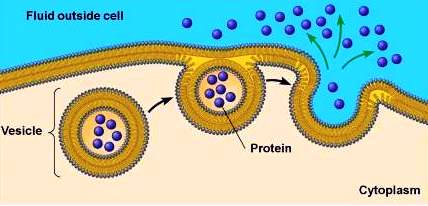
Which form of active transport is being shown?
a)
Pinocytosis
b)
Endocytosis
c)
Exocytosis
d)
Osmosis
19.

Which of the following molecules pass easily through the cell membrane, requiring little extra help or energy? Select all that apply.

a)

sodium

b)

glucose

c)

oxygen

d)

carbon dioxide

20.
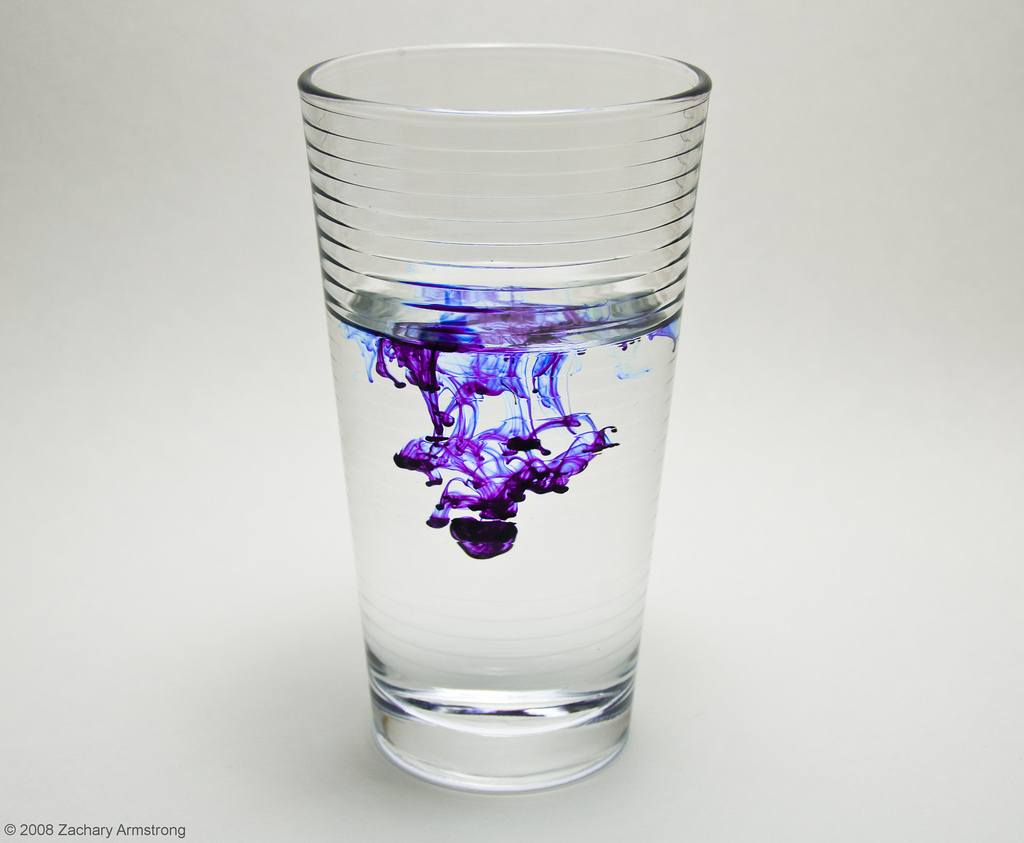
Where is there a low concentration of dye?
a)
at the bottom of cup
b)
in the color
c)
at the top of cup 
d)
no concenteraion gradient