
 Worksheets
Review for EMS and Light Waves Test
Total questions: 36
Worksheet time: 21mins
Name
Class
Date
1.
Which parts of the body allow us to see?
a)
nerve fibers, brain, vocal cords
b)
eyes, nerve fibers, and brain
c)
brain, eyes, spinal cord
d)
sinuses, optic nerve, and vitreous humor
2.
Which of the following is a type of energy from the sun that reaches the earth?
a)
visible light
b)
infrared light
c)
ultraviolet light
d)
all of the above
3.
Sunlight shines on the hood of a car which causes it to gain heat energy. Which of the following factors will affect how hot the car gets? Click ALL that apply.
a)
how long the sun shines on it
b)
the intensity of the sun
c)
the shape of the sun
d)
the amount of light the car absorbs
4.
Which of these colors of visible light has the shortest wave length?
a)
red
b)
yellow
c)
green
d)
violet
5.
Visible light is what type of wave?
a)
electromagnetic
b)
longitudinal
c)
mechanical
d)
seismic
6.
Which part of the electromagnetic spectrum can humans see without using equipment or technology?
a)
radio waves
b)
microwaves
c)
visible light
d)
x-rays
7.
Light waves are arranged in the electromagnetic spectrum by
a)
wavelength and brightness
b)
wavelength and frequency
c)
brightness and color
d)
speed and color
8.
What type of radiation in the electromagnetic spectrum is associated with observable colors such as red, green, and blue?
a)
gamma rays
b)
visible light
c)
x-rays
d)
radio waves
9.
What color is produced when all the colors of visible light are combined?
a)
black
b)
grey
c)
brown
d)
white
10.
Which statement BEST describes the relationship between visible light and the electromagnetic spectrum?
a)
visible light and the electromagnetic spectrum are different names for the same thing
b)
visible light occupies about half of the electromagnetic spectrum
c)
visible light is a narrow band in the electromagnetic spectrum
d)
visible light and the electromagnetic spectrum have a small area of overlap
11.
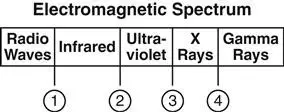
On the electromagnetic spectrum shown, which numbered position represents where the visible light spectrum is found?
a)
1
b)
2
c)
3
d)
4
12.
How do we see things?
a)
light shines on all objects allowing us to see them
b)
light shines through all objects allowing us to see them
c)
light enters the eye before striking an object allowing us to see it
d)
light reflects off an object and then enters the eye allowing us to see it
13.

How do the waves in the diagram compare?
a)
both waves have the same frequency
b)
both waves have the same wavelength
c)
the top wave has a higher frequency than the bottom wave
d)
the top wave has a longer wavelength than the bottom wave
14.
Which part of the eye is located at the back, receives focused images from the lens, and has tiny light-sensitive nerves in it?
a)
cornea
b)
optic nerve
c)
retina
d)
lens
15.
How does the Earth's atmosphere protect organisms from over exposure to ultraviolet light?
a)
water vapor reflects most of the ultraviolet light from the sun
b)
carbon dioxide in the atmosphere absorbs most the the ultraviolet light from the sun
c)
ozone in the atmosphere absorbs most of the ultraviolet light from the sun
d)
nitrogen reflects most of the ultraviolet light from the sun
16.
Which of the following is true about the relationship between heat and light?
a)
light colors and dark colors absorb heat equally
b)
dark colors absorb more heat than light colors
c)
light colors absorb more heat than dark colors
d)
there in so relationship between heat and light
17.
Which of the following images shows refraction?
a)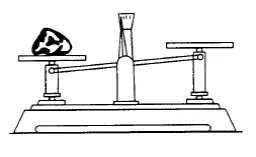
Option 1
b)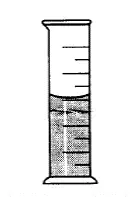
Option 2
c)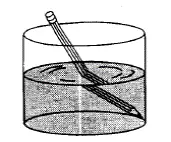
Option 3
d)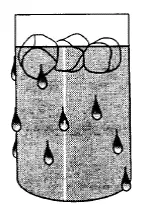
Option 4
18.
An object's color is determined by the wavelengths of light that it ________.
a)
absorbs
b)
refracts
c)
diffuses
d)
reflects
19.
Energy from the sun travels to Earth in the form of
a)
visible light
b)
invisible light
c)
both visible and invisible light
20.
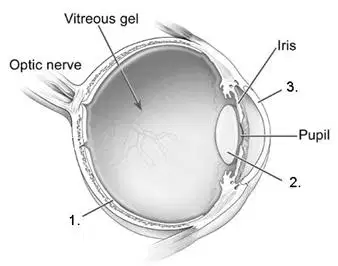
Identify the thee part of the eye are that not already labeled.
a)
1. retina; 2. lens; 3. cornea
b)
1. lens; 2. cornea; 3. retina
c)
1. retina; 2. cornea; 3. lens
d)
1. cornea; 2. lens; 3. retina
21.
Complete this statement. The retina of the eye is composed of tiny, tight-sensitive nerves that transfer the energy of light waves to nerve impulses. These nerve impulses are transmitted through the __________ to the ________ for interpretation as sight.
a)
brain; optic nerve
b)
cornea; optic nerve
c)
optic nerve; brain
d)
brain; cornea
22.
What causes a lemon to look yellow?
a)
the lemon absorbs yellow light and reflects all other light waves
b)
the lemon reflects yellow light and absorbs all other light waves
c)
the lemon creates yellow light that is absorbed
d)
the lemon creates yellow light that is reflected
23.
A student has cans full of water. He covers them with different colored paper. Which color cover will cause the water to heat up most?
a)
white
b)
yellow
c)
dark green
d)
black
24.
Complete the statement. The ______ is the outer edge of the eye; the ______ brings images into focus; the _______ is where the rods and cones are located; the _______ carries the message to the brain.
a)
cornea; lens; optic nerve; brain
b)
cornea; iris; pupil; retina
c)
cornea; pupil; lens; retina
d)
cornea; lens; retina; optic nerve
25.
How do radio waves compare to visible light?
a)
radio waves have longer wavelengths and both will travel at the same speed
b)
radio waves have longer wavelengths and will travel faster than visible light
c)
radio waves have shorter wavelengths and both will travel at the same speed
d)
radio waves have shorter wavelengths and will travel slower than visible light
26.
Complete the statement. ___________ is the passing of light through an object; ____________ is the bouncing of light off an object; ____________ is taking light into the object.
a)
transmission; absorption; reflection
b)
transmission; refraction; absorption
c)
transmission; reflection; absorption
d)
transmission; absorption; refraction
27.
Choppy water causes light to be scattered in all directions. This is an example of
a)
filtration
b)
reflection
c)
absorption
d)
diffusion
28.
Complete the statement. A glass is __________, frosted glass is _______, and a table is _________.
a)
translucent; transparent; opaque
b)
transparent; translucent; opaque
c)
opaque; transparent; translucent
d)
opaque; translucent; transparent
29.
What part of the eye is a muscle that TRULY controls how much light enters?
a)
pupil
b)
cornea
c)
iris
d)
lens
30.
What part of the eye receives images upside down from the lens?
a)
optic nerve
b)
retina
c)
cornea
d)
iris
31.
Identify the properties of a wave and label them correctly
a)
wavelength
b)
amplitude
1
2
1)
2)
32.
Match the following examples to their corresponding radiation.
a)
1.
Microwaves
b)
2.
Infrared Light
c)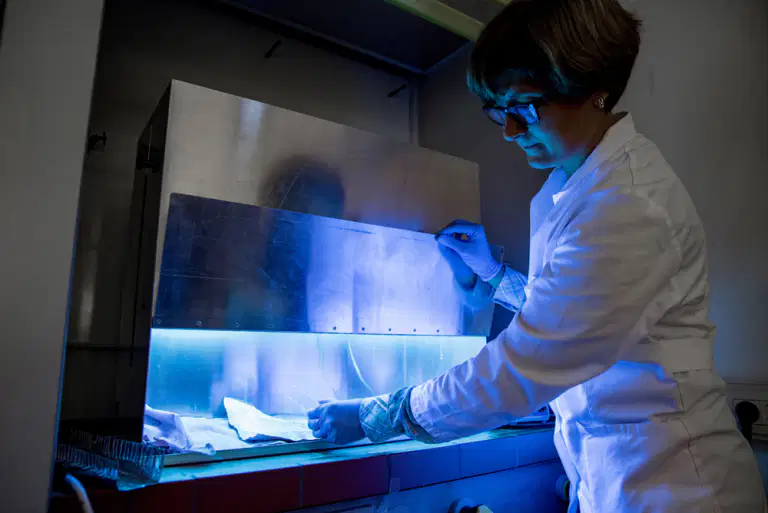
3.
Ultraviolet Light
d)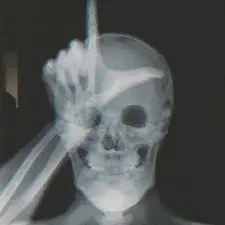
4.
X-rays
e)
5.
Gamma Rays
33.
Which of the following is an example of an electromagnetic wave?
(a)
Choose from the below words
Compressional
X-ray
Sound
34.
Which part of the eye is responsible for controlling the amount of light that enters?
a)
iris
b)
retina
c)
cornea
d)
lens
35.
What happens to light when it passes through a prism?
a)
It is absorbed
b)
It is reflected
c)
It is refracted
d)
It is diffused
36.
Which of the following colors of visible light has the longest wavelength?
a)
violet
b)
red
c)
blue
d)
green
100 %

