
 Worksheets
Cell Signaling Mechanisms Quiz
Total questions: 15
Worksheet time: 8mins

Which of the following is a type of cell communication that involves direct contact between cells?
Hormones
Gap junctions
Exocytosis
Second messengers
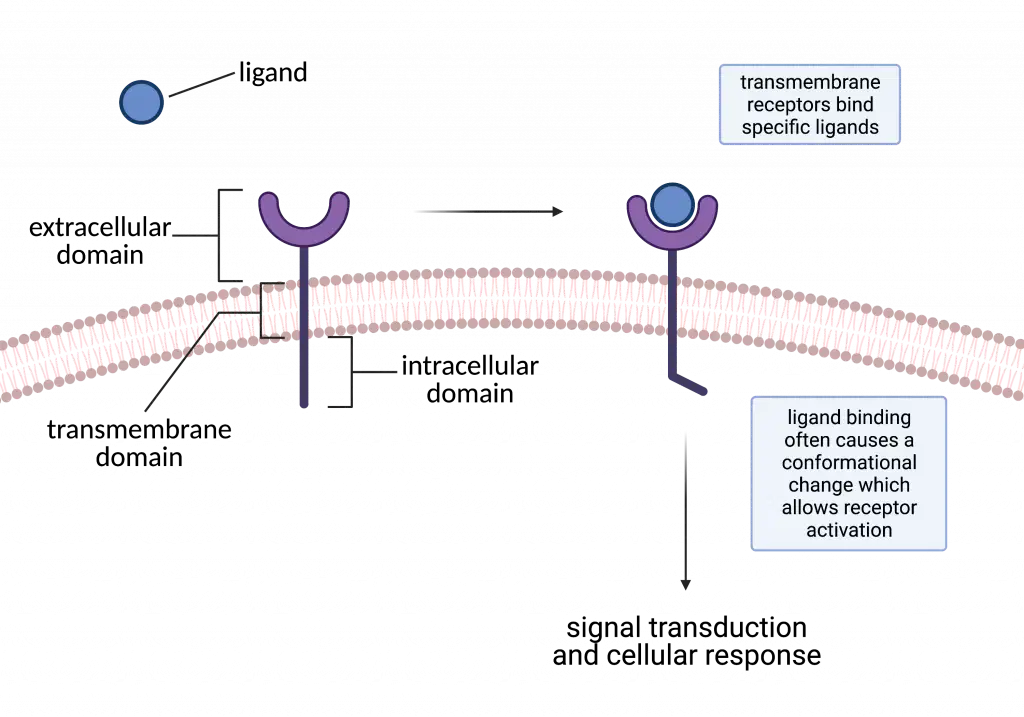
What is the primary role of a ligand in cell signaling?
To degrade proteins
To bind to a receptor
To transport ions
To synthesize DNA

Explain how G-protein coupled receptors (GPCRs) initiate a cellular response upon ligand binding.
GPCRs directly phosphorylate proteins.
GPCRs activate G-proteins, which then trigger a signaling cascade.
GPCRs open ion channels directly.
GPCRs degrade the ligand to initiate a response.
Describe the role of second messengers in signal transduction pathways.
They act as the primary signal.
They amplify the signal within the cell.
They degrade the signal.
They transport the signal out of the cell.

Which of the following processes involves the release of substances from a cell?
Endocytosis
Exocytosis
Gap junctions
Reception

How do protein kinases and protein phosphatases regulate cellular activities?
By synthesizing new proteins
By adding or removing phosphate groups from proteins
By degrading proteins
By transporting proteins across membranes
Evaluate the importance of local regulators in cell communication and provide an example.
Local regulators are unimportant; they do not affect cell communication.
Local regulators are crucial for long-distance signaling; an example is insulin.
Local regulators are important for short-distance signaling; an example is neurotransmitters.
Local regulators are only involved in plant cell communication.
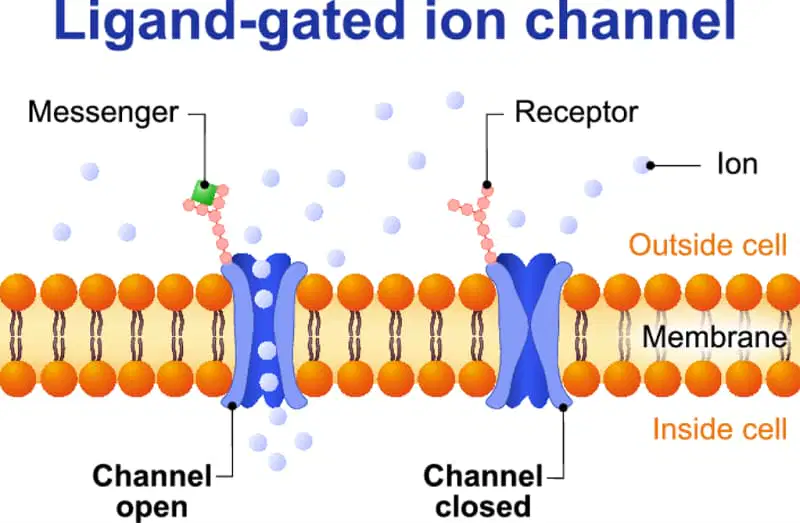
What is the function of ligand-gated ion channels in cellular communication?
They synthesize proteins.
They open or close in response to a ligand binding, allowing ions to pass through.
They degrade ligands.
They transport ligands across the membrane.
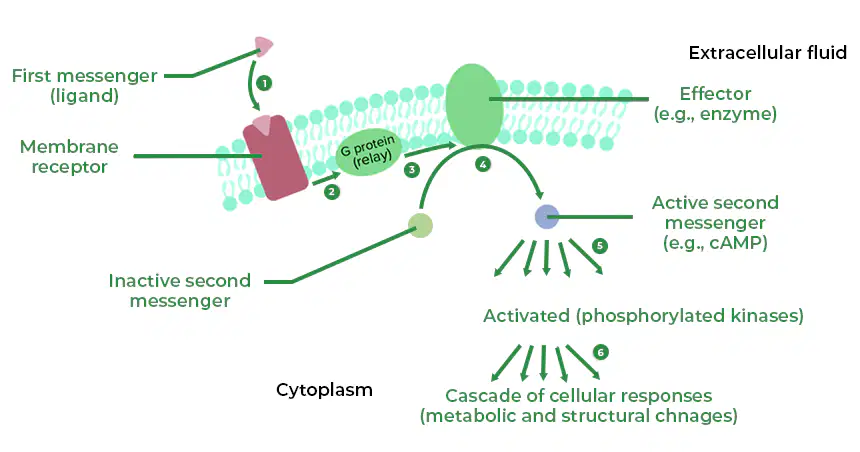
Identify the role of cAMP in signal transduction pathways.
It acts as a primary messenger.
It serves as a second messenger to amplify the signal.
It degrades the signal.
It transports the signal out of the cell.
Discuss how plasmodesmata facilitate communication between plant cells.
They allow the direct transfer of DNA between cells.
They enable the direct exchange of ions and small molecules between adjacent plant cells.
They are involved in the synthesis of proteins.
They degrade cellular waste.
What is the primary function of a receptor in cell signaling?
To degrade the ligand
To bind to a ligand and initiate a cellular response
To transport ions across the membrane
To synthesize proteins
Analyze the role of transduction in the cell signaling process.
Transduction involves the synthesis of new proteins.
Transduction is the process of converting a signal from outside the cell into a functional response inside the cell.
Transduction degrades the signal.
Transduction transports the signal out of the cell.
Which of the following best describes a target cell in the context of cell signaling?
A cell that degrades ligands
A cell that receives and responds to a specific signal
A cell that synthesizes ligands
A cell that transports ions
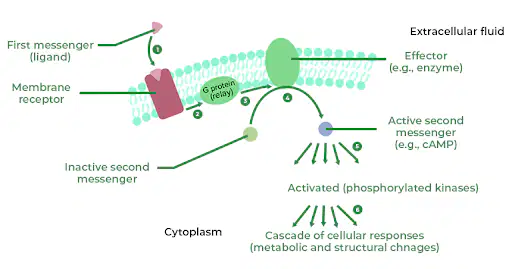
Explain the significance of the response phase in a signal transduction pathway.
The response phase is where the signal is degraded.
The response phase is where the cell synthesizes new DNA.
The response phase is where the cell carries out the action dictated by the signal.
The response phase is where the cell transports the signal out.
How do hormones differ from local regulators in terms of their signaling range and function?
Hormones act over short distances, while local regulators act over long distances.
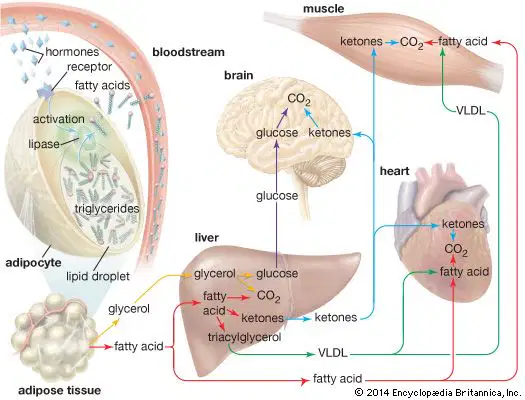
Hormones act over long distances and are involved in systemic regulation, while local regulators act over short distances and are involved in local cell communication.
Hormones and local regulators both act over long distances.
Hormones and local regulators both act over short distances.

