wayground logo

Free Printable Worksheets

Font size

S
M
L
XL
Worksheets

Season 6: Rome Review

Total questions: 97

Worksheet time: 1hrs 13mins
Name
Class
Date
1.
Common farmers, artisans, and merchants were part of which social category in Rome?
a)
Tuscans
b)
Patricians
c)
Plebians
d)
Dorians
2.
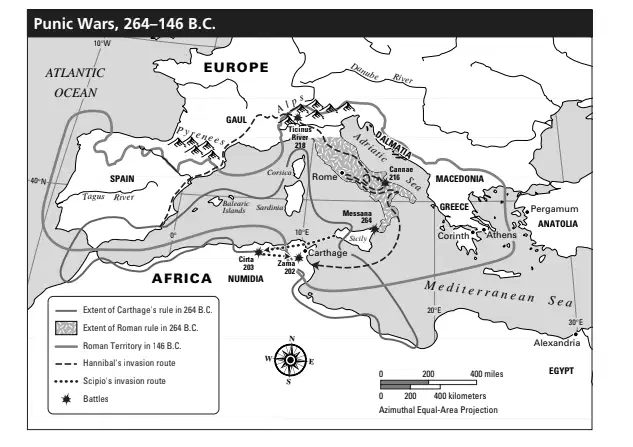
The image below depicts the Second Punic War when -
a)
General Scipio invaded Africa
b)
Numidia attacked Carthage
c)
Carthaginian general Hannibal crossed the Alps
d)
Spartacus led a slave rebellion against Rome
3.
Who led the Byzantine Empire and wrote a code of laws to influence later laws?
a)
Julius Caesar
b)
Justinian
c)
Theodora
d)
Augustus
4.
Which of the following is NOT TRUE about Constantinople?
a)
Was a good location for trade from it's harbor
b)
Capital of Rome and Byzantine empire at one point
c)
Named Constantinople after Augustus
d)
Was easily protection
5.
The proposal of laws and inclusion of 300 members are just some traits of this group of Roman governors known as the...
a)
Senate
b)
Consul
c)
Legislature of representatives
d)
Chamber of Elites
6.
Which describes the 12 Tables?
a)
the first pill ever created
b)
the first ancient Roman book
c)
the written law code of Rome
d)
the first form of visual entertainment
7.
What Is the definition of “dictator” as it pertains to ancient Rome?
a)
an individual elected during crisis/war to rule for a limited time
b)
an individual who illegally seizes power
c)
someone who uses force to rule over the people
d)
there were no dictators in Ancient Rome
8.
How did the Romans traditionally demonstrate loyalty to Rome?
a)
by giving gifts to senators and officials
b)
through music and poetry
c)
By honoring Roman Gods and the emperor with buildings/sacrifices
d)
Through spending time with family
9.
What was a major problem the Republic of Rome eventually faced?
a)
corruption of high officials
b)
lack of food
c)
drought
d)
a flu epidemic
10.
The first triumvirate combines the powers of which of the following men?
a)
Crassus, Caesar, and the Pompey
b)
Caesar and Cleopatra
c)
Crassus and Pompey
d)
Pompey and Galileo
11.
When Caesar achieves fame and success in Gaul, who begins to feel jealous of his power?
a)
Pompey
b)
Crassus
c)
Brutus
d)
No one gets jealous
12.
What crime does Caesar commit with he crosses the Rubicon after being told to return by the Senate?
a)
Treason
b)
Extradition
c)
Sedition
d)
Spying
13.
After defeating Ptolemy’s army, Caesar eventually makes which figure the ruling Pharaoh?
a)
Tutankhamen
b)
Iris
c)
Cleopatra
d)
Darius the Great
14.
Why was the Roman Senate upset about Caesar’s position as dictator?
a)
They thought he treated them unfairly
b)
They thought he had too much power
c)
They wanted to elect a woman instead
d)
They were convinced he was working with the enemy
15.
The following quote describes the assassination of - _______________________. “He was stabbed with three and twenty wounds, uttering not a word, but merely a groan at the first stroke, though some have written that when Marcus Brutus rushed at him, he said in Greek, ‘You too, my child?’ — Roman author, Suetonius
a)
Julius Caesar
b)
Marcus Brutus
c)
Marc Antony
d)
Nero
16.
Caesar’s friend, Marc Antony, eventually falls in love with _____________________.
a)
Helena of Troy
b)
Iris the Great
c)
Cleopatra
d)
Athena of Cyprus
17.
What was one key message by Jesus?
a)
Salvation was available to all believers
b)
only men could be believers
c)
salvation was non-existent
d)
life beyond earth does not exist
18.
Why was Christianity appealing as a religion?
a)
it did not discriminate by sex or class
b)
it promoted material items
c)
it took no time to follow
d)
it was believed in reincarnation
19.
Which of the following was part of the Empire’s crisis in 180 CE?
a)
war between groups of people
b)
high taxes on citizens
c)
sexism against women
d)
lack of food/water for the rich
20.
Who moved the capital of the Roman Empire from Rome to Byzantium?
a)
Theodosius
b)
Julius Caesar
c)
Diocletian
d)
Constantine
21.
Greco-Roman culture is also referred to as what kind of culture?
a)
Pax Romana
b)
classical
c)
Diocletian
d)
Aqueducts
22.
Which emperor divided the empire into Greek-speaking East and Latin-speaking West?
a)
Diocletian
b)
Julius Caesar
c)
Constantine
d)
Theodosius
23.
What was the period of peace and prosperity that lasted 207 years?
a)
classical
b)
Plebeians
c)
Legions
d)
Pax Romana
24.
The major power struggles in the early Roman republic were between __________ and ____________.
a)
military and civilians.
b)
citizens of Rome and citizens of the provinces.
c)
the Patricians and Plebians
d)
the executive and legislative branches of government.
25.
In 100 BCE what percentage of Romans were slaves?
a)
99
b)
30 (1/3)
c)
25 (1/4)
d)
1
26.
Who led the slave revolt against the Romans?
a)
Brutus
b)
Hannibal
c)
Spartacus
d)
Julius
27.
What was a 3 man Roman consul called?
a)
Trio
b)
Tricycle
c)
Bicycle
d)
Triumvirate
28.
Who was the other senator besides Cassius led the assassination of Caesar?
a)
Pompey
b)
Marc Antony
c)
Crassus
d)
Brutus
29.
Octavius changed his name to _________ meaning the Majestic / Exalted One.
a)
Nero
b)
Caligula
c)
Augustus
d)
Tiberius
30.
Where was gladiatorial combat held?
a)
Circus Circus
b)
Circus Maximus
c)
Coliseum
d)
Aqueduct
31.
The _____________ used to transport water in the Roman Empire, and took advantage of Rome's natural slopes.
a)
Forum
b)
Bicycles
c)
Aqueducts
d)
Appian
32.
Which language did the Romans speak?
a)
Roman
b)
Romanian
c)
German
d)
Latin
33.
Which Roman Governor had Jesus crucified?
a)
Constantine
b)
Hadrian
c)
Augustus
d)
Pilate
34.
Which city became the capital of the Byzantine Empire?
a)
Cairo
b)
Rome
c)
Constantinople
d)
Athens
35.
Roman rulers opposed Christianity mainly because Christians...
a)
Were mostly Jews
b)
Would not worship Roman gods.
c)
ignored wealth and status
d)
called for the overthrow of Roman rulers
36.
Under Roman law, all persons had the following rights except for _____.
a)
the right to receive equal treatment under the law
b)
the right to be punished only for actions, not thoughts
c)
the right to seek immediate justice without the courts
d)
the right to be considered innocent until proven guilty
37.
Reason for the spread of Christianity
a)
Open to all/women, rich/poor
b)
Roads spread ideas
c)
Promise of Heaven
d)
All of these
38.
Where was the Roman empire located?
a)
Europe, Asia, North America
b)
Europe, Austraila, Africa
c)
Europe, Asia, Africa
d)
Austrailia, Antarctica, Greenland
39.
The _________ empire lasted until 1453 CE
a)
Roman
b)
Ottoman
c)
Byzantine
d)
Safavid
40.
___ was NOT a reason for the decline of the Roman Empire.
a)
A strong military
b)
huge amount of money spent on defense, and inflation
c)
The invasions by Germanic tribes and by Huns
d)
The disruption of trade
41.
Carthage was located on which continent?
a)
Europe
b)
Asia
c)
Africa
d)
Australia
42.
Who LEGALIZED Christianity as a religion in Rome? (Not official religion yet)
a)
Constantine
b)
Theodosius
c)
Nerva
d)
Diocletian
43.
Rome’s geography benefitted the society because the -
a)
mountains kept it isolated
b)
peninsula protected the region and allowed for easy sea travel
c)
island allowed it to be protected on all sides
d)
swampland provided easy drinking water
44.
Because of Rome's declining military, they had to start paying _________ to join the military to defend them.
a)
Christians
b)
Greeks
c)
Mercenaries
d)
Gladiators
45.
What is a republic?
a)
the same thing as a democracy
b)
another term for a city-state
c)
a form of government where power rests with citizens who vote for their leaders
d)
a form of government where power rests with a handful of rulers
46.
What did the Plebeians gain through the creation and use of tribunes?
a)
access to water and food
b)
access to high offices and the senate
c)
the right to vote
d)
the right to voice their opinion
47.
The word “Veto” is a Latin term meaning -
a)
call for vote
b)
I forbid it
c)
Law above all
d)
Obey thy rules
48.
“There is nothing more harmful to one’s character than going to one of these [gladiatorial games]. … When I come home from one, I find that I am greedier and more aggressive….I am more cruel.” - Seneca the Younger, 60 C.E. This quote demonstrates that gladiator contests’ effect on the audience was -
a)
innocent
b)
harmful
c)
calming
d)
entertaining
49.
The ancient Romans' most significant contribution to the Western World has been in the area of...
a)
Economics
b)
Poetry
c)
Drama
d)
Law
50.
Which earlier civilization most influenced the Roman Empire?
a)
Greek
b)
Egyptian
c)
Persian
d)
Israeli
51.
The social class made up of craftsmen, merchants, and poor farmers. 
a)
Slaves
b)
Patricians
c)
Untouchables
d)
Plebeians
52.
_______, shown here, were forms of irrigation that moved water to fields. 
a)
Canals
b)
Streams
c)
Aqueducts
53.
_______, the language of the Romans, formed the roots of many modern languages today.
a)
Greek
b)
Latin
c)
French
d)
Spanish
54.

A _______________ is a form of government in which citizens elect their leaders.

a)

an empire

b)

a monarchy

c)

a republic

d)

a colony

55.

The main rival of the Roman Republic, competing for control of the Mediterranean region, was ______________.

a)

Sicily

b)

Carthage

c)

Greece

d)

Persia

56.
By expanding the empire and reorganizing the military and government to make it safe and strong, Caesar Augustus created a new era of prosperity that lasted 200 years called 
a)
Pax Romana
b)
Golden Years
c)
Pax Augustus
d)
Age of Prosperity
57.
Early in the first century AD a new religion called ________________ appeared in Rome.
a)
stoics
b)
philosophy
c)
Augustus
d)
Christianity
58.
Which society was the first to practice democracy?
a)
Greece
b)
Rome
c)
Carthage
d)
America
59.
These were posted in the Forum for all to see, the recorded laws of Rome.
a)
Nero's Laws
b)
Hammurabi's Code
c)
Barbarian Code
d)
The Twelve Tables
60.
Who made himself dictator for life and was seen as a hero to the plebeians because he gave them land & food, but was power-hungry to the patricians?
a)
Julius Caesar
b)
Mark Antony
c)
Scipio
d)
Caesar Augustus
61.
What were the rights and responsibilities of Roman citizens? 
a)
Vote
b)
Pay taxes
c)
Serve in the army
d)
All of the above
62.
Why was rome so successful?
a)
Allowed conquered people to be citizens
b)
Worshipped their prisoners
c)
Alexander the Great was a general
d)
Women and slaves could vote
63.

Which man was stabbed to death on the Senate floor?

a)

Brutus

b)

Juluis Caesar

c)

Caesar Augustus

d)

Mark Antony

64.

These group of people conquered the Roman Empire

a)

Mongols

b)

Americans

c)

Barbarians

d)

Samurai

65.

Which of the following was NOT a reason for the Fall of Rome?

a)

Slave Rebellions

b)

Barbarian Invasion

c)

Size

d)

Corruption

66.

Who was believed to be the founder of Rome?

a)

Remus

b)

Romulus

c)

Julius Caesar

d)

Gaius Octavius

67.
A person elected to rule the Roman Republic for a short period in time of emergency
a)
emperor
b)
king
c)
counsul
d)
dictator
68.
Who was NOT in the First Triumvirate?
a)
Caesar
b)
Mark Antony
c)
Crassus
d)
Pompey
69.
What did Caesar do to officially declare war on Rome?
a)

Married Cleopatra

b)

Crossed the Rubicon River

c)

Conquered Spain from the Celts

d)

Gave a speech to the Senate

70.

During the 2nd Punic War, Carthage was led by a general named ____.

a)
Lucius
b)
Hannibal
c)

Hamilcar

d)
Draco
71.

One or two people elected to run the day to day operations of Rome for 1 year

a)

Census

b)

Consul

c)

Census

d)

Senate

72.

What is a Patrician?

a)

Aristocratic families.

b)

Middle class.

c)

Common people.

d)

Ancient Greek.

73.

What is a Plebeian?

a)

Land owning aristocracy

b)

Nobility class

c)

Debtor slaves

d)

Common People

74.

What is a Senate?

a)

Recorded wealth

b)

Put laws into practice

c)

assembly who voted on laws

d)

300 members who advised elected officials

75.

What three things allowed Rome to expand?

a)

Conquering Italy.

b)

Conquering Greece.

c)

Defeating Germanic Tribes

d)

Punic Wars

e)

Defeating the Huns.

76.
What does a consul's right to reject each other's decisions called?
a)
Tax
b)
Veto
c)
Oversee
d)
Affirm
77.
A leader who has absolute power and commands the army is called... 
a)
General 
b)
King
c)
Dictator 
d)
President 
78.
What was the period of peace and prosperity that lasted 207 years?
a)
Augustus time
b)
Christianity
c)
classical
d)
Pax Romana
79.
Culture developed from the blending of Greek, Hellenistic and Roman Cultures
a)
Inflation
b)
Mercenary
c)
Greco-Roman
d)
Republic
80.

What three things allowed Rome to expand?

a)

Conquering Italy.

b)

Conquering Greece.

c)

Defeating Germanic Tribes

d)

Punic Wars

e)

Defeating the Huns.

81.

He was a dictator of Rome and later killed by senators because he became too powerful.

a)

Julius Ceasar

b)

Ceasar Augustus

c)

Constantine

d)

Spartacus

82.

Who became Rome's first dictator?

a)

Crassus

b)

Augustus

c)

Julius Caesar

d)

Constantine

83.

Who was Rome's first Emperor?

a)

Octavian

b)

Marcus Antonius

c)

Augustus

d)

Constantine

84.

Roman system that brought water from the countryside to the city

a)

Forum

b)

Colosseum

c)

Aqueducts

d)

Canals

85.

Locate the Roman Empire on the map.

a)

A

b)

B

c)

C

d)

D

86.

A large structure built by the Roman Empire that represents their love for mass entertainment.

a)

The Acropolis

b)

The Atrium

c)

The Colosseum

d)

The Parthenon

87.

Name the conflict between the Ancient Romans and Carthage.

a)

The Battle of Thermopylae

b)

The Punic Wars

c)

The Battle of 300

d)

The New Age War

88.
A wealthy, upperclass person in the Ancient Roman Republic
a)
patrician
b)
plebian
c)
counsul
d)
dictator
89.

This Roman leader changed his name to Augustus, and was the first Emperor of Rome

a)

Octavian

b)

Julius Caesar

c)

Nero

d)

Marc Antony

90.

Which body of water is letter D?

a)

Black Sea

b)

Tiber River

c)

Mediterranean Sea

d)

Rubicon River

91.

How many branches of government did Rome have?

a)

4

b)

3

c)

1

d)

2

92.

5000 Roman foot soldiers

a)

legion

b)

republic

c)

patrician

d)

plebeian

93.

The Romans were famous for building ________ and ________

a)

Aqueducts and Roads

b)

Pyramids and Castles

c)

Ziggurats and Roads

d)

Aqueducts and Ships

94.

a series of wars between Rome and Carthage

a)

Peloponnesian

Wars

b)

Persian

Wars

c)

Punic

Wars

d)

Carthaginian

Wars

95.
Could women in Rome vote or hold office?
a)
only wealthy women
b)
only married women
c)
No, women could not vote
d)
yes, women could vote
96.
Christianity is,
a)
Monotheistic - belief in many gods 
b)
Monotheistic - belief in one god 
c)
Polytheistic - belief in many gods 
d)
Polytheistic - belief in one god
97.
What type of government did ancient Rome have?
a)
 Direct Democracy
b)
Republc
c)
Senate
d)
Dictatorship