
 Worksheets
CONCERT ORCHESTRA Study Quiz
Total questions: 45
Worksheet time: 23mins
Name
Class
Date
1.
1. Define: Allegro
a)
Fast
b)
Loud then immediately soft
c)
Get louder
d)
To gradually get faster
e)
Slow, stately
2.
2. Define: Adagio
a)
Slow, stately
b)
Loud then immediately soft
c)
Get louder
d)
To gradually get faster
e)
Get softer
3.
4. Define: Accelerando
a)
To gradually get faster
b)
Loud then immediately soft
c)
Get louder
d)
Slow, stately
e)
Get softer
4.
5. Define: Ritardando
a)
To gradually get slower
b)
Loud then immediately soft
c)
Get louder
d)
To gradually get faster
e)
Slow, stately
5.
6. Define: Fortepiano
a)
Loud then immediately soft
b)
Get louder
c)
To gradually get faster
d)
Slow, stately
e)
Get softer
6.
7. Define: Sforzando
a)
With sudden emphasis
b)
Loud then immediately soft
c)
Get louder
d)
To gradually get faster
e)
Slow, stately
7.
8. Define: Crescendo
a)
Get louder
b)
Loud then immediately soft
c)
To gradually get faster
d)
Slow, stately
e)
Get softer
8.
9. Define: Decrescendo
a)
Get softer
b)
Loud then immediately soft
c)
Get louder
d)
To gradually get faster
e)
Slow, stately
9.
10. Define: DS al Coda
a)
Go back to the sign, then the Coda
b)
Loud then immediately soft
c)
Get louder
d)
To gradually get faster
e)
Slow, stately
10.

11. What symbol is being shown in this picture?
a)
Staccato
b)
Tremolo
c)
Trill
d)
Accent
e)
Arcato - to play with the bow
11.
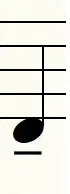
12. What symbol is being shown in this picture?
a)
Tenuto
b)
Tremolo
c)
Trill
d)
Accent
e)
Arcato - to play with the bow
12.

13. What symbol is being shown in this picture?
a)
Fermata
b)
Tremolo
c)
Trill
d)
Accent
e)
Arcato - to play with the bow
13.

14. What technique is being shown in this picture?
a)
Pizzicato - to play with the fingers
b)
Tremolo
c)
Trill
d)
Accent
e)
Arcato - to play with the bow
14.
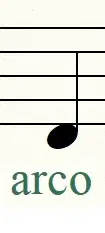
15. What technique is being shown in this picture?
a)
Arcato - to play with the bow
b)
Tremolo
c)
Trill
d)
Accent
e)
Pizzicato - to play with the fingers
15.
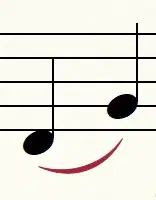
16. What technique is being shown in this picture?
a)
Bowing - Slur
b)
Tremolo
c)
Trill
d)
Accent
e)
Arcato - to play with the bow
16.

17. What technique is being shown in this picture?
a)
Bowing - Hooked
b)
Tremolo
c)
Trill
d)
Accent
e)
Arcato - to play with the bow
17.

18. What symbol is being shown in this picture?
a)
Accent
b)
Tremolo
c)
Trill
d)
Arcato - to play with the bow
e)
Pizzicato - to play with the fingers
18.
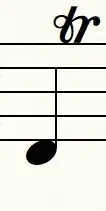
19. What symbol is being shown in this picture?
a)
Trill
b)
Tremolo
c)
Accent
d)
Arcato - to play with the bow
e)
Pizzicato - to play with the fingers
19.

20. What symbol is being shown in this picture?
a)
Tremolo
b)
Trill
c)
Accent
d)
Arcato - to play with the bow
e)
Pizzicato - to play with the fingers
20.
21. The bowing term "staccato" means to play
a)
Heavy and into the string
b)
With short, stopped bow strokes
c)
With consecutive up bows
d)
Only with down bows
e)
As smoothly as possible
21.
22. The bowing term "hook" means to play
a)
Multiple notes played with the same bow direction, as smoothly as possible
b)
With short, stopped bow strokes
c)
With consecutive lifts and repeated down bows
d)
With the stick of the bow
e)
Multiple notes played with the same bow direction, with space between the notes
22.
23. How is a "glissando" performed?
a)
With consecutive down bows
b)
By quickly alternating between 2 notes
c)
By extremely rapid up and down bows
d)
By sliding the finger up/down the fingerboard
e)
By bowing over the fingerboard
23.
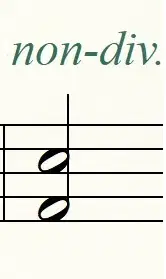
24. How would these notes be performed?
a)
Both notes played at the same time
b)
With a down then up bow
c)
Inside player plays bottom note, outside player plays top note
d)
Hold out the note as long as possible
e)
By bowing over the fingerboard
24.
25. What does "poco a poco" mean?
a)
Little by little
b)
All at once
c)
In a short, pecky fashion
d)
As loudly as possible
e)
As softly as possible
25.
26. What is best describes as: "a slight variation in pitch created by movement of the left hand/arm/finger in order to produce a rich, vocal-like tone"?
a)
Canon
b)
Col legno
c)
Vibrato
d)
Symphony
e)
Exposition
26.
27. What musical form is characterized by a melodic line performed by each instrument but starting at different times, one after another?
a)
Canon
b)
Sonata
c)
Rondo
d)
Symphony
e)
String Quartet
27.
28. Select the fastest tempo:
a)
Grave
b)
Allegro
c)
Vivace
d)
Andante
28.
29. What is the correct order of sharps when seen in a key signature?
a)
A, B, C, D, E, F, G
b)
G, F, E, D, C, B, A
c)
F, C, G, D, A, E, B
d)
B, E, A, D, G, C, F
29.
30. Which is the method for discovering the key name for a key signature with Sharps (#)?
a)
Find the last sharp listed
b)
Find the last sharp listed, go up a half step
c)
Find the second-to-last sharp listed
d)
Find the second-to-last sharp listed, go up a half step
30.
31. What is the correct order of flats when seen in a key signature?
a)
A, B, C, D, E, F, G
b)
G, F, E, D, C, B, A
c)
F, C, G, D, A, E, B
d)
B, E, A, D, G, C, F
31.
32. Which is the method for discovering the key name for a key signature with Flats (b)?
a)
Find the last flat listed
b)
Find the last flat listed, go up a half step
c)
Find the second-to-last flat listed
d)
Find the second-to-last flat listed, go up a half step
32.
33. What is the best definition of a "relative" key?
a)
Two different key names that share the same key signature
b)
Two different key signatures that share the same tonic note
c)
When a key signature changes in the middle of the piece
33.
34. What scale is produced with this pattern of whole and half steps: Whole Whole Half Whole Whole Whole Half
a)
Major Scale
b)
Natural minor Scale
c)
Mixolydian Scale
d)
Harmonic minor Scale
e)
Melodic Minor Scale
34.
41. What does the top number of a time signature signify?
a)
Number of notes in the measure
b)
What type of note gets 1 beat
c)
Number of beats in the measure
35.
42. What does the bottom number of a time signature signify?
a)
Number of notes in the measure
b)
What type of note gets 1 beat
c)
Number of beats in the measure
36.

43. In the 4/4 Time Signature, how many beats is a: Quarter Rest
a)
1 beat
b)
Half of a beat
c)
1.5 beats
d)
2 beats
e)
2.5 beats
37.

44. In the 4/4 Time Signature, how many beats is a: Eighth Note
a)
Half of a beat
b)
1 beat
c)
1.5 beats
d)
2 beats
e)
2.5 beats
38.

47. In the 4/4 Time Signature, how many beats is a: Half Rest
a)
2 beats
b)
Half of a beat
c)
1 beat
d)
1.5 beats
e)
2.5 beats
39.
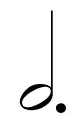
48. In the 4/4 Time Signature, how many beats is a: Dotted Half Note
a)
3 beats
b)
Half of a beat
c)
1 beat
d)
1.5 beats
e)
2 beats
40.

49. In the 4/4 Time Signature, how many beats is a: Eighth Rest
a)
Half of a beat
b)
1 beat
c)
1.5 beats
d)
2 beats
e)
2.5 beats
41.
51. How many beats are in a measure of: 3/4?
a)
2
b)
3
c)
4
d)
5
42.
52. How many beats are in a measure of: 4/2?
a)
2
b)
3
c)
4
d)
5
43.
53. How many beats are in a measure of: 5/8?
a)
2
b)
3
c)
4
d)
5
44.
55. What kind of note gets 1 beat in a measure of: 3/4?
a)
Eighth Note
b)
Quarter Note
c)
Half Note
d)
Whole Note
45.
56. What kind of note gets 1 beat in a measure of: 4/2?
a)
Eighth Note
b)
Quarter Note
c)
Half Note
d)
Whole Note
100 %

