
 Worksheets
10.1 & 10.2 WMA
Total questions: 18
Worksheet time: 11mins
What new Renaissance artistic technique, partly revived from classical times, did Leonardo da Vinci use?
focus on religious topics, as in his painting of The Last Supper
two-dimensional views, as in his sketches of inventions
angular style, as in his sketches of architectural buildings
realism, as in his painting of the Mona Lisa
What theme did Machiavelli address in his book The Prince?
gaining and maintaining power
developing multiple talents
creating a just and peaceful society
becoming ideal men and women
Which statement BEST describes an artistic impact of the Italian Renaissance?
Art moved away from realism and toward mystery.
Art became more stylized to appeal to wealthy patron families.
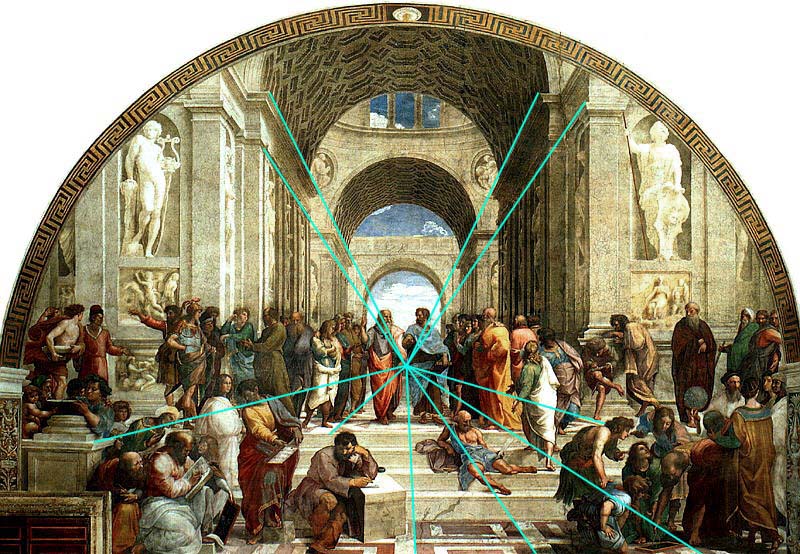
The use of perspective allowed more accurate representations.
The use of religious themes in art diminished drastically.
Why was the work of Andreas Vesalius so important to medicine?
His studies of the human circulatory system correctly identified the heart as a pump that pushed blood through the human body.
His work with ointments to prevent infection led the way for later discoveries in disease prevention.
His book accurately describing human anatomy helped the research and discoveries of other medical scientists.
His development of a more powerful microscope allowed scientists to see microorganisms for the first time.
What new Renaissance artistic technique, partly revived from classical times, did Leonardo da Vinci use?
realism, as in his painting of the Mona Lisa
abstract expressionism
cubism
surrealism
Which statement BEST describes an artistic impact of the Italian Renaissance?
The use of perspective allowed more accurate representations.
Art became more abstract and symbolic.
Artists focused solely on religious themes.
Sculpture became less popular.
What was a major impact of the work of Johannes Gutenberg?
An increase in literacy
A decline in book production
The rise of oral storytelling
A decrease in education
What purposes and themes were common to the writers Erasmus, More, and Rabelais?
Humanism, education, and social reforms
Exploration, conquest, and trade
War, politics, and power
Science, technology, and innovation
What were some themes explored by the artist Jan van Eyck?
Religious themes, townspeople, peasant life
Mythology, heroism, and adventure
Industrialization, urbanization, and progress
Nature, wildlife, and landscapes
Based on the text, which statement BEST describes William Shakespeare’s genius as a writer?
He wrote only for the elite.
He focused on historical events.
He expressed universal themes in everyday settings.
He used complex language that was hard to understand.
Why was the work of Andreas Vesalius so important to medicine?
His book accurately describing human anatomy helped the research and discoveries of other medical scientists.
He discovered the circulation of blood.
He invented the microscope.
He developed the theory of evolution.
Isaac Newton’s contributions to science are sometimes referred to as the “Newtonian Revolution” because he
combined physics, mathematics, and astronomy to explain why the planets moved as they did.
invented the telescope.
discovered the law of conservation of energy.
proposed the theory of relativity.

(1469 - 1527) was born in Florence. He was a Renaissance political philosopher, statesman and writer. His most famous work was a book called The Prince, which was a guide for rulers on how to gain and keep power.
Which of the following was the MOST profound effect of the printing press?
Books became cheaper
News spread
Increased literacy rates
Books could be produced in mass
What did the invention of the printing press allow people to do?
Afford books and articles that discussed new ideas
Travel faster across Europe
Build larger cities
Grow more crops

