
 Worksheets
Biology Final Review- Semester 1- Braunberger
Total questions: 160
Worksheet time: 1hrs 20mins
Name
Class
Date
1.
A collection of organisms of different species that all live in the same area and interact with each other is called _____.
a)
Biome
b)
Community
c)
Population
d)
Organism
2.
In a forest ecosystem, which of the following organisms are responsible for breaking down fallen leaves and dead animals?
a)
Consumers
b)
Producers
c)
Decomposers
d)
Autotrophs
3.
Which of the following statements is part of the cell theory?
a)
Cells are composed mostly of empty space.
b)
Cells are generally large enough for the unaided eye to see.
c)
All cells are produced from existing cells.
d)
Only animals are made up of cells.
4.
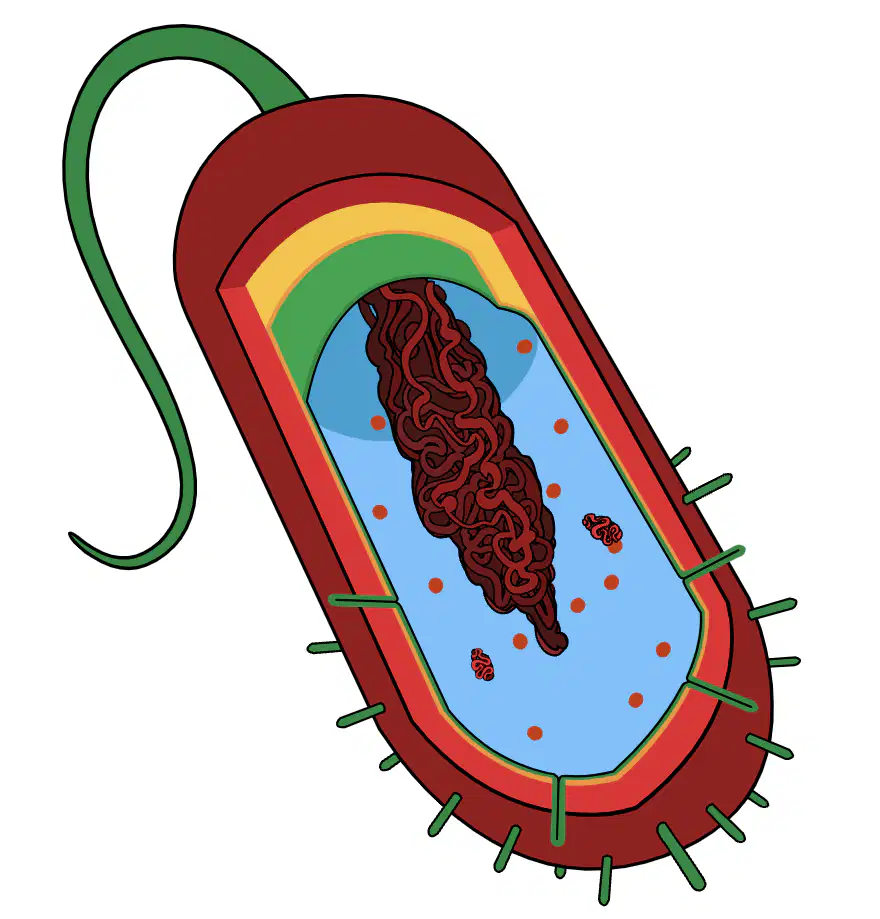
Complete the statement:
This cell is ______ because it ______________.
a)
eukaryotic, contains a nucleus
b)
prokaryotic, does not contain a nucleus
c)
from a plant, contains a nucleus
d)
from an animal, contains a nucleus
5.
The cells of all organisms contain DNA. In cells of which of the following groups is the cellular DNA enclosed in a nucleus?
a)
bacteria
b)
eukaryotes
c)
prokaryotes
d)
viruses
6.
5. Lysosomes are organelles that contain enzymes. Which of the following is a function of lysosomes?
a)
Lysosomes build lipids, carbohydrates, and proteins.
b)
Lysosomes package lipids, carbohydrates, and proteins.
c)
Lysosomes break down lipids, carbohydrates, and proteins.
d)
Lysosomes store lipids, carbohydrates, and proteins.
7.
6. What is the primary function of cell membrane?
a)
To store nutrients
b)
To produce energy
c)
To make proteins
d)
To controls what enters and exits the cell.
8.
7. In eukaryotic cells, a number of organelles allow the cell to produce and distribute proteins. Where are proteins modified, sorted, and packaged?
a)
Golgi apparatus
b)
ribosomes
c)
rough endoplasmic reticulum
d)
smooth endoplasmic reticulum
9.
8. . What is the role the ribosome plays in the cell?
a)
makes proteins
b)
uses the energy in sugar to make a molecule the cell can use
c)
tells which proteins to make when
d)
break down cell parts for recycling or waste
10.
12. What is the role the mitochondrion plays in the cell?
a)
makes proteins
b)
uses the energy in sugar to make a molecule the cell can use
c)
tells which proteins to make when
d)
break down cell parts for recycling or waste
11.
13. What is the role the nucleus plays in the cell?
a)
makes proteins
b)
uses the energy in sugar to make a molecule the cell can use
c)
tells which proteins to make when
d)
break down cell parts for recycling or waste
12.
14. What is the role the vacuole plays in the cell?
a)
makes proteins
b)
modifies and packages proteins for export or storage
c)
tells which proteins to make when
d)
stores materials like water, salts, proteins and carbohydrates
13.
16. What is the role the cytoskeleton plays in the cell?
a)
used in cell movement and gives a cell structure
b)
modifies and packages proteins for export or storage
c)
a tiny package to move materials from one place to another
d)
stores materials like water, salts, proteins and carbohydrates
14.
17. What is the role the chloroplast plays in the cell?
a)
used in cell movement and gives a cell structure
b)
modifies and packages proteins for export or storage
c)
a tiny package to move materials from one place to another
d)
converts the energy in light to chemical energy
15.
18. What is the role the cell wall plays in the cell?
a)
used in cell movement and gives a cell structure
b)
modifies and packages proteins for export or storage
c)
support, shape and protect the cell
d)
converts the energy in light to chemical energy
16.
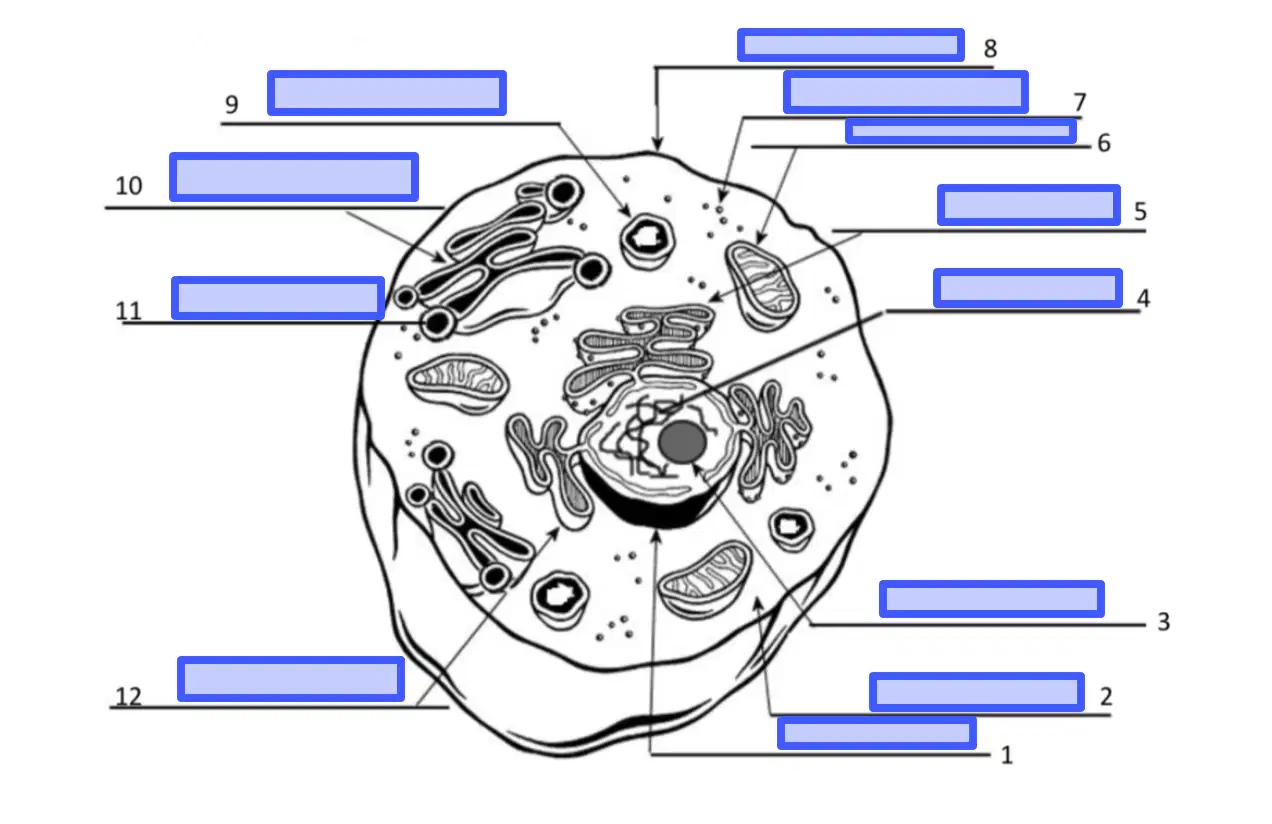
19. What organelle is structure #6?
a)
ribosome
b)
Golgi apparatus
c)
lysosome
d)
mitochondrion
17.

21. What organelle is structure #10?
a)
rough ER
b)
Golgi apparatus
c)
lysosome
d)
smooth ER
18.

22. Object #3 is what structure in the cell?
a)
nucleus
b)
Golgi apparatus
c)
lysosome
d)
nucleolus
19.

24. Which tiny organelles are shown in the diagram below?
a)
nucleus
b)
ribosome
c)
lysosome
d)
chloroplast
20.
26. Sugar molecules can easily pass through the phospholipid bilayer due to their size.
a)
True
b)
False
21.
27. Facilitated diffusion occurs through specific proteins that aid in transporting certain substances.
a)
True
b)
False
22.
28. Which type of molecules can easily cross the phospholipid bilayer?
a)
Small nonpolar molecules
b)
Large polar molecules
c)
Sugar
d)
Salt
23.
29. Which process describes the movement of water through a membrane?
a)
Diffusion
b)
Facilitated diffusion
c)
Osmosis
d)
Active transport
24.
30. Which process describes the movement of particles from high to low concentration?
a)
Diffusion
b)
Osmosis
c)
Active transport
25.
31. What is the term used to describe a membrane that only allows certain substances to pass through?
a)
Impermeable membrane
b)
Selectively permeable membrane
c)
Non-permeable membrane
26.
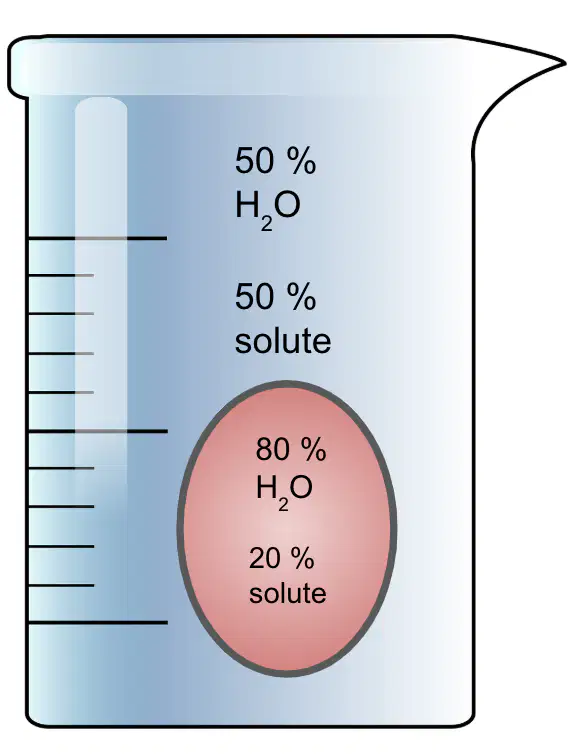
32. What type of solution is in the image below?
a)
Isotonic
b)
Hypotonic
c)
Hypertonic
27.
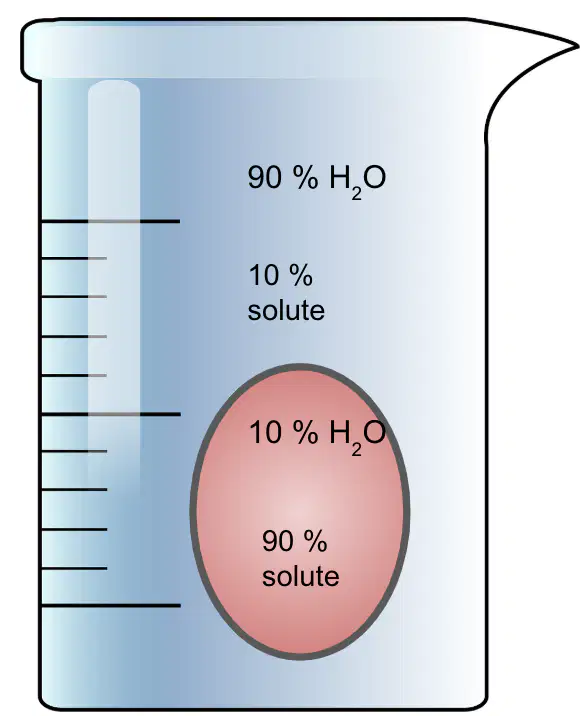
34. What is the direction of the movement of water? What will happen to the cell?
a)
Into the cell, the cell will swell
b)
Out of the cell, the cell will shrink
c)
Both directions, stays the same
28.
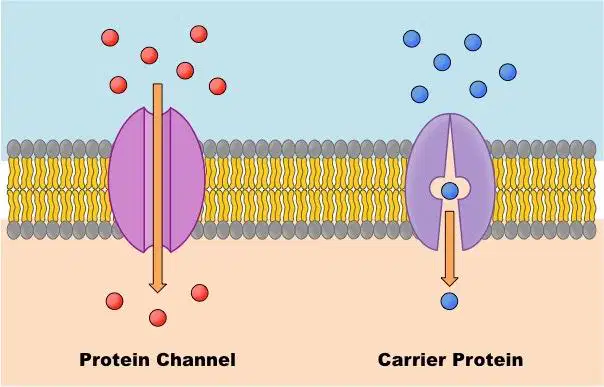
35. What type of cell transport is modeled?
a)
It illustrates active transport because energy is required for solute particles to cross the cell membrane.
b)
It illustrates diffusion because solute particles are moving from an area of higher concentration to an area of lower contration.
c)
It illustrates facilitated diffusion because protein channels allow solute particles to cross the cell membrane.
d)
It illustrates osmosis because water molecules are moving from an area of higher concentration to an area of lower concentration.
29.
36. Which describes active transport, but not passive transport?
a)
requires cellular energy
b)
moves particles across the cell membrane
c)
moves particles from high concentration to low concentration
d)
particles diffuse directly through the lipid bilayer
30.
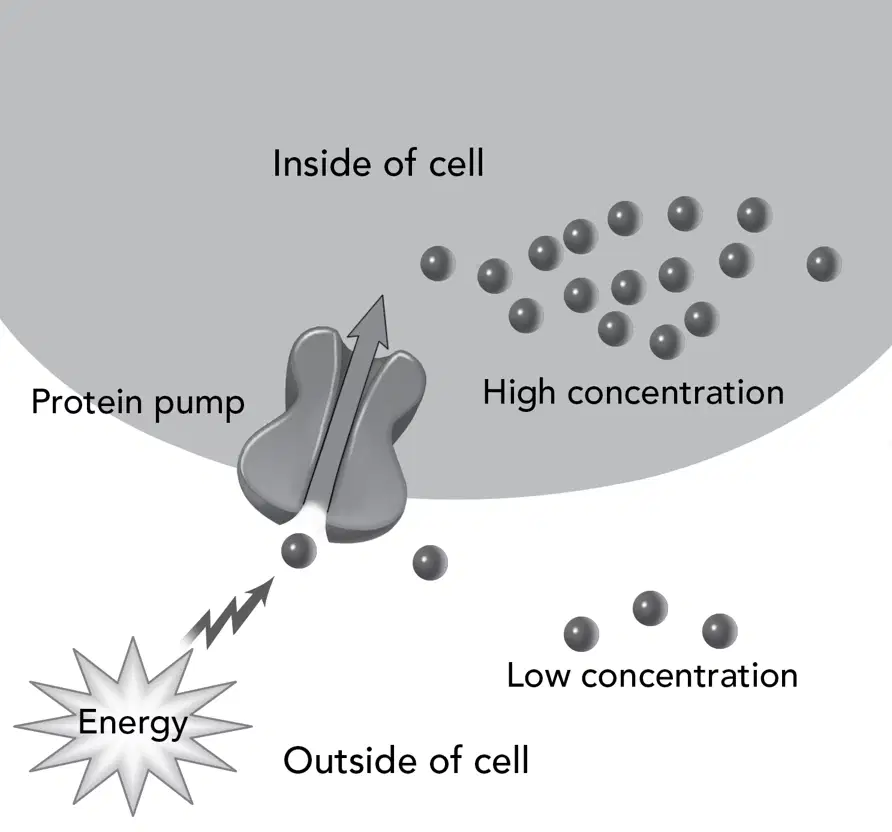
37. The illustration shows a model of the transport of solute particles from outside the cell to inside the cell.
What type of transport is modeled?
a)
The model illustrates active transport because energy is required to move the solute particles from an area of lower concentration to an area of higher concentration.
b)
The model illustrates diffusion because solute particles are moving from an area of higher concentration to an area of lower concentration.
c)
The model illustrates facilitated diffusion because protein channels allow solute particles to cross the cell membrane.
d)
The model illustrates osmosis because water molecules are moving from an area of higher concentration to an area of lower concentration.
31.

39. What organelle is the arrow pointing at?
a)
mitochondria
b)
cytoskeleton
c)
centrioles
d)
vacuole
32.

40. What organelle is the arrow pointing at?
a)
vacuole
b)
centrioles
c)
cytoskeleton
d)
flagella
33.
41. Who coined the term the cell'?
a)
Zacharias Janssen
b)
Anton van Leeuwenhoek
c)
Robert Hooke
d)
Matthias Schleiden
34.
43. Which scientist proposed that all plant tissues are composed of cells?
a)
Anton van Leeuwenhoek
b)
Theodor Schwann
c)
Matthias Schleiden
d)
Robert Hooke
35.
44. This organelle is the transportation network for the cell and moves materials around in the cell. What am I?
a)
mitochondria
b)
lysosomes
c)
chloroplast
d)
endoplasmic reticulum
36.
45. What is the function of the nucleolus?
a)
Makes ribosomes
b)
Makes proteins
c)
Stores information
37.

46. This image shows the detailed 3-D surface of a COVID-19 virus. Which microscope was used to get this image?
a)
Transmission Electron
b)
Dissecting
c)
Scanning Electron
d)
Compound
38.

49. What active transport was shown in the image below?
a)
It is endocytosis because a cell takes in substances from its surrounding environment by engulfing them within a small pocket of the cell membrane.
b)
It is exocytosis because a cell releases large molecules or waste products from its cytoplasm to the outside by fusing a vesicle containing the material with the cell membrane.
c)
It is a cell membrane pump because proteins actively move ions and/or solutes across biological membranes against a concentration or electrochemical gradient.
39.
Population density refers to:
a)
the number of individuals per unit area
b)
the number of individuals in a population
c)
the number of biotic factors in an ecosystem
40.
Herd animals that travel in groups have what type of distribution?
a)
random
b)
clumped
c)
uniform
d)
complete
41.
Under ideal conditions with unlimited resources, a population will grow __________.
a)
negatively
b)
slowly
c)
logistically
d)
exponentially
42.

This graph is an example of:
a)
J-curve; exponential growth
b)
J-curve; logistic growth
c)
S-curve; exponential growth
d)
S-curve; logistic growth
43.
_________________ occurs when a population’s growth slows and then stops, following a period of exponential growth.
a)
Ecological succession
b)
Density and distribution
c)
Exponential growth
d)
Logistic growth
44.
The maximum number of individuals of a particular species that a particular environment can support is:
a)
exponential growth
b)
logistic growth
c)
carrying capacity
d)
density and distribution
45.
When a specific population grows past the ecosystem's carrying capacity, what happens to the population?
a)
Density Independent limiting factors start to occur resulting in the population going farther above carrying capacity.
b)
Density Dependent limiting factors start to occur resulting in the population going back below carrying capacity.
c)
The population will go extinct due to lack of resources
d)
The population grows then finds a new carrying capacity
46.
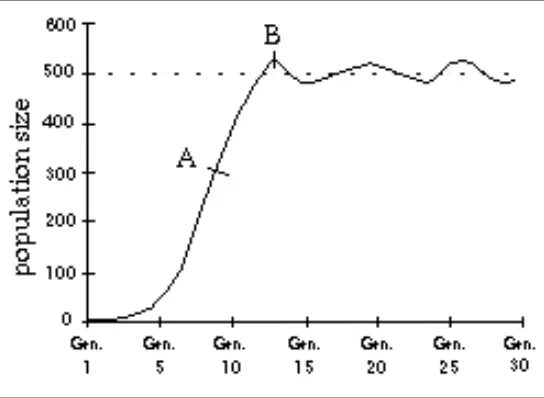
What is the carrying capacity of the graph?
a)
around 500
b)
more than 500
c)
less than 500
d)
around 600
47.
Natural disasters can be considered limiting factors.
a)
true: density independent limiting factors
b)
false; natural disasters are not limiting factors
c)
true: density dependent limiting factors
d)
false: these are not limiting factors
48.
An environmental factor such as storms and extreme heat or cold that decrease a population are considered to be:
a)
density- dependent factor
b)
population density
c)
dispersion
d)
density- independent factor
49.
A lion and a cheetah attempt to occupy the same niche. The more aggressive lion survives; the cheetah does not.
a)
Density-Dependent: Competition
b)
Density-Independent: Competition
c)
Density-Dependent: Predator-Prey
d)
Density-Independent: Predator-Prey
50.
A severe frost wipes out 50% of the wheat crop in ND.
a)
Density-Dependent
b)
Density-Independent
51.
What are some adaptations that prey have evolved to avoid being caught by predators?
a)
What are some adaptations that prey have evolved to avoid being caught by predators?
b)
Prey animals have not evolved any adaptations to avoid predators
c)
Camouflage, mimicry, warning coloration, defensive structures, speed and agility, and the ability to release toxins or chemicals.
d)
Hibernation, migration, and playing dead
52.
______________ occurs when more than one individual or population tries to use the same limited resource.
a)
Predator-prey
b)
Availability
c)
Competition
d)
Mutualism
53.
The first organisms to repopulate an area affected by a volcanic eruption are called _______________________
a)
keystone species.
b)
climax species.
c)
primary producers.
d)
pioneer species.
54.
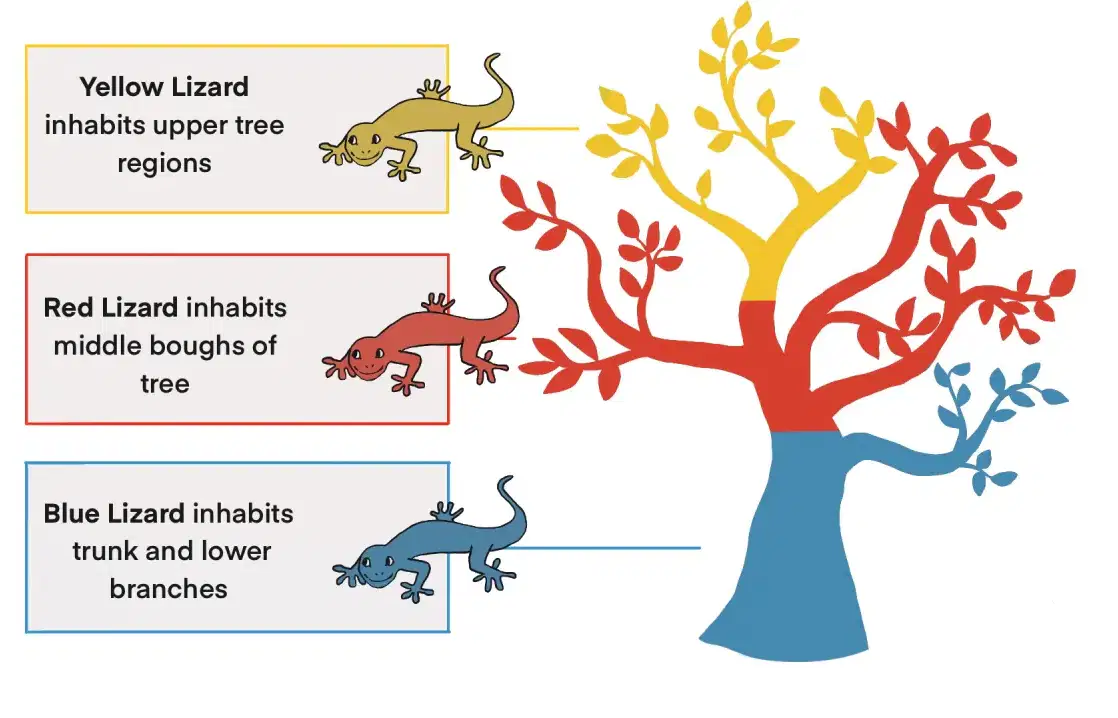
What does this diagram describe?
a)
This diagram shows how species have the same niche and can live in the same tree. They will compete and thrive within this habitat.
b)
This diagram shows the competitive exclusion principle stating that no two species can occupy the same niche at the same time.
c)
This diagram shows the comparative inclusion principle stating that no two species can occupy the same habitat at the same time.
d)
This diagram shows how species can inhabit the same tree and eat the same diet.
55.
Wolves were reintroduced to Yellowstone National Park in 1995. This keystone species restored the park’s ecosystem. What is the ecological value of a keystone species?
a)
they influence the survival of many other species in an ecosystem.
b)
they protect land and water resources within the ecosystem.
c)
they prevent the ecosystem from changing and growing.
d)
they decrease the number of unwanted species in an ecosystem.
56.
If conditions fall above or below the optimum range an organisms will experience____________________________
a)
death
b)
stress
c)
adaptation
d)
tolerance
57.
What is primary succession in ecology?
a)
The process where a community forms in a previously inhabited area.
b)
The process where a community forms in an area that was previously uninhabited.
c)
The process where a community is replaced by another within an inhabited area.
d)
The process where a community prevents any other from forming.
58.
Which of the following is an example of an event that can lead to primary succession?
a)
Urban development
b)
Forest re-plantation
c)
Volcanic eruptions
d)
Agricultural expansion
59.
What is the first step of primary succession?
a)
Formation of soil from bare rock
b)
Decomposition of pioneer species
c)
Growth of complex plants
d)
Arrival of animals
60.
Which of the following are considered pioneer species in primary succession?
a)
shrubs and mosses
b)
lichen, moss and bacteria
c)
aquatic plants
d)
insects and moss
61.
What is secondary succession in ecology?
a)
The process where a new species evolves from an existing one.
b)
The initial development of plant and animal life in an area without topsoil.
c)
The recovery of an ecosystem that was previously occupied by living organisms but was disturbed.
d)
The migration of animals from one habitat to another.
62.
How does secondary succession typically begin?
a)
With the growth of trees
b)
With the growth of aquatic plants
c)
With the growth of weeds and grasses
d)
With the removal of topsoil
63.
What represents the final stage of primary succession?
a)
Intermediate species
b)
Pioneer species
c)
Climax community
d)
Small annual plants and lichens
64.
Natural disasters such as flooding and tornadoes are linked to ________________.
a)
primary
b)
secondary
c)
old field
d)
ecosystem
65.
Zebra- Gets cleans of parasites and ear wax
Oxpecker- Food and protection
What type of symbiosis?
a)
Commensalism
b)
Parasitism
c)
Mutualism
d)
Plagarism
66.
Cattle egrets forage (feed) in fields among cattle. The egret gets easy access to flying insects stirred up by the cattle, and the cattle are unaware if they are there or not. What type of symbiosis is this?
a)
mutualism
b)
commensalism
c)
competition
d)
parasitism
67.
Honeyguide birds find a bee hive, then chatter loudly to attract the honey badger. They fly toward the hive making sure the badger is following. Upon arrival at the bee hive, the badger tears open the hive and feasts on the honey. Once the badger is done, the honeyguide bird feeds on the remaining wax and larvae. This relationship is called _________________________.
a)
commensalism
b)
mutualism
c)
parasitism
d)
predation
68.
Hookworms can enter the body of animals or even humans. The hookworm attaches to the lining of the intestinal wall and feeds on blood. Its eggs are ejected into the digestive tract and the larvae (young hookworms) that hatch live off of the host’s blood. The host can suffer from blood loss, anemia and iron deficiency. This relationship is called__________________.
a)
commensalism
b)
mutualism
c)
parasitism
d)
predation
69.

This zone has few organisms where the temperature is either too low or too high. The old and weak fish die in this zone.
a)
Zone of Physiological Stress
b)
Zone of Intolerance
c)
Zone of Optimum Range
d)
Zone of Invalidity
70.

Zone where a stable healthy population survives
a)
zone of intolerance
b)
optimal range
c)
zone of physiological stress
d)
limiting factors
71.
Deep in the ocean, where sunlight does not reach, how do certain organisms produce their energy?
a)
By photosynthesis, using sunlight to make their own food
b)
By chemosynthesis, producing energy from chemical reactions without sunlight
c)
By breaking down chemicals in the presence of sunlight
d)
By synthesizing organic compounds using light absorbed by bacteria
72.
All food webs and food chains begin with _________________.
a)
primary consumer
b)
producers
c)
secondary consumers
d)
tertiary consumers
73.

In this energy pyramid, which organisms have the most energy available?
a)
Producers
b)
Carnivores
c)
Herbivores
d)
Top Predator
74.
If there are 500 Kcal of energy available in the producers, how much energy would be available in the primary consumers?
a)
50 Kcal
b)
5 Kcal
c)
500 Kcal
d)
5000 Kcal
75.
An organism that eats the secondary consumer is called a(n)_______________________________
a)
Primary Consumer
b)
Secondary Consumer
c)
Tertiary Consumer
d)
Consumer
76.
Energy decreases as you move up the food pyramid (from bottom to top).
a)
true
b)
false
77.
In an energy pyramid, how much of the energy in each level gets lost as heat or is used by the organism for survival?
a)
80%
b)
90%
c)
10%
d)
20%
78.
The main difference between photosynthesis and chemosynthesis is:
a)
photosynthesis uses chemicals (hydrogen sulfide) to make food, while chemosynthesis uses light
b)
chemosynthesis uses chemicals (hydrogen sulfide) to make food, while photosynthesis uses sunlight
c)
Photosynthesis gives off carbon doxide, while chemosynthesis gives off oxygen
d)
photosynthesis happens in the dark, while chemosynthesis happens in light
79.
What three things are always needed for photosynthesis to occur?
a)
water, light, fertilizer, oxygen
b)
water, light, chlorophyll, oxygen
c)
water, light, chlorophyll, carbon dioxide
d)
water, carbon dioxide, oxygen and glucose
80.
Which of the following are products of photosynthesis:
a)
oxygen and carbon dioxide
b)
carbon dioxide and ATP
c)
oxygen and glucose
d)
glucose and water
81.
What numbers need to be placed in the blanks to make the following a BALANCED equation?
___CO2 + ___H2O ---> C6H12O6 + ___O2
a)
6, 6, 6
b)
6, 12, 6
c)
1, 1, 1
d)
23, 46, 23
82.
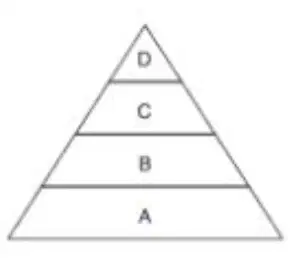
Letter B in the pyramid represents:
a)
scavengers
b)
producers
c)
carnivores
d)
herbivores
83.
What is it called when plants give off water vapor through their pores in the leaves?
a)
condensation
b)
evaporation
c)
sublimation
d)
transpiration
84.
What is condensation?
a)
The part of the water cycle when the sun heats up water, turning it from a liquid into water vapor or steam. It rises from the ground into the air.
b)
The part of the water cycle when clouds get heavy and can no longer hold the liquid water. This causes the water to fall from the sky to the earth as rain, snow, sleet, or hail.
c)
The part of the water cycle when the water vapor in the air gets cold. The water turns back into a liquid and forms clouds.
85.
What is evaporation?
a)
The part of the water cycle when the sun heats up water, turning it from a liquid into water vapor or steam. It rises from the ground into the air.
b)
The part of the water cycle when clouds get heavy and can no longer hold the liquid water. This causes the water to fall from the sky to the earth as rain, snow, sleet, or hail.
c)
The part of the water cycle when the water vapor in the air gets cold. The water turns back into a liquid and forms clouds.
86.
How does carbon get from the atmosphere into organisms?
a)
Decomposition
b)
Respiration
c)
Photosynthesis
d)
Deposition
87.
Select all of the storages of the carbon cycle:
a)
Atmosphere
b)
Animals
c)
Ocean
d)
Fossil fuels
e)
Forest
88.
What does NOT produce carbon dioxide?
a)
Photosynthesis
b)
Burning Fossil Fuels
c)
Animal respiration
d)
Plants decaying
89.
How much of the atmosphere is composed of nitrogen gas?
a)
78%
b)
38%
c)
70%
d)
28%
90.
How is nitrogen "fixed" into a usable form for plants?
a)
Through action of bacteria only
b)
Through lightning only
c)
Through action of bacteria and lightning
d)
Through photosynthesis
91.
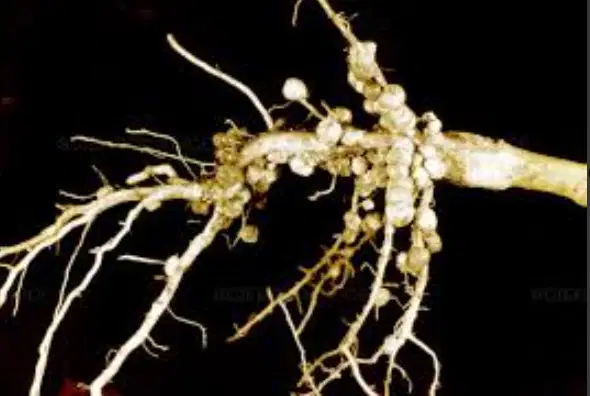
These bumps on the roots of a legume are called
a)
nodes
b)
nurdles
c)
noodles
d)
nodules
92.
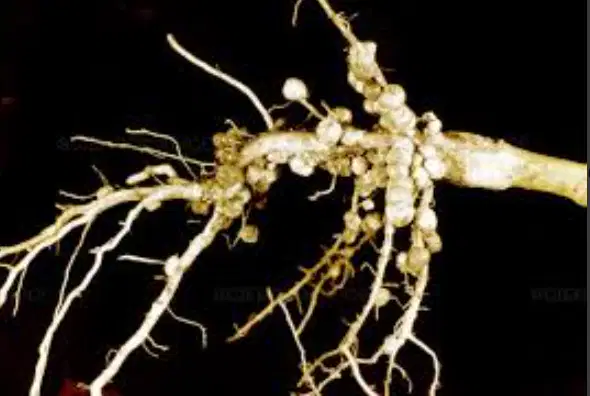
___________ live inside the bumpy things on the roots of the legumes.
a)
bacteria
b)
carbon
c)
nitrogen
d)
phosphorus
93.
This is NOT a part of the phosphorus cycle.
a)
Phosphate is incorporated into sedimentary rocks
b)
Phosphate bound to soil
c)
Atmospheric phosphate
d)
Phosphate is absorbed from the soil by plants
94.
Which of the following statements is true of the phosphorus cycle?
a)
Phosphorus enters the atmosphere as phosphates.
b)
The phosphorus cycle utilizes the processes of erosion, and weathering.
c)
Phosphates are used in carbohydrate and glucose storage.
d)
The phosphorus cycle utilizes bacteria to breakdown phosphates and make them available for plants.
95.
The major sink for phosphorus is____________________.
a)
sedimentary rock
b)
atmospheric gases
c)
seawater
d)
plants
96.
Phosphorus is used to make phospholipids which makes up the _________________.
a)
cell membrane
b)
protein
c)
cell wall
d)
nucleus
97.
A molecule of phosphorus is trap in a sedimentary rock formation recently exposed to the elements. How does the inorganic phosphorus enter the soil?
a)
the exposed rock gets eaten by animals, which enters their tissues
b)
the exposed rock gets absorbed by plants directly and enters their tissues
c)
the exposed rock gets eroded by the rain and runs off into the soil
d)
the exposed rock warms up due to the sun and evaporates into the atmosphere
98.
Which of these is in order according to numbers of factors from smallest to largest?
a)
biome population biosphere community
b)
population biome community biosphere
c)
population community biome biosphere
d)
community biome population biosphere
99.
How would water be different on Earth with no greenhouse effect?
a)
Water would be more dense and ice would sink.
b)
Water would have less surface tension and cohesion.
c)
Water would evaporate more quickly.
d)
Water would be frozen and not much would be in the liquid state.
100.
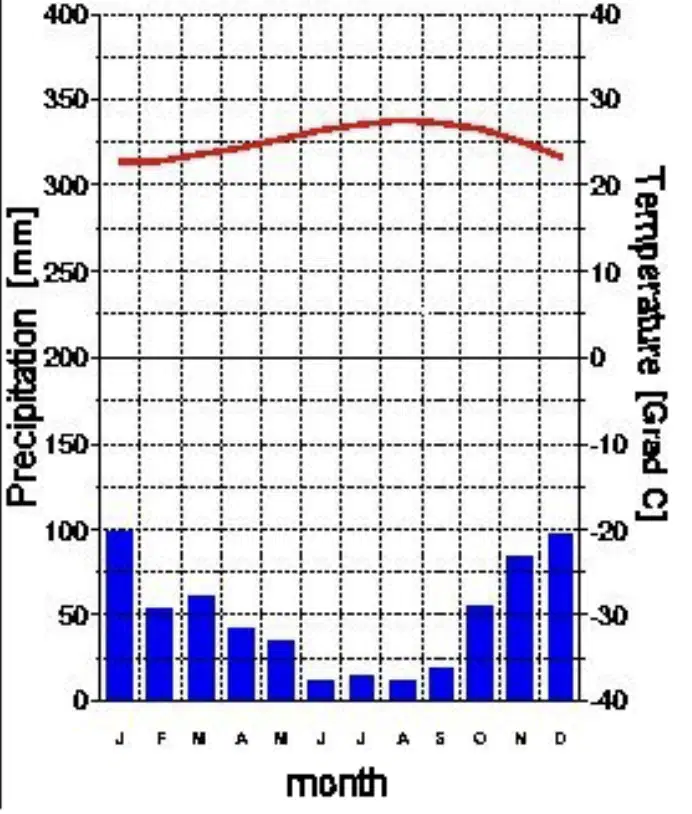
What is the temperature range for this location’s climate?
a)
20°C to 100°C
b)
23°C to 27°C
c)
-40°C to -20°C
d)
310°C to 340°C
101.
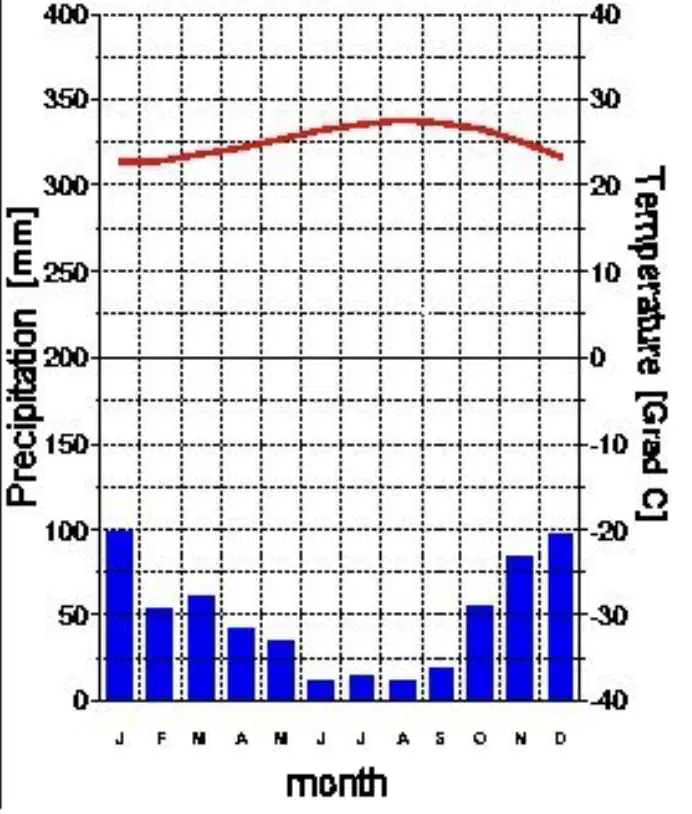
Does this location appear to be closer or further from the equator than where we are in North Dakota?
a)
It is closer to the equator because the temperature doesn't hardly change with the seasons.
b)
It is further from the equator because the temperature is a steady, cold 20 to 30 degrees
c)
It is closer to the equator because the rain is a steady 310-340mm all year long,
d)
It is further from the equator because the rain comes more in the winter months.
102.
What feature about Earth keeps temperatures in a small range as compared to the Moon?
a)
large size
b)
atmosphere
c)
extensive vegetation
d)
distance from the Sun
103.
Greenhouse gases include carbon dioxide and methane. How do greenhouse gases act to increase air temperatures near Earth's surface?
a)
They trap infared heat that is radiated from earth's surface.
b)
They reflect heat that enters the atmosphere.
c)
They transmit visible light that enters the atmosphere.
d)
They emit heat when they undergo chemical reactions.
104.
5. The following human activities below can increase the amount of greenhouse gas concentration in the atmosphere, EXCEPT.
a)
Burning fossil fuels
b)
Industrial Processes
c)
Deforestation
d)
Reforestation
105.
6. What is the biome of North Dakota, USA?
a)
Tropical rainforest
b)
Temperate Grassland
c)
Desert
d)
Tundra
106.
Regions of the planet with similar types of life and climates are called?
a)
Population
b)
Community
c)
Ecosystem
d)
Biomes
107.
As a team of explorers travels southward from the North Pole into Canada, they encounter a dense forest of pines and other coniferous evergreens. They leave the forest before the winter, which is long and cold. Which of these biomes has the team visited?
a)
Temperate Grassland
b)
Tundra
c)
Boreal Forest (Tiaga)
d)
Temperate Deciduous Forest
108.
Jorge is exploring the ocean. On which of these journeys is he MOST LIKELY to pass from the photic zone into the aphotic zone?
a)
A boat trip from the shore to the middle of the ocean.
b)
A boat trip from the middle of the ocean to the shore.
c)
A submarine dive from the surface into deep ocean water.
d)
A walk from the intertidal zone into shallow ocean water.
109.
Each of the following is an abiotic factor in the environment except.......
a)
soil pH
b)
rainfall for each month of the year
c)
temperature variations throughout the day
d)
species of snails in the water
110.
_________________ is the average year to year conditions of temperature and precipitation in an area over a long period of time.
a)
Climate
b)
Temperature
c)
Atmospheric conditions
d)
Weather
111.
What kind of trees loses its leaves in the fall?
a)
Evergreen
b)
Deciduous
c)
Lichen
d)
Coniferous
112.
A chaparral is an area dominated by:
a)
squirrels
b)
snowfall
c)
frequent fires
d)
extreme temperature changes over a 24 hour period
113.
Which of the following best explains why we have seasons?
a)
the earth travels farther away from the sun as it revolves around it
b)
the earth faces toward the sun at certain times and away from it at other times
c)
patterns of ocean and wind currents change the seasons
d)
the tilt of the earth exposes the northern hemisphere to more direct light in summer
114.
What is the monomer (building block) of a carbohydrate?
a)
Glycerol "heads" and fatty acid "tails"
b)
Amino Acids
c)
Nucleotides
d)
Monosaccharides
115.
What is the monomer (building block) of a Protein?
a)
Glycerol "heads" and fatty acid "tails"
b)
Amino Acids
c)
Nucleotides
d)
Monosaccharides
116.
What is the monomer (building block) of a Lipid?
a)
Glycerol "heads" and fatty acid "tails"
b)
Amino Acids
c)
Nucleotides
d)
Monosaccharides
117.
What is the function of a carbohydrate?
a)
store genetic information, chemical cellular energy
b)
long term energy storage, make up the cell membrane, act as hormones, insulation
c)
short term energy storage- quick energy
d)
Build muscles and tissue, fight disease, cell transport, enzymes
118.
What is the function of a lipid?
a)
store genetic information, chemical cellular energy
b)
long term energy storage, make up the cell membrane, act as hormones, insulation
c)
short term energy storage- quick energy
d)
Build muscles and tissue, fight disease, cell transport, enzymes
119.
What is the function of a protein?
a)
store genetic information, chemical cellular energy
b)
long term energy storage, make up the cell membrane, act as hormones, insulation
c)
short term energy storage- quick energy
d)
build muscles and tissue, fight disease, cell transport, enzymes
120.
What is the function of a nucleic acid?
a)
store genetic information, chemical cellular energy
b)
long term energy storage, make up the cell membrane, act as hormones, insulation
c)
short term energy storage- quick energy
d)
build muscles and tissue, fight disease, cell transport, enzymes
121.
Glucose and sucrose are considered to be which type of biological and organic molecule?
a)
Lipid
b)
Carbohydrate
c)
Protein
d)
Nucleic Acid
122.
How many naturally occuring amino acids are there?
a)
15
b)
10
c)
20
d)
30
123.
The bond that joins amino acids together are called?
a)
Ester bonds
b)
Polycarbonate bonds
c)
Peptide bonds
d)
Carboxyl bonds
124.
In a carbohydrate, what is the ratio to Carbon, Hydrogen and Oxygen atoms?
a)
1:2:1
b)
1:4:2
c)
2:6:1
125.
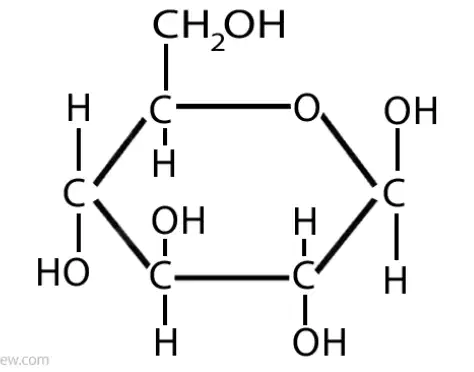
What is this molecule?
a)
protein
b)
lipid
c)
glucose
d)
nucleic acid
126.

What type of carbohydrate is this?
a)
monosaccharide
b)
disaccharide
c)
polysaccharide
127.
When conducting the lab on macromolecules, what test helped you identify a starch?
a)
Benedicts Test
b)
Buret Test
c)
Iodine Test
128.
In a covalent bond...
a)
The non-metal atom gives its electrons to the metal
b)
Both atoms share electrons
c)
The metal atom gives its electrons to the non-metal
d)
Electrons are destroyed
129.
In an ionic bond...
a)
The non-metal atom gives its electrons to the metal
b)
Both atoms share electrons
c)
The metal atom gives its electrons to the non-metal
d)
Electrons are destroyed
130.
Wen conducting the properties of water lab, what property of water was observed when the paperclips were able to float on the surface of the water dish?
a)
high heat capacity
b)
capillary action
c)
surface tension
d)
adhesion
131.
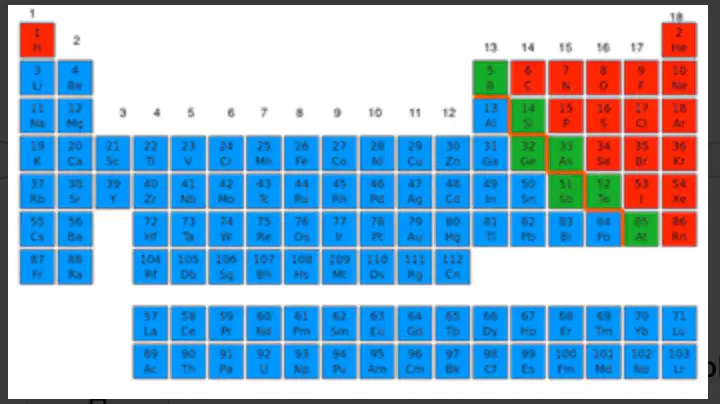
What color are the nonmetal on the periodic table?
a)
blue
b)
red
c)
green
132.
What is the mass number (atomic mass) defined as
a)
number of protons and electrons in a nucleus
b)
number of electrons and neutrons in a nucleus
c)
number of protons and neutron in a nucleus
133.
What does the atomic number identify?
a)
number of neutron in the nucleus
b)
number of electrons and neutrons
c)
number of protons
134.
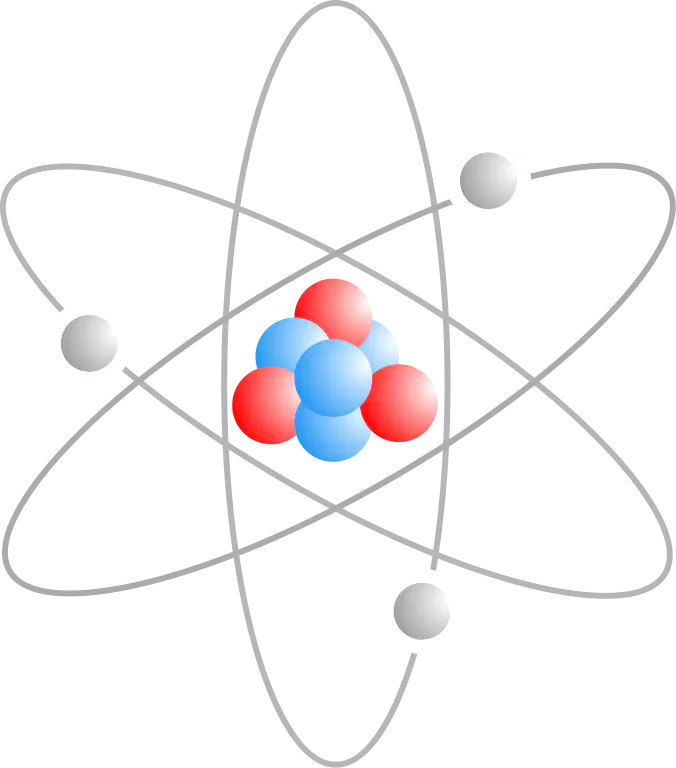
What is the atomic number of this atom?
a)
3
b)
7
c)
4
d)
10
135.
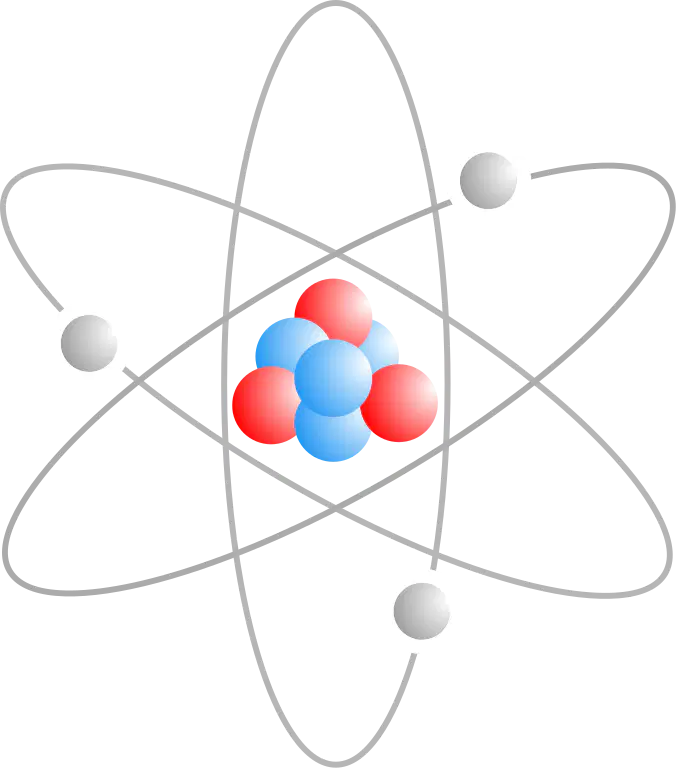
What is the atomic mass of this atom?
a)
3
b)
7
c)
4
d)
10
136.

How many electrons does barium (Ba) have?
a)
56
b)
137
c)
81
d)
82
137.

How many neutrons does barium-137 (Ba) have?
a)
56
b)
137
c)
81
d)
82
138.
Which subatomic particle has a negative charge?
a)
quark
b)
proton
c)
neutron
d)
electron
139.
Isotopes are common for all elements on the periodic table. Isotopes are different in one way, but in what ways are isotopes similar?
a)
Same atomic mass and neutrons
b)
Same atomic number and electrons
c)
Same atomic mass and electrons
d)
Same atomic number and neutrons
140.
What two subatomic particles are found in the nucleus of an atom?
a)
protons and neutrons
b)
neutrons and electrons
c)
electrons and protons
141.
What is Cohesion?
a)
Water molecules ability to stick to each other
b)
Water molecules ability to conduct electricity
c)
Water molecules ability to melt
d)
Water molecules ability to stick to other surfaces
142.
Water is polar because...
a)
The unequal sharing of electrons gives the water molecule a slight negative charge near its hydrogen atoms and a slight positive charge near its oxygen atom.
b)
The unequal sharing of electrons gives the water molecule a slight negative charge near its oxygen atom and a slight positive charge near its hydrogen atoms.
c)
The molecule has two poles, at which the it is colder than other regions of the molecule.
d)
The water molecule is neutral.
143.
Attractions between the Oxygen atom of one water molecule and the Hydrogen atom of another water molecule are called?
a)
Ionic Bonds
b)
Covalent Bonds
c)
Hydrogen Bonds
d)
Polar Bonds
144.
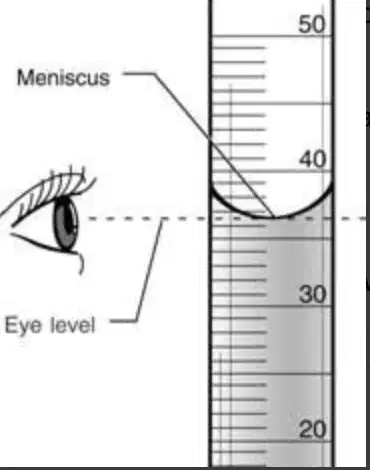
The meniscus in a graduated cylinder or glass of water is due to.....
a)
The water molecules being attracted to the glass and adhering to it
b)
Because water is hydrophilic
c)
The meniscus in a graduated cylinder or glass of water is due to.....
d)
The water molecules being attracted to the glass and cohering to it
145.
This variable in an experiment is the one being tested and changed by the scientist.
a)
dependent variable
b)
independent variable
c)
constant
d)
control group
146.
Ms. B. sets up an experiment to see how the mass of a ball affects the distance it rolls off a ramp. Identify the independent variable.
a)
distance traveled by the ball
b)
height of the ramp
c)
mass of the ball
d)
weight of the ball
147.
In a study to determine the effect of different fertilizers on plant height, each plant is given a different type of fertilizer; organic, chemical, or none. All plants receive the same amount of water, sunlight, and are planted in the same type of soil. What is the dependent variable in this study?
a)
Type of fertilizer
b)
Amount of water
c)
Plant height
d)
Type of soil
148.
What is the purpose of a hypothesis in scientific research?
a)
To outline the procedures of an experiment
b)
To summarize the results of an experiment
c)
To randomly guess the outcome of an experiment
d)
To provide a basis for experimentation and prediction
149.
Which of these explain how a natural phenomenon works or happens?
a)
Theory
b)
Law
150.
Which type of data involves using instruments like thermometers and stopwatches?
a)
Qualitative data
b)
Quantitative data
151.
What is the term for the variables that are kept unchanged in both the control and experimental setups?
a)
independent
b)
dependent
c)
constants
d)
variable
152.
What is a peer review?
a)
Option 1
b)
A system for writers to submit for publishing
c)
A system for checking research reports before publishing
d)
It is not necessary if the scientist feels their results are valid
153.
What is the term for a tendency to favor a particular result in scientific research?
a)
Fallacy
b)
Bias
c)
Hypothesis
d)
Opinion
154.

Which characteristic is shown in the image?
a)
Organisms reproduce
b)
Organisms react to stimuli
c)
Organisms can adapt
d)
Organisms use and obtain energy
e)
Organisms are made up of cells
155.
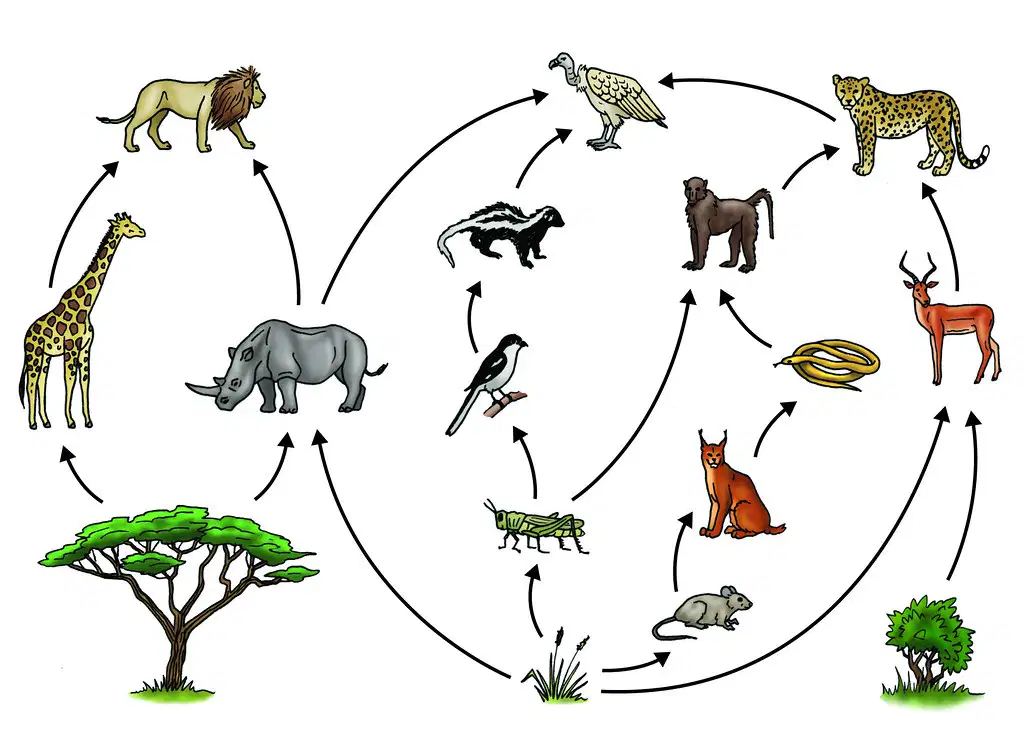
Which characteristic is shown in the image?
a)
Organisms reproduce
b)
Organisms react to stimuli
c)
Organisms can adapt
d)
Organisms use and obtain energy
e)
Organisms are made up of cells
156.
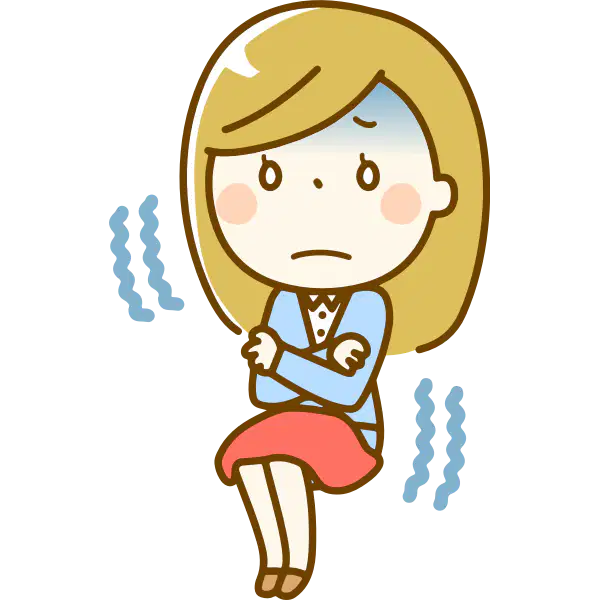
In this image what is the response?
a)
cold weather
b)
shivering
157.
Maintaining a stable internal environment despite external changes is called:
a)
adaptation
b)
equilibrium
c)
balance
d)
homeostasis
158.
In asexual reproduction, how do the offspring compare to the parent organism?
a)
They are formed through the process of fertilization
b)
They develop from gametes (sex cells)
c)
They exhibit genetic variation among themselves
d)
They are genetically identical to the parent
159.
What is an advantage of sexual reproduction?
a)
Allows genetic variation
b)
Only needs one parent
c)
Offspring are exact copies of parent
160.
Viruses are living.
a)
true
b)
false
100 %