
 Worksheets
The Greek and Persian Wars
Total questions: 66
Worksheet time: 43mins
Who was also called Cyrus the Great?
Darius I
Xerxes I
Cyrus II
Alexander the Great
When did Cyrus II rule Persia?
600-550 BC
559-530 BC
500-450 BC
530-500 BC
The Persian Wars began in _______.
492 BC
480 BC
500 BC
450 BC
Which empire did Darius I expand while dealing with revolts in Babylon, Susania, and Ionia?
Roman Empire
Greek Empire
Persian Empire
Egyptian Empire
Who did Darius I name as his successor when his health began to fail?
Cambyses II
Cyrus the Great
Xerxes I
Alexander the Great
Who were the hoplites?
Citizen-soldiers
Farmers
Merchants
Priests
What type of armor did Greek Hoplites wear on their chest?
Iron breastplate
Bronze breastplate
Leather vest
Chainmail
What is the name of the helmet with cheek plates and horse hair on top used by Greek Hoplites?
Helmut
Iron helmet
Kabuto
Roman Galea
What type of armor did Greek Hoplites wear on their shins?
Greaves
Cuirass
Helmet
Shield
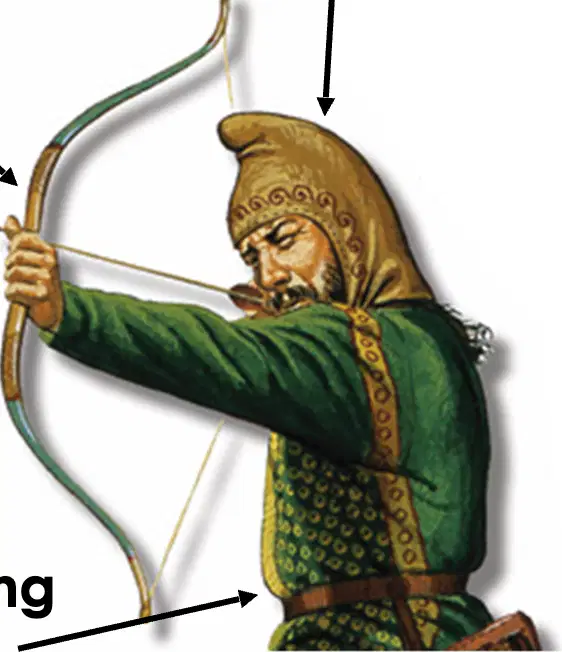
What materials were used to make the bow of Persian archers?
Wood or Bone
Metal
Plastic
Elephant Tusk
What was the outcome of Darius I's fleet sent in 492 BC to invade the Greek city-states?
The fleet successfully conquered Athens.
The fleet was destroyed in a storm.
The fleet established a permanent base in Greece.
The fleet was defeated by the Spartan army.
What was the ratio of Persians to Athenians during the Battle of Marathon?
10,000 to 20,000
20,000 to 10,000
15,000 to 5,000
25,000 to 15,000
During the Battle of Marathon in 490 BC, how many men did Athens lose?
192
6400
500
1000
What did Greek historian Herodotus record about the runner named Pheidippides?
He ran from Athens to Sparta and back to Athens.
He ran from Athens to Marathon and back.
He ran from Sparta to Marathon and back.
He ran from Athens to Rome and back.
The Persian army relied on Persian supply ships so the ships were always close to the _______.
army
enemy
shore
capital


The Greek city-state of (a) became a military society.
499 BCE, who rebelled against the Persian Empire?
Ionians in Asia Minor
Athenians on Mainland Greece
Spartans on Peloponnesus
Minoans on Crete
Where did the Battle of Marathon in 490 BCE take place?
On the plains outside of the city-state of Athens
In a narrow mountain pass
On the Aegean Sea
On a plateau outside of Sparta
How were the Greeks able to defeat the Persians in the first phase of the Battle of Marathon?
The Athenians successfully utilized their navy
They had more soldiers than the Persians
The Athenians out flanked or surrounded the Persians on three sides
The Persians retreated due to bad weather
Prior to the Battle of Thermopylae in 480 BCE, who took leadership of the Persian Empire?
Cyrus the Great
Xerxes
Alexander the Great
Darius II
Which of the following best describes the location of the Battle of Thermopylae?
A wide open field
In the city of Sparta
A narrow mountain pass
A narrow beach
What helped the Persians defeat the Spartans at Thermopylae?
A spy told the Persians about a secret passage
The Persians had superior weapons
The Persians had superior armor
A sudden flood swept away the Spartan army
Where did the Persians advance to after their victory at Thermopylae?
City-state of Sparta
City-state of Athens
Mt. Olympus
The oracle of Delphi
What happened to the city-state of Athens following the Battle of Thermopylae?
It was burned to the ground by the Persians
It was flooded by the Aegean Sea
It was saved by the Spartans
Nothing happened to the city-state
How were the Greeks able to get the Persians to sail into the narrow channel in the Battle of Salamis?
The Greeks pushed their ships into the channel
The Greeks tricked them with the promise of surrender
A storm had blown the Persian ships off course
The Persians had gotten lost and went the wrong way
Who won the Battle of Salamis, a sea battle in 480 BCE?
Persians
Greeks
Where did the final battle of the war take place in 479 BCE?
Outside the city-state of Athens
Outside the town of Plataea
In the mountains near Mt. Olympus
At the Hellespont Channel
What advantage did the Athenian ships have over the Persian fleet?
They were larger and stronger.
They were faster and more maneuverable.
They had more weapons.
They were invisible to the enemy.
Who led the small force of Spartans to meet the Persians?
The Athenian General
The Spartan King Leonidas
A Persian defector
A Greek merchant
How many miles from Athens was the city-state where the Persian fleet landed?
26 miles
100 miles
150 miles
262 miles
Reorder the following battles of the Persian War
Marathon
Thermopylae
Salamis
Plataea
Final battle of the Persian Wars
Thermopylae
Chaeronia
Hydaspes
Platea
Who won the Battle of Salamis?
Athenian navy
Athenian army
Athens and Sparta
Persia
What type of government did Athens create?
Monarchy
Democracy
Oligarcy
Dictatorship
What is the Phalanx?
What was the strategic significance of the Battle of Thermopylae?
It allowed the Greeks to unite their forces.
It delayed the Persian advance and allowed the Greeks to prepare for further battles.
It was the first time the Greeks defeated the Persians.
It marked the end of the Persian invasion.
What was one of the main consequences of the Persian Wars for Greece?
The destruction of Athens
The rise of the Delian League
The end of Greek civilization
The expansion of the Persian Empire
Which battle of the Persian War is famous for the valiant stand of 300 Spartans?
Battle of Marathon
Battle of Thermopylae
Battle of Salamis
Battle of Plataea
What was the primary cause of the Persian Wars?
Greek colonization of Persian territories
Persian desire for revenge
Greek support for the Ionian Revolt
Religious differences between Greeks and Persians
Who was the runner the Greeks sent to share news with the city-state of Athens?
Pheidippedes
Plato
Atlas
Poseidon
What did the Athenians build, as a monument for their victory over Persia at Marathon?
A statue of Pheidippides
Statue to Ares, God of War
A new palace
The Parthenon

He was invaded Greece as revenge for his father's defeat at Marathon and to build a base for expansion into Europe.
Xerxes
Cyrus II (the Great)
Darius I
How did the Greek mountains affect communication?
They isolated communities
They promoted road building
They led people to write letters
They made farmers stop speaking

In a tyranny, what did the leader use to gain power and keep it?
military force
family tradition
the law of the land
foreign partnerships
A peninsula is land that is surrounded on (a) sides by water.
The Greeks traded mostly along the _________________ coast.
African Coast
Pacific Coast
Mediterranean Coast
Ivory Coast

The City- State of Athens was named after which god or goddess ?
(a)
Match the following

monarch

aristocrat

tyrant

oligarch

assembly
Match the following.
Zeus
King of the Gods, God of the Sky & Lightning
Athena
Goddess of Wisdom and War
Hades
God of the Underworld
Poseidon
God of the Sea
Aphrodite
Goddess of Love and Beauty


On what continent is Greece located?
Africa
Europe
Asia
Australia
The (a) battle of the Persian Wars was fought in (b) . The Persians landed there and were loading (c) when (d) attacked.
The (a) battle of the Persian Wars was fought at (b) . The (c) navy was able to defeat the larger and slower (d) ships.

Europe
A
B
C
D
E

Africa
B
C
D
E
F

Greece
A
B
C
D
E

Persian Empire
A
B
C
D
E

Mediterranean Sea
A
B
C
D
E

Aegean Sea
A
B
C
D
E
______ are states that agree to help each other against a common
enemy.
City-states
Republics
Democracies
Persia
Allies
What century did Herodotus write in?
21st century
5th century BCE
10th century BCE
When dinosaurs roamed
What did the Spartans do at Thermopylae according to Herodotus?
They went on vacation
They fought heroically against a much larger Persian army
They held a dance-off
They opened a spa
What title was given to Herodotus hundreds of years after his death?
The King of Pop
The Father of History
The First DJ
Lord of the Dance

