
 Worksheets
Plate Tectonics
Total questions: 15
Worksheet time: 13mins

What is the lithosphere?
The center layer of Earth
The outermost layer of Earth consisting of the crust and upper mantle
The molten rock layer between the crust and core
The layer of Earth where tectonic plates are found
What is the definition of 'molten'?
Solidified
Melted; liquefied
Crystallized
Vaporized
Fill in the blank: The broken pieces of the lithosphere that move on the asthenosphere are called _________.
tectonic plates
continental shelves
oceanic ridges
mantle plumes
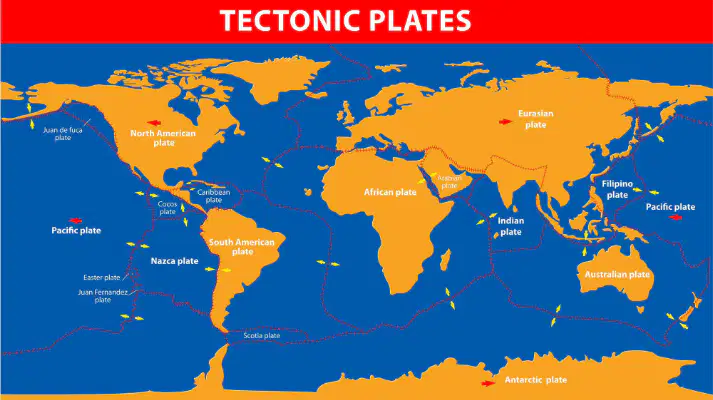
Which of the following is NOT a major tectonic plate?
African Plate
Antarctic Plate
Pacific Plate
Arctic Plate
How did they discover that the tectonic plates had moved? Was that movement related to Earth structures such as mountains, valleys, or volcanoes?
Through the study of fossil distribution and matching geological features across continents.
By observing the daily movement of tectonic plates using satellites.
Through the analysis of ocean currents and their impact on climate.
By measuring the temperature changes in the Earth's core.
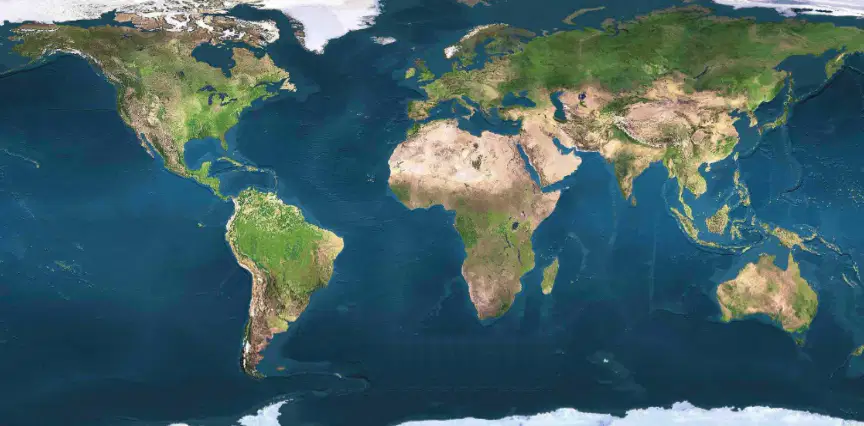
Look at the world map and notice the shapes of the continents. Do you see how some continents appear to fit together like the pieces of a jigsaw puzzle? Why do you think this is? Is it just a coincidence, or do you think it suggests something important about the history of our planet?
It is just a coincidence.
It suggests that continents were once connected.
It is due to the current shape of the Earth.
It is because of the way maps are drawn.
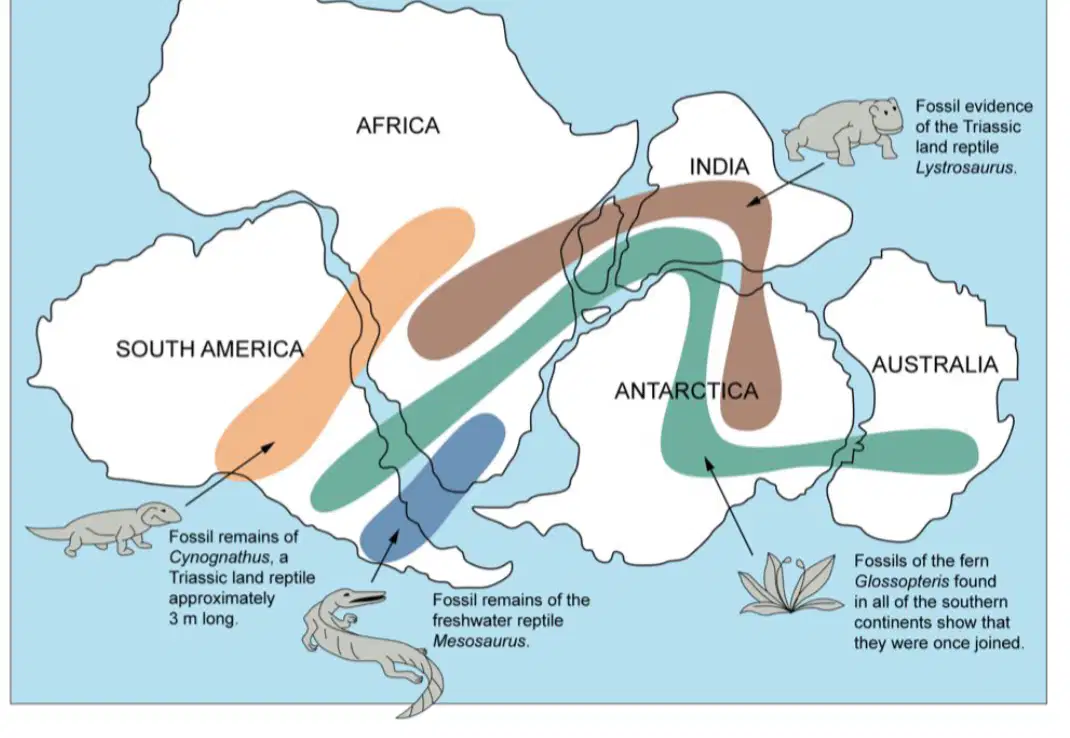
What does this suggest about the continents?
They are fixed and unchanging.
They have moved over time.
They are all the same size.
They are all connected underwater.
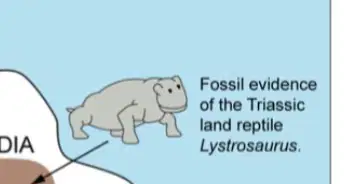
Fill in the blank: Fossils of a land reptile called _______ were found along matching coasts of eastern Africa, central India, and Antarctica.
Lystrosaurus.
Tyrannosaurus.
Stegosaurus.
Triceratops.
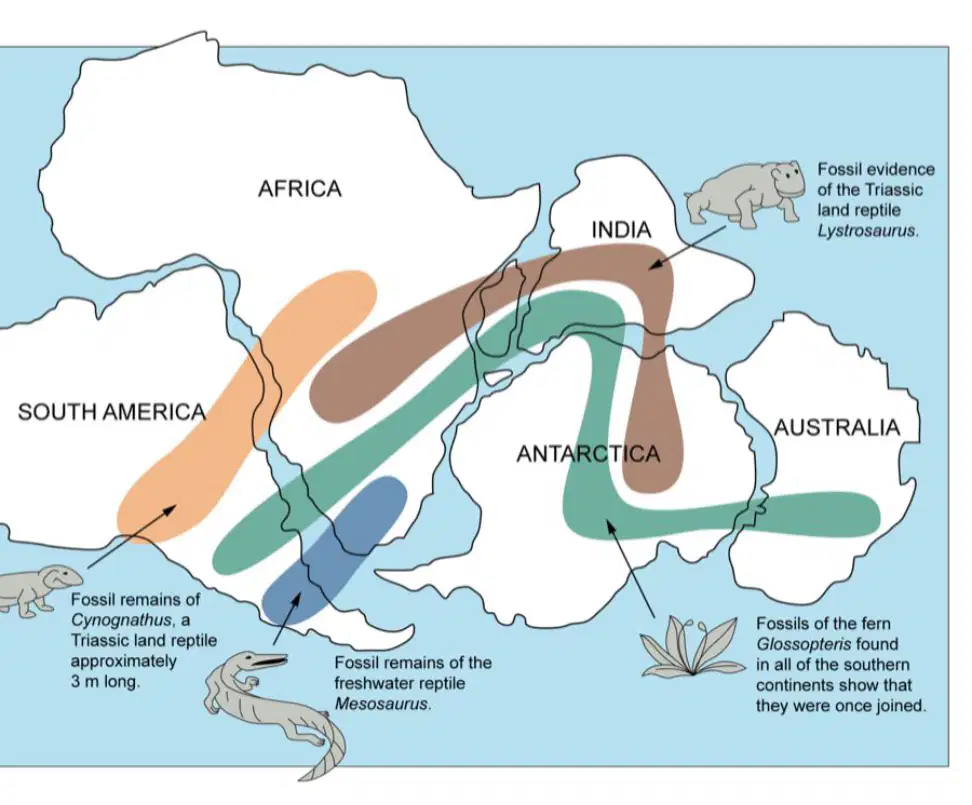
What reasoning did Wegener use to explain the presence of similar fossils on different continents?
Continents were once connected and have drifted apart.
Similar species evolved independently on different continents.
Fossils were transported by ancient humans across continents.
Ocean currents carried fossils across continents.
What is the name given to the process of continents moving over time?
Who named the supercontinent Pangaea?
What new evidence was discovered in the 1940s that supported Wegener's hypothesis?
Discovery of mid-ocean ridges
Identification of tectonic plates
Mapping of ocean floor magnetic patterns
Observation of continental drift
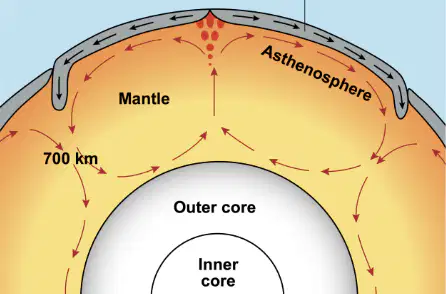
The asthenosphere is:
a rigid layer of the Earth
a liquid layer of the Earth
a semi-fluid layer of the Earth
a solid layer of the Earth
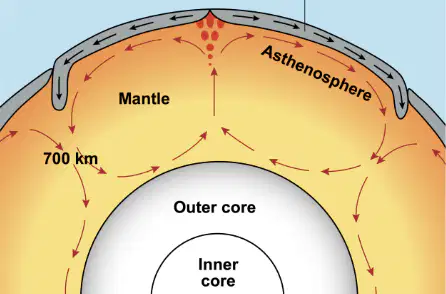
Convection currents are responsible for the transfer of heat in which of the following processes?
Conduction
Radiation
Convection
Evaporation
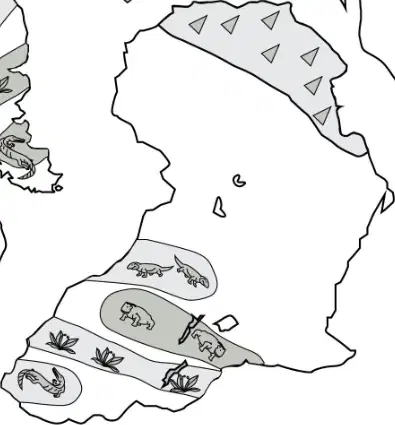
How should the continents be matched up in the 'Making Pangaea' activity?
By aligning the coastlines to fit together like a puzzle.
By matching the climate zones of each continent.
By arranging them according to their current positions.
By grouping them based on their size.

