
 Worksheets
Iron Safety
Total questions: 27
Worksheet time: 17mins
Minor burns should be immersed under cool, running water for 10 to 20 minutes to relieve discomfort and minimize tissue damage
True
False
Irons should be unplugged
when not in use.
when being filled with water.
when left unattended.
all of the above.
Carefully place the cords to irons away from traffic areas to prevent tripping hazards
True
False
The easiest way to determine if an iron is hot enough to use is to lick a finger and quickly touch the soleplate.
True
False
Sherry needs to steam wrinkles from her skirt. To safely remove wrinkles while wearing the skirt, hold the iron a foot from the skirt and aim the steam vents toward the skirt. Carefully apply steam to the wrinkled areas.
True
False
It depends on the fabric
You should always turn an iron off or put it on its lowest setting before plugging it in OR out of the wall.
True
False
Sometimes
A hot iron is left with the soleplate sitting directly on the clothes. What will happen?
Nothing. The iron will turn itself off.
The fabric under the soleplate may burn.
The fabric will get flat and nice looking.
The iron will explode.
It is ok to goof around and push each other while using an iron.
True
False
Make sure the iron steam setting is _____. If you need to steam, ask for assistance.
on
off
It is ok to iron over the cord of the iron.
True
False
Why should you iron dark, dull fabrics on the wrong side?
protects from scorching
prevents shiny spots
enhances color
If your iron gets dirty, just throw it in a sink full of water.
True
False
Depends on the type of iron.
What could happen if you turn an iron upside down?
It will explode.
It will catch the drapes on fire.
It will burn your clothes.
Hot water could run out and burn you.
Straight pins are used for:
Engraving.
holding fabric together.
ripping seams.
Where is the best place to hold pins while sewing?
mouth
sleeve
pincushion
Hand scissors to someone else:
handle first.
blade first.
Sideways.
You can cut both paper and fabric with sewing shears.
True
False

pillow

When using a seam ripper, rip the seam
away from you
up and to the right
towards you
it really doesn't matter
A seam ripper is used to:
cut a hole in the fabric.
fix a snag in the fabric.
remove stitches.
If you injure yourself while sewing, you should ________________________
tell your teacher right away
never sew again
close your eyes and count to 10
none of the above
Do not sew on your __________ because you may sew your project to your clothes, resulting in seam ripping and starting over
lap
right
left
none of the above

What should you do if you accidentally drop a needle on the floor?
Leave it there and hope someone else picks it up
Inform the teacher immediately
Pick it up carefully and put it back in the pin cushion
Ignore it and continue working
All pins and sewing needles should be safely picked up and put back into the cabinet or container by the end of class.
True
False
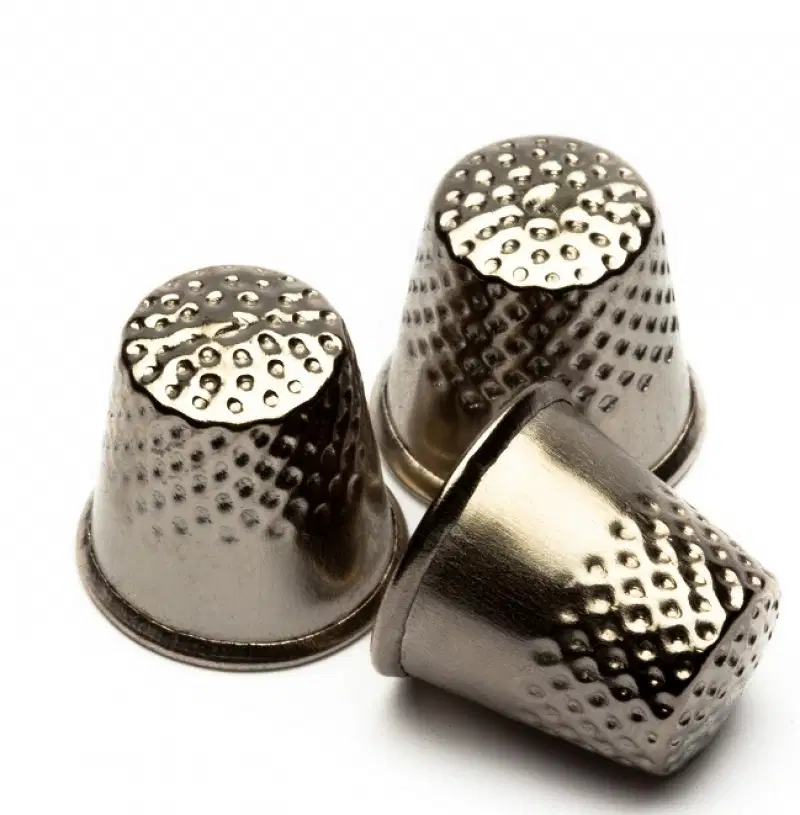
These tools that protect your fingers when sewing are called ___________.
erasers
thimbles
bobbins
needles

This objects is a
seam gauge
ruler
tape measure
seam ripper

