
 Worksheets
25-26 Earth's spheres, layers, rocks,
Total questions: 173
Worksheet time: 4hrs 42mins

Which sphere does the picture best represent?
geosphere
atmosphere
hydrosphere
biosphere

Which sphere does the picture best represent?
geosphere
atmosphere
hydrosphere
biosphere

Which sphere does the picture best represent?
geosphere
atmosphere
hydrosphere
biosphere

Which sphere does the picture best represent?
geosphere
atmosphere
hydrosphere
biosphere

Which sphere does the picture best represent?
geosphere
atmosphere
hydrosphere
biosphere

Which sphere does the picture best represent?
geosphere
atmosphere
hydrosphere
biosphere

Which sphere does the picture best represent?
geosphere
atmosphere
hydrosphere
biosphere

Which sphere does the picture best represent?
geosphere
atmosphere
hydrosphere
biosphere

How many spheres can be found in the picture?
1
2
3
4
Which of the following is found in the earths Geosphere
Soil
Rocks
Minerals
All of the Above
Oceans, rivers, lakes, and clouds are all part of which of Earth's spheres?
Hydrosphere
Biosphere
Atmosphere
Geosphere
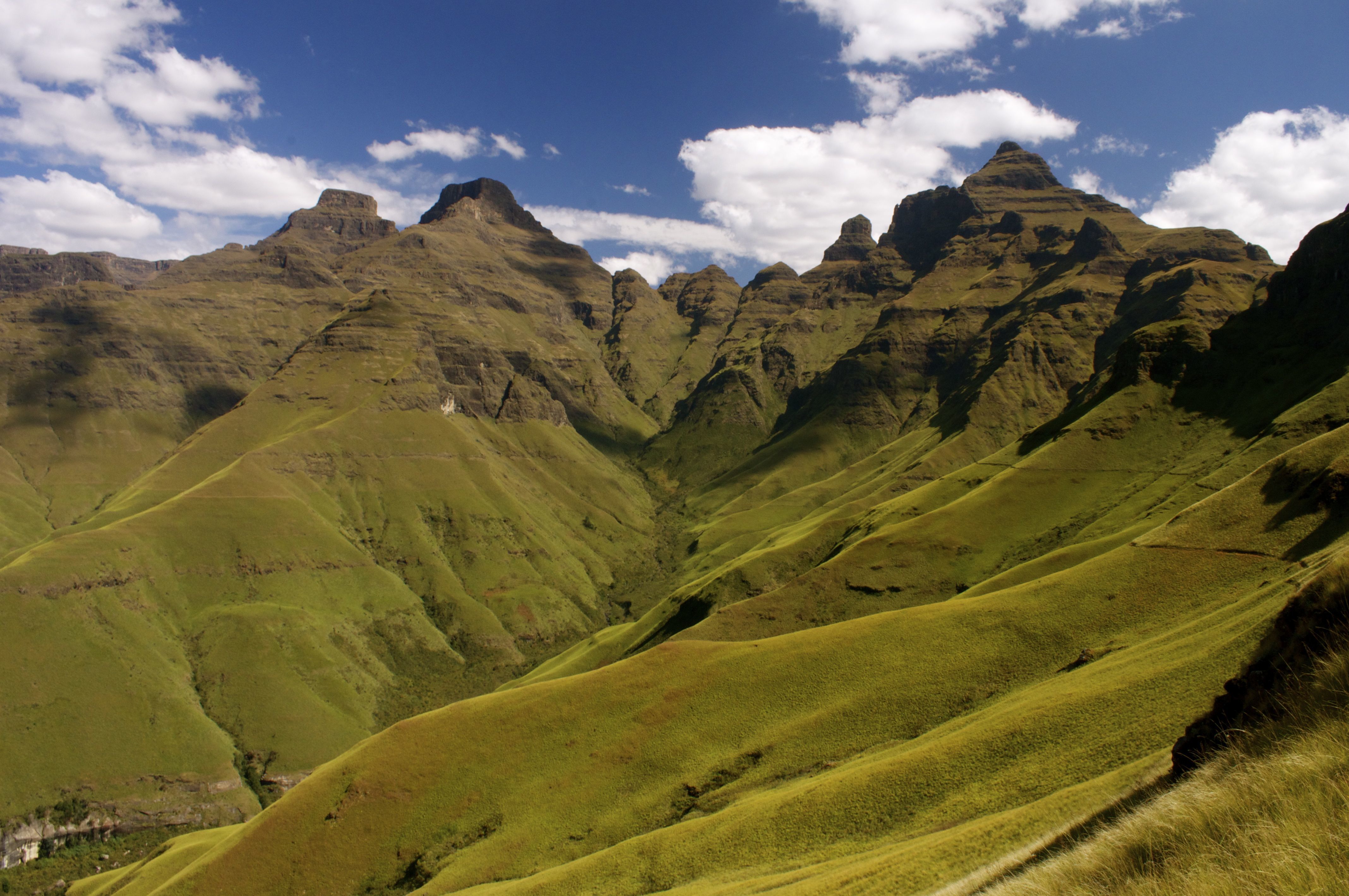


All water on Earth is part of the...
Hydrosphere
Geosphere
Cryosphere
Atmosphere



The prefix "bio" comes from a Greek word that means what?
Life
Water
Earth
Ground
How much of the planet is covered by water?
20%
50%
70%
90%
What do we call scientists who study the EARTH?
Archaeologist
Geologist
Biologist
Astronomers

What does the word part ATMOS mean?
gases
rock
ice
water
Atmosphere
living things on Earth
crust on Earth
gases surrounding Earth
water on Earth
The hydrosphere does not include water in gaseous states
True
False
Which one is part of the geosphere?
Elephants
Clouds
Lakes
Mountains
When two systems work together it's called
component
interaction
input
output
You and I are part of the
atmosphere
biosphere
geosphere
hydrosphere
Oxygen, carbon dioxide, and nitrogen are part of the
atmosphere
biosphere
geosphere
hydrosphere

Which of these answers describes Earth’s atmosphere?
All living and once living things.
The mixture of gasses that surrounds the earth.
The mixture of nickle and iron below the earth's surface.
All the fresh and salt water on the earth's surface.
Which of the following does NOT belong in the atmosphere?
tornado
wind
snow
carbon dioxide
Which of the following does NOT belong in the hydrosphere?
corals
snow
glaciers
oceans
Which of the following is NOT part of the biosphere?
tree
oxygen
corals
bacteria
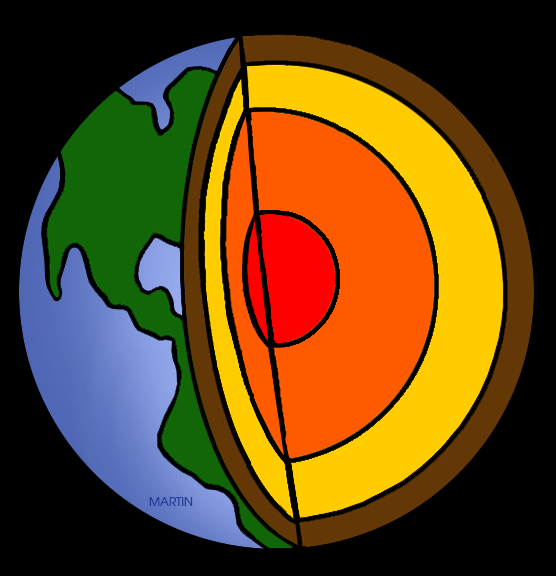
Which layer is shown in red?
crust
mantle
outer core
inner core
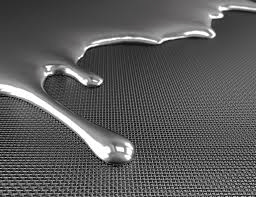
Which layer is made (mostly) of LIQUID iron and nickel?
crust
mantle
outer core
inner core
Sally is researching the differences that exist in each layer of the Earth. Which of the following best describes Earth's crust?
Solid, rocky
Liquid, metallic
Semisolid, convecting
Dense, extremely hot

Which layer of the Earth is the THINNEST?
crust
mantle
outer core
inner core

Which layer of the Earth is the THICKEST?
crust
mantle
outer core
inner core
Which layer is the hottest?
crust
mantle
outer core
inner core
Which layer is the coolest?
crust
mantle
outer core
inner core
Scientists study ages of rocks to better understand the Earth's past and make predictions about its future
True
False
What two layers make up the core?
Lithosphere and
Asthenosphere
Inner and Outer core
Lithosphere and Outer Core
Inner core and Mantle
What layer is made of mostly iron?
Mantle and crust
Mantle and core
Inner core and outer core
Crust only
Which of Earth's layers is best described as liquid metal?
crust
mantle
outer core
inner core
Which of the following correctly lists the layers from innermost to outermost?
inner core, outer core, lower mantle, upper mantle, crust
lower mantle, upper mantle, crust, inner core, outer core
lower mantle, inner core, upper mantle, outer core, crust
crust, inner core, lower mantle, upper mantle, outer core

As you travel from the crust to the core, how would temperature, pressure and density of the material change?
They would all increase
They would all decrease.
Nothing, the layers are made of the same material throughout
Temperature would decrease, but pressure and density would increase
Which layer is shown in red?
crust
mantle
outer core
inner core
Which layer is shown in orange?
crust
mantle
outer core
inner core

Which shows the order of the layers from COOLEST to HOTTEST?
crust, mantle, outer core, inner core
inner core, outer core, mantle, crust
crust, outer core, inner core, mantle
Trick question! All of the layers are the same temperature!
Which layer of the Earth is the THINNEST?
crust
mantle
outer core
inner core
The Earth is divided into layers based on ________ and _______.
density, temperature
heat, pressure
what they are made of, how they act
their depth and what they are made of
The outer core is thicker than the mantle.
True
False
We live on the ________ layer of the Earth.
hottest
dentist
thinnest
softest

A diagram of Earth's layers is provided. Which letter in the diagram identifies the layer scientists believe to be in a liquid state?
Location A
Location B
Location C
Location D
Oceans and other bodies of water are found on which layer of Earth?
Outer core
Crust
Mantle
Inner core

Which letter correctly identifies the area of Earth called the crust?
A
B
C
D
As we travel deeper into the Earth which of the following is true:
A. Pressure goes up and temperature goes down
B. Pressure goes down and temperature goes up
C. Both pressure and temperature go up
D. Both pressure and temperature go down
Which Layer of the Earth has human life on it?
Inner Core
Outer Core
Mantle
Crust

Which Layer of the Earth is the thinnest?
Inner Core
Outer Core
Mantle
Crust
Which Layer of the Earth is made of molten (melted) Nickel and Iron?
Inner Core
Outer Core
Mantle
Crust
Which layer of the Earth is the largest layer?
Inner Core
Outer Core
Mantle
Crust

What are the two types of Earth's Crust?
Oceanic and Continental
water and land
ocean and dessert
crust and mantle

Oceanic crust is _____ than continental crust.
denser
less dense
Which layer of Earth is in the liquid state of matter?
Crust
Inner Core
Lithosphere
Outer Core
Which of the following would be an accurate feature to include in a model of Earth?
A crust that is the thickest layer
An inner core that contains oceans
A thin mantle in the center of the model
A liquid outer core below the mantle
Which of Earth’s layers has the lowest density?
Crust
Inner core
Mantle
Outer core
How many distinct layers does Earth have?
1
2
3
4
Which layer of the Earth is thought to be liquid?
Crust
Mantle
Outer Core
Inner Core
Which is the hottest layer of the Earth? (It is also solid!)
Crust
Mantle
Outer Core
Inner Core
What are the two different types of crust?
Continental and oceanic
Continental and icelandic
Oceanic and marine
Atomic and continental
Which type of crust is more DENSE than the other?
Oceanic is more dense than continental.
Continental is more dense than oceanic.
The solid inner core is thought to be made of what?
Iron and nickel
Carbon and oxygen
Oxygen and aluminum
Dirt

Which layer of the Earth is liquid Iron and Nickle?
Crust
Mantle
Outer Core
Inner Core

Which layer of the Earth is a dense solid ball of Iron and Nickle?
Crust
Mantle
Outer Core
Inner Core
Temperature _____________________ as you go deeper into the earth.
increases
decreases
goes up and down depending on the layer
stays the same
Pressure ______________________ as you go deeper into the Earth.
increases
decreases
goes up or down depending on the layer
stays the same
Density ______________________ as you go deeper into the Earth.
increases
decreases
goes up or down depending on the layer
stays the same
What causes part of the Core to be a solid when it is hot enough to melt?
Extreme pressure from the Earth
Air temperatures
The magnetism of the metals won't let it melt
Ocean temperatures

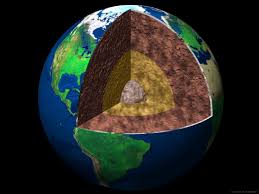
Has two types- continental and oceanic
Crust
Mantle
Outer Core
Inner Core
Which of the following correctly lists the layers from innermost to outermost?
inner core, outer core, lower mantle, upper mantle, crust
lower mantle, upper mantle, crust, inner core, outer core
lower mantle, inner core, upper mantle, outer core, crust
crust, inner core, lower mantle, upper mantle, outer core
Solid ball of metal
Crust
Mantle
Outer Core
Inner Core
Has convection currents
Crust
Mantle
Outer Core
Inner Core
liquid metal
Crust
Mantle
Outer Core
Inner Core

Which model BEST represents the layers of the Earth?
F
G
H
J
liquid iron and nickel
crust
outer core
inner
mantle
The layers of Earth are in the order they are in because:
It keeps us safe
It holds the Earth together
Its pretty
The different layers have different densities
What layer is a shell of liquid iron nickel that creates the Earth's magnetic field?
Outer Core
Mantle
Crust
Inner Core
If we can't travel to the center of the Earth, how do we know so much about it?
Seismic waves, made by earthquakes and man-made explosions
special camera scopes sent through all the layers of the earth
very long thermometers that can reach to the inner core
super powerful x-rays
We live on the ________ layer of the Earth.
hottest
dentist
thinnest
softest
Which shows the order of the layers from COOLEST to HOTTEST?
crust, mantle, outer core, inner core
inner core, outer core, mantle, crust
crust, outer core, inner core, mantle
Trick question! All of the layers are the same temperature!

True or False: Once a rock is sedimentary, it cannot ever become an igneous rock.
True
False
The process by which metamorphic rock changes to igneous rock begins with _______.
melting
erosion
deposition
crystallization
The process by which metamorphic rock changes to igneous rock begins with _______.
melting
erosion
deposition
crystallization

Sandstone is an example of...
Metamorphic
Sedimentary
Igneous
What is underground molten rock?
Lava
Magma
Soil
Intrusive

Obsidian is an example of...
Igneous
Sedimentary
Metamorphic
What is it called when layers pile up and press down on the material below?
Compaction
Layering
Cementation
I don't know


This rock was another type of rock that was heated and compressed over time deep underground. What type of rock is this?
Sedimentary
Igneous
Metamorphic
Any rock that forms from another rock as a result of changes in heat and/or pressure is a _____________.
chemical rock
igneous rock
sedimentary rock
metamorphic rock
Limestone is a sedimentary rock. During the rock cycle, limestone is changed into marble, a metamorphic rock. The processes that act on limestone and change it into marble are
weather and erosion
heat and pressure
compacting and cementing
melting, cooling, and hardening
If a lot of heat is applied to a rock, it will melt and turn into ________.
magma
rocks
sediment
metamorphic rocks
If heat and pressure inside Earth cause the texture and crystal structure of a rock to change, what new material is formed?
sedimentary rock
metamorphic rock
igneous rock
chemical rock

Which type of rock is made by small bits of rock, mud, or sand that are deposited, compacted, and cemented together?
Coal
igneous
metamorphic
sedimentary

Sediment goes through _________________ to become sedimentary rock.
heat and pressure
compacting and cementing
melting and cooling
Limestone is a common sedimentary rock found in texas. How did limestone most likely form?
lave from volcanic eruptions cooled and hardened
Oceanic deposits were layered and cemented together
Extreme heat and pressure inside earth melted the sediment
Partial melting of rocks into magma that fossilized
Which type of rock is formed from INTENSE heat and pressure (often deep inside the Earth)?
igneous
sedimentary
metamorphic
Igneous rock be changed into sedimentary rock when igneous rocks
that form mountains get pushed together
are weathered and the fragments deposited
melt to form layers of different minerals
put out by volcanoes create new land


