
 Worksheets
Chemistry of Life
Total questions: 41
Worksheet time: 38mins
Why can fish survive winters in a pond?
ice is less dense than liquid water so it will be on the top of a lake or pond allowing fish to swim beneath it
water is available in all 3 phases so ice will be on the top of a lake or pond allowing fish to swim beneath it
water is polar so ice will be on the top of a lake or pond allowing fish to swim beneath it
Adhesion so ice will be on the top of a lake or pond allowing fish to swim beneath it
Water has a high specific heat which means it can hold a great deal of thermal energy without rapidly increasing in temperature. What will this affect?
Cities that are close to Oceans and large lakes
Cities that are near ponds or rivers
Deserts far from oceans
Why is water so good at dissolving so many substances?
it is polar
it is less dense as a solid
cohesion
adhesion
Water has a slightly positive end AND a slightly negative end, this means water has
polarity
cohesion
adhesion
specific heat
Water can hold a great deal of heat and help moderate the climate of a nearby landmass because of which property?
specific heat (high heat capacity)
cohesion
adhesion
polarity
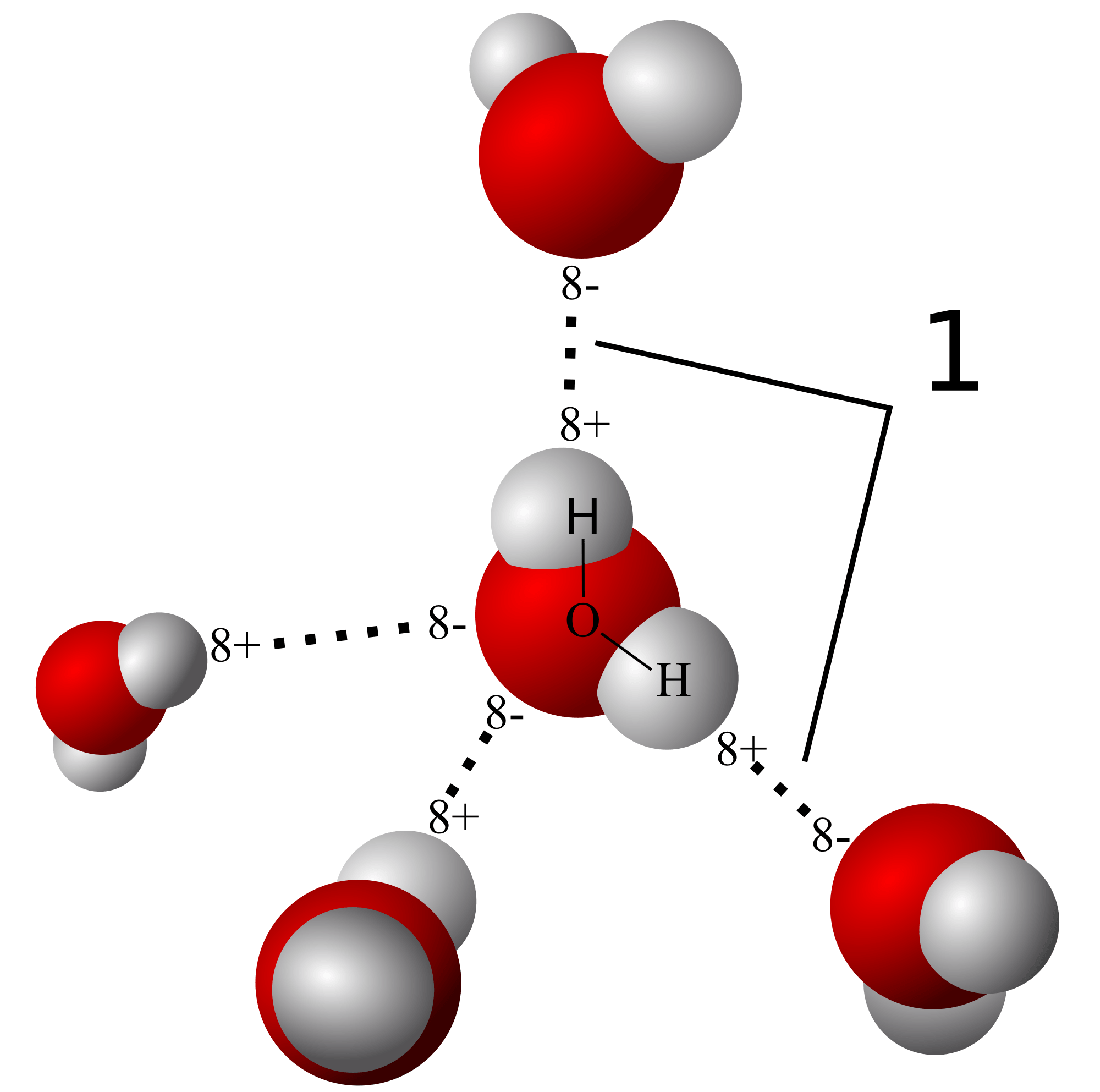

Describe COHESION.
Water molecules attracted to other substances.
Water molecules climbing upwards against the force of gravity.
Water molecules dissolving many substances because of its polarity.
Water molecules attracted to other water molecules.
Describe ADHESION.
Water molecules attracted to other substances.
Water molecules climbing upwards against the force of gravity.
Water molecules dissolving many substances because of its polarity.
Water molecules attracted to other water molecules.
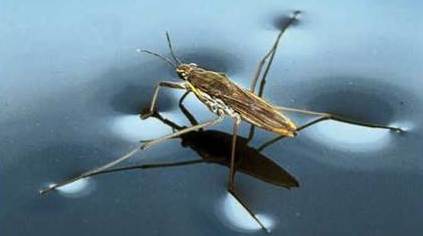

Which letter represents hydrogen?
A
B
C
D

What is the charge on the hydrogen atom?
Positive
Negative

What is the charge on the oxygen atom?
Positive
Negative
Which of the following is a property of water related to its molecular interactions?
Elasticity
Intermolecular forces (H bond)
Opacity
Malleability
Why does oxygen have a partial negative charge in a water molecule?
Oxygen has lower electronegativity than hydrogen
Oxygen shares its electrons equally with hydrogen
Oxygen has higher electronegativity than hydrogen
Oxygen loses electrons to hydrogen
What type of charge do the hydrogen atoms in a water molecule have?
Partial negative charge
No charge
Full positive charge
Partial positive charge
How many covalent bonds does each water molecule have?
One
Two
Three
Four

What type of bond is shown between water molecules in the diagram?
Ionic bond
Covalent bond
Hydrogen bond
Metallic bond
Why does water have high melting and boiling points compared to other covalent compounds?
Because of its low specific heat
Because it has weak hydrogen bonds
Because it has strong ionic bonds
Because it has strong hydrogen bonds


When water and other liquids stick together to form drops or thin films called ________________.
adhesion
capillary action
cohesion
surface tension

Large bodies of water help to keep nearby climates from being too hot or too cold because they
Absorb heat in the spring and slowly release that heat in the fall
Absorb heat in the fall and slowly release that heat in the spring
Absorb heat in the summer and slowly release that heat in the winter
Absorb heat in the winter and slowly release that heat in the summer
Oil is too heavy to mix with water
Water can only mix with polar or ionic molecules
Water can only mix with non-polar molecules
Oil is too light to mix with water

What characteristic is shown in the image?
Polarity
Hydrogen Bonds
Cohesion
Adhesion

Which statement will result in the solute not being soluble in a solvent?
Polar solute into a polar solvent.
Non-polar solute into a non-polar solvent.
NaCl solute into H2O solvent.
Polar solute into a non-polar solvent.
Which type of chemical bond is formed when electrons are shared and is a stronger bond that is not easily broken?
Ionic bond
Covalent bond
Hydrogen bond
Van der Waals force
Which statement describes an ionic bond?
Two atoms share a pair or electrons equally
Two atoms share a pair of electrons unequally
One atom gives up an electron to another, and oppositely charged atoms form a bond
One atom shares a proton equally
The electrons in a nonpolar covalent molecule are shared...
Evenly
Unevenly
Electrons are not shared
None of the Above
What is a cation's charge?
positive
negative
neutral
depends on the element
What is an anion's charge?
positive
negative
neutral
depends on the element's charge

Refer to the picture of water sticking to a leaf, this is occurring because of _______________.
adhesion
cohesion
solute
solvent
Refer to the picture of water sticking to a leaf, this is occurring because of _______________.
adhesion
cohesion
solute
solvent

