
Font size
 Worksheets
Unit 4 Chapter 2 Study Guide
Total questions: 17
Worksheet time: 9mins
What was the relationship between cotton and enslaved labor in the South?
As the supply of cotton grew, the demand for enslaved workers fell.
As the demand for enslaved workers fell, the supply of cotton grew.
As the demand for cotton grew, so did the demand for enslaved workers.
As the supply of enslaved workers grew, so did the supply of cotton.

Who is this person?
Jefferson Davis
Sojourner Truth
Frederick Douglass
William Lloyd Garrison
What is he known for? Select the three correct answers.
He was an abolitionist.
He was a newspaper publisher.
He was an author.
He was a presidential candidate.
He was an Underground Railroad conductor.
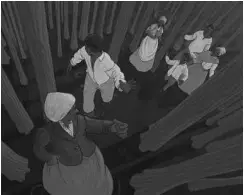
What is Harriet Tubman doing in this image?
leading Confederate soldiers into a trap
convincing Northerners that slavery is wrong
helping people escape on the Underground Railroad
reuniting families that have been separated by slavery
Eleven states left the Union after Abraham Lincoln was elected president because they thought he was going to _____________.
raise taxes
abolish slavery
sell Southern farmland
stop the spread of slavery
Why did President Lincoln send Union troops into war following the Confederacy’s attack on Fort Sumter?
He thought it was the only way to reunite the country.
He wanted to punish Southerners for leaving the United States.
He wanted to scare Confederate leaders into surrendering.
He knew it was the best chance of ending slavery in America.
What did the Emancipation Proclamation do?
It banned slavery in Union states.
It banned slavery in the United States.
It freed all enslaved people in the United States.
It freed all enslaved people in Confederate states.
What did the Thirteenth Amendment do?
It reunited the Union.
It freed enslaved Americans.
It officially ended the Civil War.
It banned slavery in the United States.
What document did the Thirteenth Amendment change?
the Declaration of Independence
the Emancipation Proclamation
the Articles of Confederation
the Constitution
the Bill of Rights
What does the Juneteenth holiday celebrate?
the end of the Civil War
the end of slavery in the United States
the end of the French and Indian War
the passage of the Fifteenth Amendment
What, to the American slave, is the Fourth of July? I answer, a day that reveals to him, more than all other days in the year, the gross injustice and cruelty to which he is the constant victim. To him, your celebration is a sham . . . Which statement summarizes the claim Douglass makes in the excerpt?
White Americans do not celebrate the Fourth of July.
The Fourth of July should be a day of celebration, not sadness.
A country that enslaves people has no right to celebrate freedom.
The Fourth of July is a fitting way to honor Americans’ struggles for freedom.
unable to be taken away or denied
privilege
unalienable right
rules
right
to end; to stop something completely
finish
done
quit
abolish
a change made to the United States
Constitution
abolitionist
change
constitutional amendment
abolition
to formally withdraw membership
quit
secede
revoke
leave
a war between people who live in the same country
civil war
fight
disagreement
French and Indian War
the act of setting or being set free
abolition
independence
freedom
emancipation

