wayground logo

Free Printable Worksheets

Font size

S
M
L
XL
Worksheets

Radioactivity and Atomic Structure

Total questions: 10

Worksheet time: 23mins

Name
Class
Date
1.
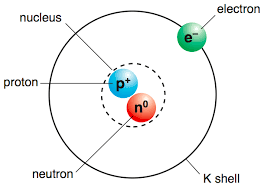
Where is the proton located?
a)
In the very dense nucleus
b)
Floating around in the negative electron cloud
c)
the loose nucleus
d)
the positive electron cloud
2.
What is the atomic number of Neon, Ne?
a)
10
b)
20.1798
c)
10.1798
d)
7
3.
Iron-60 (atomic number 26) is an isotope that is often used to study meteorites.  How many neutrons does iron-60 have?
a)
26
b)
60
c)
34
d)
86
4.
A neutral atom of the isotope 2612Mg would consist of
a)
12 protons, 26 neutrons, 26 electrons
b)
26 protons, 12 neutrons, 26 electrons
c)
26 protons, 14 neutrons, 14 electrons
d)
12 protons, 14 neutrons, 12 electrons
5.

An isotope of an element has the same number of _________, but a different number of _________.

a)

Protons, electrons

b)

Protons, neutrons

c)

Electrons, neutrons

d)

Neutrons, protons

6.
What makes something radioactive?
a)

different electrons

b)
an unstable nucleus
c)

contaminated protons

d)
It decays over time
7.
Which subatomic particles contribute the most to the mass of an atom?
a)
Protons, Neutrons, Electrons
b)
Protons only
c)
Protons and Electrons
d)
Protons and Neutrons
8.
Four isotopes of lead include lead-204, lead-206, lead-207, and lead-208.  The average atomic mass of lead is 207.2.  Which isotope of lead is likely to be the most abundant.
a)
204
b)
206
c)
207
d)
208
9.

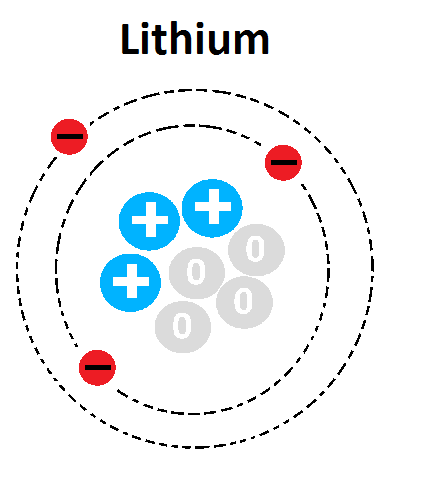
What is the mass number of this atom?

a)

1

b)

3

c)

4

d)

7

10-13.

Answer the questions below after watching the video

10.

What happens to an atom when it becomes an ion?

a)

It gains or loses protons

b)

It gains or loses neutrons

c)

It gains or loses electrons

d)

It remains unchanged

11.

How can iron form different ions?

a)

By changing its protons

b)

By bonding with other elements

c)

By losing different numbers of electrons

d)

By gaining electrons

12.

What charge does a cation carry?

a)

Neutral

b)

Variable

c)

Positive

d)

Negative

13.

What leads to the formation of anions?

a)

Gaining protons

b)

Losing protons

c)

Gaining electrons

d)

Losing electrons