
 Worksheets
Color Theory
Total questions: 25
Worksheet time: 13mins
Color theory is important for which of the following fields?
Photography
Cooking
Architecture
Music
Fill in the blank: The basis of all color theory is ______.
Light
Darkness
Contrast
Hue
According to the text, can beginners understand the basic concepts of color theory?
Yes, it's complicated but beginners can understand
No, it's too complex for beginners
Only with advanced training
Only if they are artists.
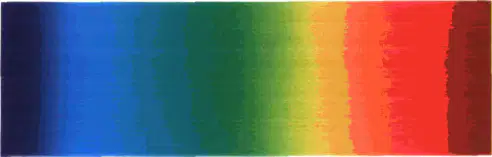
The rays in the spectrum differ in _______ and frequency.
length of waves
sound
heat
light
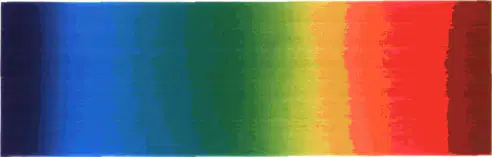
The electromagnetic spectrum includes both visible and _______ rays.
invisible
sound
heat
light

In a rainbow, which color is found in the center?
Red
Green
Blue
Violet

Which of the following is not a source of white light?
The Sun
Fire
Water
Electricity
Why do colored objects look different under various light sources?
Different light sources have the same mixture of colored rays.
Different light sources have a slightly different mixture of colored rays.
All light sources emit only white light.
Light sources do not affect color perception.
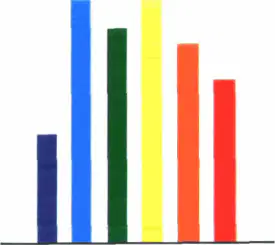
Light from a daylight fluorescent-tube lamp has more blue and ______ than red or violet rays.
green
yellow
orange
white

Fill in the blank: The light that reaches our eyes is _______ back to our eyes.
absorbed
reflected
emitted
scattered

What is necessary for us to see an object?
The object must emit light
Light must reflect off the object
The object must be transparent
The object must be opaque
Fill in the blank: The brain translates wavelengths of light into ______ sensation.
Sound
Color
Taste
Smell
What is the result when red, green, and blue light are added together in the additive system of color?
Black
White
Cyan
Yellow
True or False: Both the subtractive and additive systems can create all colors of the spectrum.
True
False
In the subtractive system, which color is NOT used as a primary?
Magenta
Cyan
Yellow
Blue
Which term is the basic name of a color on the color wheel?
hue
intensity
value
What is the term for colors that are opposite each other on the color wheel?
Analogous colors
Complementary colors
Monochromatic colors
Triadic colors
What does the term "analogous colors" refer to?
Colors that are next to each other on the color wheel
Colors that are directly opposite each other on the color wheel
A single color in various shades
A set of three colors evenly spaced around the color wheel

What type of image is this?
Monochromatic
Polychromatic


What type of image is this?
Monochromatic
Polychromatic

YELLOW + RED =
what color do they make?


BLUE + YELLOW =
what color do they make?


RED + BLUE =
what color do they make?



