
 Worksheets
Atomic Theories
Total questions: 20
Worksheet time: 17mins
Name
Class
Date
1.
"Everything is composed of atoms" was stated by:
a)
Democritis
b)
Dalton
c)
Moseley
d)
Einstein
2.
John Dalton stated:
a)
elements are made of atoms
b)
atoms of a given element are identical
c)
atoms cannot be subdivided, created, nor destroyed
d)
all of the above
3.
The scientist responsible for "discovering" the nucleus is:
a)
Bohr
b)
Rutherford
c)
Schroedinger
d)
Einstein
4.
The scientist responsible for "discovering" the nucleus is:
a)
Bohr
b)
Rutherford
c)
Schroedinger
d)
Einstein
5.
The nucleus of an atom can be described as:
a)
spacious and negatively charged
b)
dense and positively charged
c)
spacious and positively charged
d)
dense and negatively charged
6.
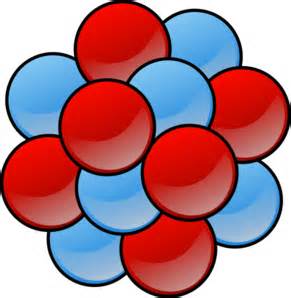
What does the nucleus of an atom contain?
a)
Electrons and neutrons
b)
Protons and neutrons
c)
Neutrinos and positrons
d)
DNA and RN
7.
The word "atom" comes from a Greek word that means
a)
Invisible
b)
Indivisible
c)
Undivided
8.
Electrons can be found in
a)
The protons
b)
The nucleus
c)
Electron Clouds
9.

The positively charged particles of an atom are the ________.
a)
electrons
b)
protons
c)
neutrons
d)
protons & neutrons
10.
What is at the center of every atom?
a)
An electron
b)
A compound
c)
A molecule
d)
A nucleus
11.
All matter is made of _________.
a)
energy
b)
atoms
c)
electrons
d)
compounds
12.

The subatomic particles that make up an atom.
a)
solid, liquid, gas
b)
electrons, protons, nucleus
c)
energy, protons, nucleus
d)
electrons, protons, neutrons
13.

__________ are negatively charged particles that are in the orbitals around the nucleus.
a)
protons
b)
nucleus
c)
neutrons
d)
electrons
14.

Which is an electron?
a)
A
b)
B
c)
C
15.
He developed the planetary model of the atom.
a)
Rutherford
b)
Bohr
c)
Chadwick
d)
Dalton
16.

What scientist is best known for his "Plum Pudding" model of the atom?
a)
J.J. Tomson
b)
Ernest Rutherford
c)
John Dalton
d)
Democritus
17.

Rutherford concluded that the atom
a)
has a nucleus with a positive charge
b)
has a nucleus with a negative charge
c)
is a small mass with negative and positive charges
d)
contains a nucleus without a charge
18.
The smallest particle into which an element can be divided and still be the same substance
a)
neutron
b)
atom
c)
electron
19.

Who stated that all atoms of the same element are exactly alike?
a)
Democritus
b)
Dalton
c)
Thomson
d)
Bohr
20.

Place the following scientists in order, from earliest to latest:
Rutherford, Dalton, Bohr, Thomson
Rutherford, Dalton, Bohr, Thomson
a)
Dalton, Rutherford, Bohr, Thomson
b)
Thomson, Dalton, Rutherford, Bohr
c)
Dalton, Thomson, Rutherford, Bohr
d)
Bohr, Dalton, Rutherford, Thomson
100 %

