
NEW
Font size
 Worksheets
Chemistry Quiz
Total questions: 13
Worksheet time: 7mins
How does the atomic radius change across a period?
It increases from left to right
It decreases from left to right
It stays the same across the period
It increases from right to left
Which intermolecular force is present between water molecules?
Ionic bonds
Covalent bonds
Hydrogen bonds
Van der Waals forces
The electrons that are on the outer most shell of the atom called.
Shell Electrons
Valence Electrons
Violent Electrons
Random electrons
In which type of decay does the nucleus emit energy in the form of electromagnetic waves?
Alpha decay
Beta decay
Gamma decay
Neutron decay
Which of the given choices correctly shows the three main groups of elements listed from least conductivity to greatest conductivity?
Metals, Nonmetals, Metalloids.
Nonmetals, Metalloids, Metals.
Metalloids, Metals, Nonmetals.
Nonmetals, Metals, Metalloids.
A radioactive isotope has a half-life of 30 minutes. What fraction of the nuclei will have remained after 60 minutes?
1/2
1/4
1/8
1/16
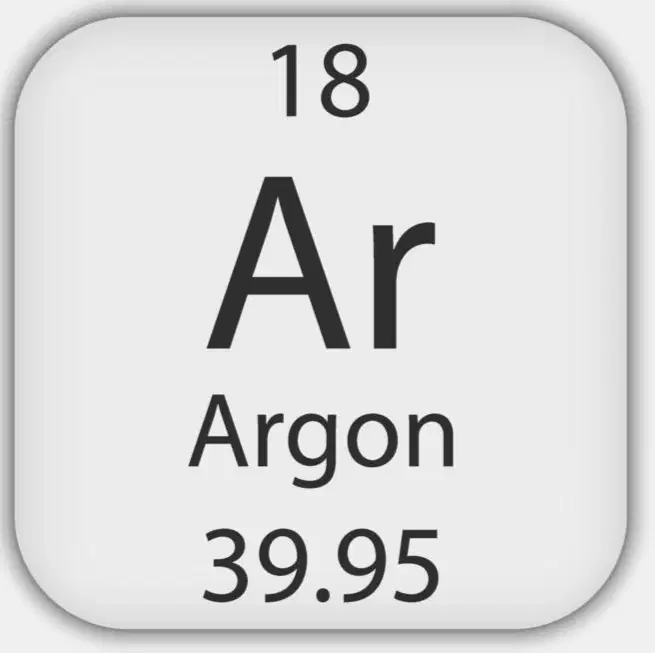
Look at the image of the symbol of the Argon element from the periodic table. How many protons are in an Argon atom?
18 protons
40 protons
21.9 protons
22 protons
What does the "sea of electrons" allow in metallic bonding?
High melting points.
Free movement of electrons.
Formation of ionic bonds.
Polar covalent bonds.
What would be the general formula unit of a compound made with a Group 1 element, A, and a Group 16 element, Z, from the periodic table? Refer to the periodic table.
AZ
AZ2
AZ16
A2Z
Which statement best explains why oil and water do not mix?
Water molecules are polar, and oil molecules are nonpolar.
Oil molecules are polar, and water molecules are nonpolar.
Water molecules are carbon-based, and oil molecules are not.
Oil and water both have covalent bonds and repel one another.
What is the charge of a neutron in an atom?
Negative
Neutral
Positive
Variable
Which type of bond involves the sharing of electron pairs between atoms?
Covalent bond
Hydrogen bond
Ionic bond
Metallic bond
What is the primary reason for the formation of ionic bonds?
Transfer of electrons
Sharing of electrons
Hydrogen bonding
Magnetic attraction

