
 Worksheets
Road to .....And American Revolution
Total questions: 86
Worksheet time: 51mins
Imagine Maya, Mia, and Noah are time-traveling back to 1663! They stumble upon a document titled 'The Navigation Act'. What was the main purpose of this act they discovered?
To tax European goods destined for the American colonies
To enforce tax laws on ships leaving colonial ports
To regulate trade between the colonies and England
To restrict colonial education and shipbuilding
What role did the Navigation Acts play in colonial labor practices?
They encouraged free labor by allowing colonists to hire workers at will
They regulated trade and reinforced England’s control over colonial resources
They required all colonial goods to be shipped on African vessels
They banned the use of indentured servants and African slaves
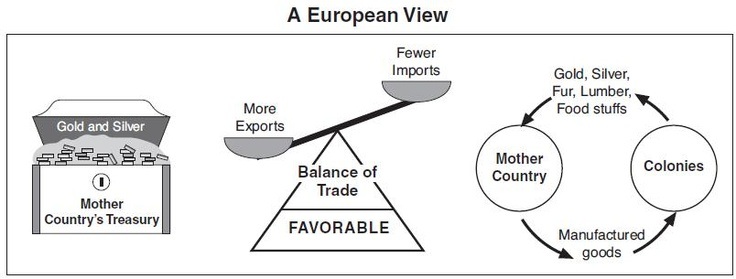
What is mercantilism?
A system where a mother countries gains money and power from natural resources that come from its colonies.
where colonies trade gold and silver with each other.
Wars that start over money.
Plantation colonies trading slaves for money.
Why did Britain seek to tax the colonists in the 1760s?
The colonists were wealthier than most British citizens.
Britain needed money to pay for the French and Indian War.
The British wanted to punish the colonists for rebelling against the Proclamation.
Britain needed money to protect the colonists from the French.
Which of the following best describes the Great Awakening?
A political movement in colonial America
A religious revival in colonial America
A social reform movement in colonial America
A scientific revolution in colonial America
According to the ideals of government as espoused by the Enlightenment, all citizens have the right to life, liberty, and property. These rights are known as
civil rights
states rights
natural rights
federal rights
What was salutary neglect?
Britain was strictly controlling the colonies
Britain left the colonies to govern themselves
Britain sent an army to the colonies
Britain sold the colonies to France
What was the goal of the Navigation Acts?
To loosen up restrictions on the colonies
To help people navigate the ocean
To regulate trade so England could make more money
To sell the colonies to France
Why did the British government begin enforcing taxes on the colonists?
they were rebelling and they wanted to keep them in line
they felt the colonists should pay for the French & Indian War
they were not making enough money through mercantilism
they didn't enforce the taxes, they had the option to pay them
Is it mercantilism or salutary neglect-
The colonies must send resources to England to turn into goods
Mercantilism
Salutary Neglect
Is it mercantilism or salutary neglect-
They must use British ships manned by British crew for all importing and exporting
Mercantilism
Salutary Neglect
Is it mercantilism or salutary neglect-
Colonists began to get a separate identity and begin ruling themselves- We're American!
Mercantilism
Salutary Neglect
What reason did Parliament give for raising taxes in the colonies after 1763?
the colonists should help pay for the cost of the French & Indian War
colonists should be punished for protesting against taxes
colonists were ignoring the Proclamation Line
colonists did not live in England, but enjoyed English rights
The main source of income for France in the New World was the fur trade.
True
False
During the French and Indian War the British and the French were fighting over control of which area?
Mississippi River Valley
Connecticut River Valley
Pennsylvania River Valley
Ohio River Valley
Who won the French and Indian War?
Great Britain
France
Spain
Native Americans
This created a temporary boarder at the Appalachian Mountains, restricting movement west for the colonists..
Treaty of Paris
Colonial Boarder 1763
Proclamation of 1763
Northwest Ordinance
Why were colonist not happy with the Proclamation of 1763?
They didn't want the Natives to have the land in the West.
They don't like being told what to do.
They would lose trade in the West.
They had just fought a war to win land that they now couldn't move to.
What impact did the Great Awakening have on religious authority?
It strengthened the authority of the church
It made everyone equal in the eyes of God
It eliminated the need for preachers
It increased the power of civil rulers
How did merchants avoid paying the sugar tax?
not using them
smuggling goods into the country
made their own sugar
just paid the taxes anyway
The Stamp Act taxed all ________ goods.
paper
plastic
pollution
Why did the British government decide to tax the colonies?
A. To pay for a new palace for King George
B. To pay for a war against Spain
C. To pay for the French and Indian War
D. To pay for improvements in the city of London
Why did the American colonists protest against the Sugar Act?
A. Because they the colonists did not have money
B. Because they already paid high taxes
C. Because they were being taxed without discussing the Sugar act in the Parliament
D. None of the above.
Why did the American colonists protest against the Sugar Act?
A. Because they the colonists did not have money
B. Because they already paid high taxes
C. Because they were being taxed without discussing the Sugar act in the Parliament
D. None of the above.
What was the purpose of the Townshend Acts?
To promote trade between the American colonies and Great Britain.
To establish a system of self-governance in the American colonies.
To provide financial support for the British military in the American colonies.
To impose taxes on imported goods in the American colonies.
How did the colonial response to the Townshend Acts?
formed alliances with British merchants to increase trade
accepted the Townshend Acts and complied with British demands
petitioned the British government for more taxes
organized boycotts and protests against British goods
What were the outcomes of the colonial response to the Townshend Acts?
Protests, boycotts, and repeal of most Townshend Acts
Violent riots, increased taxation, and acceptance of the Townshend Acts
Peaceful negotiations, implementation of additional taxes, and expansion of the Townshend Acts
Supportive demonstrations, reduction of taxes, and continuation of the Townshend Acts
Which acted stated the right of the British to tax the colonies?
Sugar Act
Stamp Act
Proclamation of 1763
Declaratory Act
Who was the King of Great Britain during the French and Indian War?
King Louis XVI
King George II
King George III
King Charles I
Colonists that sided with the American cause for freedom were called...
Loyalists
Tories
Patriots
Redcoats
The economic policy that made the "mother country" rich by not letting colonies trade with anyone else was known as...
Salutary Neglect
Free Market System
Capitalism
Mercantilism
British law stating colonists had to house and feed British soldiers.
Sugar Act
Stamp Act
Quartering Act
Townshend Act
On December 16, 1773, 342 crates of tea were tossed in Boston Habor in an act of rebellion. This act is now known as ________________.
The Boston Rebellion
The Boston Tea Party
England punished the colonists for the Boston Tea Party by passing the _______________________.
Coercive Acts
The Tea Party
Which of these was NOT part of the Coercive Acts?
An increase in the taxes paid on paint and glass
A blockade of Boston Harbor
What was the effect of the Coercive Acts?
Colonial rebellion against England decreased
Colonial rebellion against England increased
The First Continental Congress urged colonists to _____________ British goods if the Coercive Acts were not repealed.
Purchase
Boycott
British soldiers were marching to Lexington and Concord to _____________.
Capture Hancock and Adams and destroy colonial weapons
Collect tax money from the towns
Repeal means to
make something happen
pay taxes
cancel an act or law
import or export goods illegally
Boycott means
refuse to buy
buy at a discount
import or export illegally
fight in a war

This act required colonists to buy a stamp each time they registered a legal document, bought newspapers, pamphlets, and almanacs.
Tea Act
Sugar Act
Intolerable Acts
Stamp Act

Clash between Boston rioters and British Troops that left 5 colonists dead.
Boston Tea Party
Intolerable Acts
Boycott
Boston Massacre

Series of Acts designed to punish Colonists for the Boston Tea Party
Townshend Acts
Martial Law
Intolerable Acts
Tyranny

Delegates meet to declare American independence from Great Britain
1st Continental Congress
2nd Continental Congress
Which phrase become popular among colonists in response to England imposing taxes?
“No taxation without representation”
“The rights of Englishmen”
“Life, liberty, and the pursuit of happiness”
“Give me liberty or give me death”
The Continental army was composed of _____________.
troops from all the colonies.
troops from throughout Great Britain
only troops from the New England colonies.
only troops from Virginia and Massachusetts.
What effect did 'Common Sense' have in the colonies?
It persuaded many colonists that America should be independent.
It instilled fear of war in the colonies.
It convinced the colonies to remain loyal to Great Britain.
It petitioned the king to end the quarrel between the colonies and Great Britain.
What was the purpose of the Olive Branch Petition?
to ask King George to make peace with the colonies.
to persuade British troops to leave Boston.
to encourage colonists to join the army.
to convince Parliament to repeal the Stamp Act.
Why was the Declaration of Independence written?
to explain why the colonies were separating from Great Britain
the start the American Revolution
to offer a peace settlement to Great Britain.
to instruct how a county wins its freedom.
How do natural rights, as described in the Declaration of Independence, differ from other rights?
People are born with natural rights.
People can vote to choose natural rights
Natural rights are given only to citizens.
Natural rights come from the government.
According to Thomas Jefferson, the power to rule comes from
the governed.
God
Parliament.
the king.
Why did Thomas Jefferson say that King George III was an unfit ruler?
He denied the colonists their rights.
He was not born in Great Britain
He was not elected by Parliament
He lived far away from the colonies.
What is the official name of the army George Washington commanded during the Revolutionary War?
Continental Army
Patriot Army
The Minutemen
American Army
1. True or False: The French were the Patriots' greatest ally during the American Revolution
True
False
2. The last MAJOR battle of the American Revolution was the __________.
Battle of Bunker Hill
Battle of Trenton
Battle of Yorktown
Battle of Lexington
Colonists who chose to side with the British were known as
Patriots
Loyalists
This treaty formally ended the American Revolution
Treaty of Ghent
Treaty of Boston
Treaty of Paris of 1783
The Battle of Saratoga was significant in the Revolutionary War because it
ended the British threat to the South
convinced the French to support the Americans
guaranteed Canadian help for the colonists
forced the British to withdraw from North America
What are unalienable rights?
rights given by the president
rights the government can't take away from you
rights given by congress
During the American Revolution, colonists rebelled against
Great Britain
France
Spain
United States
Which of the following is a strength of the British army?
They had a professional army
They were fighting a war across the ocean
They were not familiar with the land or culture of the colonies
Which of the following was a weakness of the American colonies?
They had the biggest army in the world.
Their army was disorganized.
They knew the land and how to get around.
They were determined to win.
What year did the American Revolution officially end?
1776
1783
2023
1800
What was the name of the treaty that ended the war?
Treaty of London
Treaty of Paris
Treaty of Philadelphia
Treaty of Versailles
After the war, the new United States got all of the land between
the Rockies and the Pacific Ocean
the Appalachian Mountains and the Mississippi River
the Atlantic Ocean and the Appalachian Mountains
the Mississippi River and the Rocky Mountains
The First Continental Congress
Was a meeting of delegates in Philadelphia to decide what to do about the British
Was a meeting of delegates in New York City to decide what to do about the British
Was a meeting of delegates in Atlanta to decide what to do about the British
Was a meeting of delegates in Virginia to decide what to do about the British

F
G
H
J
F
G
H
J

A
B
C
D

F
G
H
J

A
B
C
D

A
B
C
D

A
B
C
D
The most important accomplishment at the Second Continental Congress was...
naming George Washington commander in chief
creating the Continental Army
writing the Declaration of Independence

