
 Worksheets
ELISA Quiz Part 1
Total questions: 24
Worksheet time: 12mins
What does ELISA stand for?
Enzyme Linked Immunosorbent Assay
Enzyme Linked Immunosuppressant Assay
Enzyme Linked Immunoglobulin Assay
Enzyme Linked Immunoassay
What is the purpose of the solid phase in ELISA?
To provide a surface for antigen/antibody attachment
To enhance the color reaction
To dilute the enzyme
To increase the temperature
What is adsorption in the context of ELISA?
The process of adding an antigen/antibody to a solid phase
The process of removing antibodies from a solution
The process of heating the enzyme
The process of changing the pH of the solution
What is the role of washing in ELISA?
To separate bound from unbound reagents
To increase the enzyme activity
To change the color of the substrate
To decrease the temperature
What is an antigen?
A protein produced in response to stimuli
A molecule that elicits antibody production
An enzyme attached to an antibody
A chemical that alters color
What is the role of antibodies?
To alter color as a result of enzyme interaction
To stop the action of an enzyme
To produce proteins in response to antigenic stimuli
To measure color in ELISA
What is an enzyme conjugate?
A molecule that elicits antibody production
A chemical that alters color
An enzyme attached irreversibly to an antibody
A process of stopping enzyme action
What is a chromogen?
A protein produced in response to stimuli
A chemical that alters color due to enzyme interaction
An enzyme attached to an antibody
A process of stopping enzyme action
What is the purpose of stopping in enzyme reactions?
To produce antibodies
To alter color
To stop the action of an enzyme on a substrate
To measure color in ELISA
What is the function of reading in ELISA?
To produce antibodies
To alter color
To measure color spectrophotometrically
To stop enzyme action
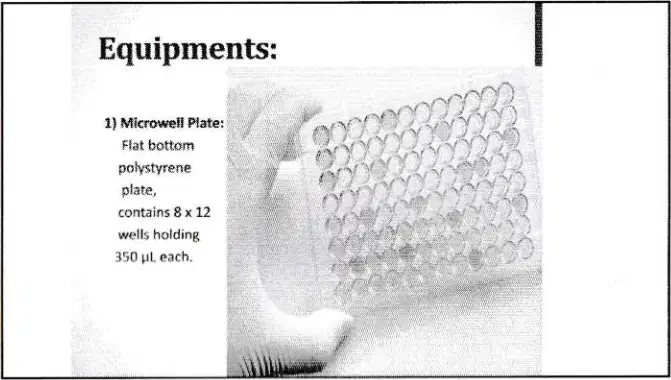
What is a microwell plate used for?
To measure color in ELISA
To hold samples in 8 x 12 wells
To alter color due to enzyme interaction
To stop enzyme action
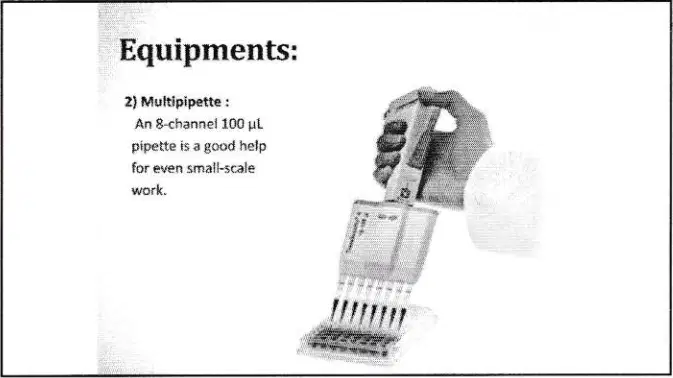
What is a multipipette used for?
To measure color in ELISA
To hold samples in 8 x 12 wells
To dispense liquid in small-scale work
To stop enzyme action
Which of the following enzymes is used in ELISA?
Alkaline phosphatase
Amylase
Lipase
Trypsin
What is a characteristic of a microplate washer used in ELISA?
High carry-over contamination
Very efficient with low carry-over contamination
Manually operated
Used for heating samples

Which type of ELISA is based on the procedure?
Direct
Indirect
Sandwich
All of the above
What is a function of a washing device in ELISA?
To heat samples
To manually wash samples
To freeze samples
To measure sample pH
What type of ELISA uses a primary labeled antibody that reacts directly with the antigen?
Indirect ELISA
Sandwich ELISA
Direct ELISA
Competitive ELISA
Which ELISA technique involves the use of a secondary anti-isotype antibody?
Direct ELISA
Indirect ELISA
Sandwich ELISA
Competitive ELISA
In which ELISA is the antibody immobilized on a microtiter well?
Direct ELISA
Indirect ELISA
Sandwich ELISA
Competitive ELISA
What is used to measure the absorbance of all wells in a 96-well plate in seconds?
Enzyme-linked immunosorbent assay
Spectrophotometric plate readers
Microtiter plate
Colorimetric assay
What is the purpose of the competitive ELISA technique?
To measure the amount of antigen by using a labeled antibody
To measure the amount of antigen by using a sample containing antigen
To measure the amount of antigen by using a substrate
To measure the amount of antigen by using a microtiter well
In competitive ELISA, what happens when more antigen is present in the sample?
More free antibody is available to bind to the antigen-coated well
Less free antibody is available to bind to the antigen-coated well
The color reaction is inhibited
The substrate is not added
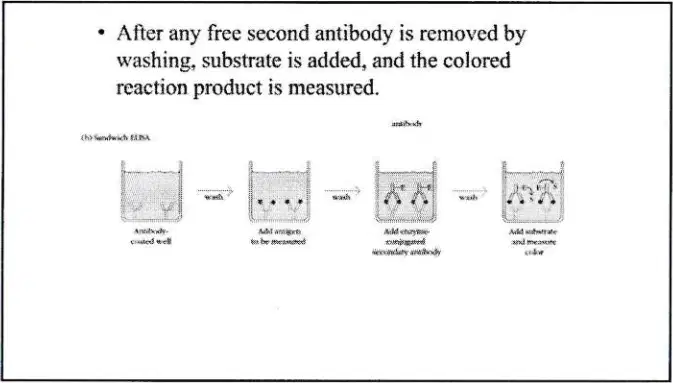
What is added after any free second antibody is removed in the Sandwich ELISA?
Antigen
Substrate
Primary antibody
Microtiter well
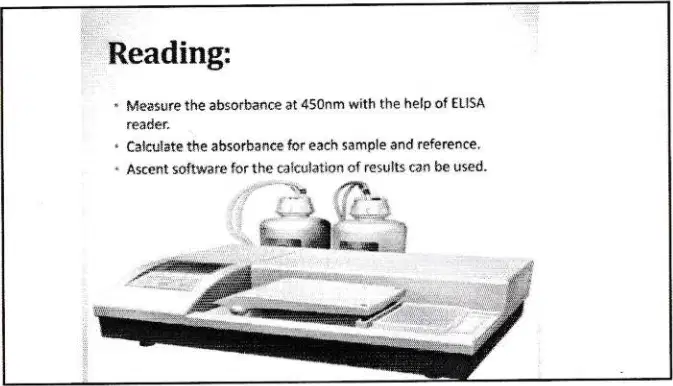
What is the purpose of measuring absorbance at 450nm in ELISA?
To determine the concentration of antibodies
To detect the presence of viruses
To measure the pH level
To calculate the temperature

