
 Worksheets
DNA History
Total questions: 14
Worksheet time: 18mins
Name
Class
Date
1.
What does DNA do?
a)
a. It carries genetic codes from parents to offspring.
b)
a. It carries oxygen from the lungs to the body.
c)
a. It tells you who you are.
d)
a. It defines the organism.
2.
What is the shape of a DNA?
a)
Double Helix
b)
Base Pairing
c)
The shape of you
d)
Hydrogen Bonding
3.
Adenine, Cytosine, Guanine and Thymine are examples of
a)
DNA structure
b)
DNA bases
c)
DNA double helix
d)
DNA sugars
4.
The sequence of bases forms the
a)
Genetic Code
b)
DNA base pair
c)
Double Helix
d)
Paired bases
5.
What holds the DNA bases together?
a)
Hydrogen bonds
b)
DNA bases
c)
Double Helix
d)
Paired bases
6.
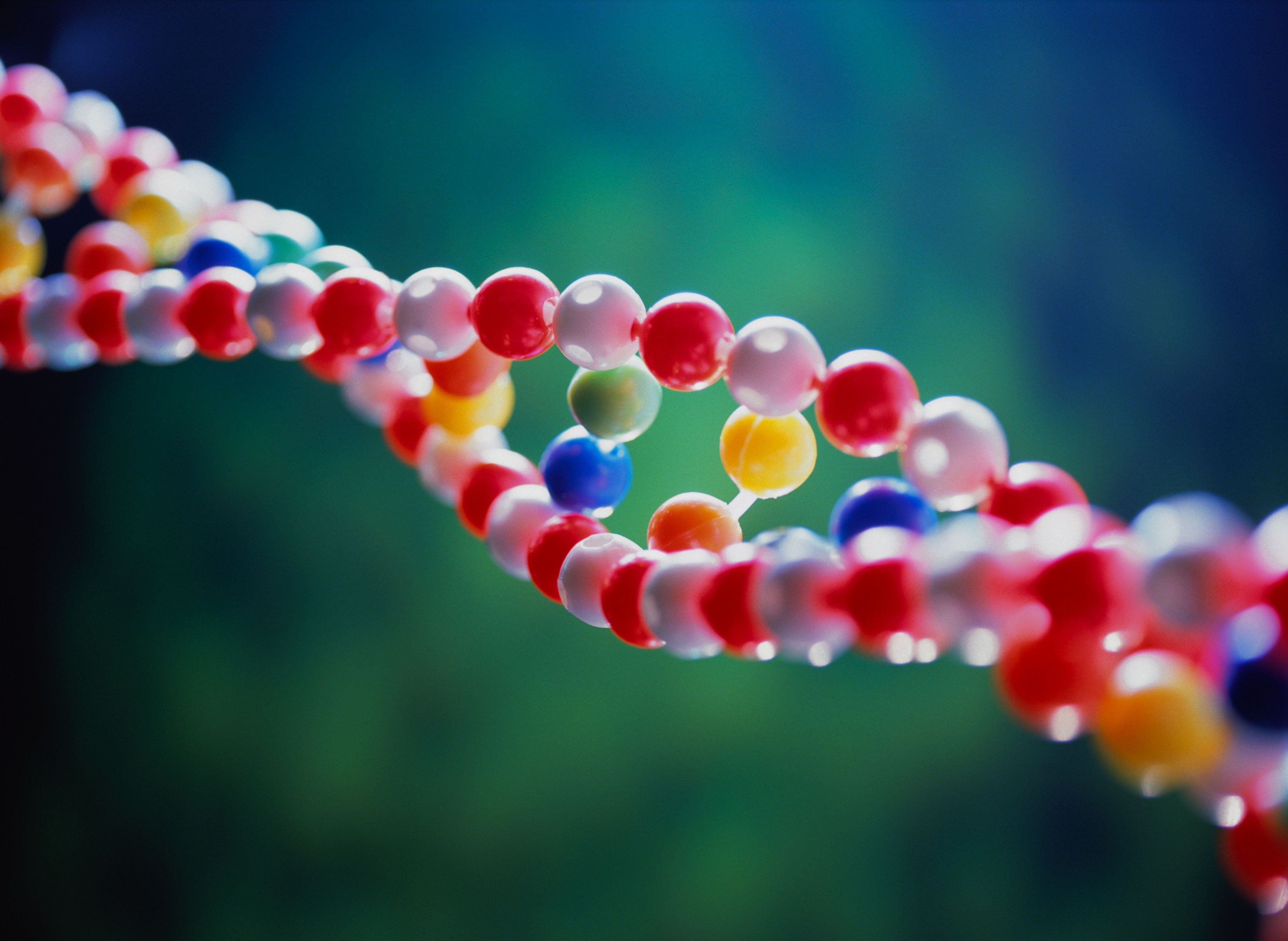
Why is DNA important?
a)
it is very small and very complicated
b)
it's in everything
c)
it serves as the blueprint for traits of all living things
d)
because we eat it every day for energy
7.
Which 2 molecules form the sides (backbone) of the DNA ladder?
a)
deoxyribose sugar and adenine
b)
deoxyribose sugar and a hydrogen bond
c)
deoxyribose sugar and the nucleus
d)
deoxyribose sugar and phosphate
8.
What are the three components of a nucleotide?
a)
sugar, hydrogen, nitrogen base
b)
sugar, oxygen, nitrogen base
c)
sugar, phosphate, nitrogen base
d)
sugar, phosphate, protein
9.

Who is responsible for producing this image?
a)
Erwin Chargaff
b)
Eugene Levine
c)
Rosalind Franklin
d)
Watson and Crick
10.
Who developed the general model of DNA that we use today?
a)
Rosiland Franklin
b)
Watson & Crick
c)
Eli Whitney
d)
Robert Oppenheimer
11.
What enzyme unzips the DNA strands to allow replication to occur?
a)
polymerase
b)
ligase
c)
helicase
d)
primase
12.
What was Watson and Crick's main scientific accomplishment?
a)
Building the first accurate model of DNA
b)
Isolating strains of pneumonia causing bacteria
c)
Determining base pairing rules
d)
Discovering the process of genetic transformation
13.
Adenine bonds with ______________.
a)
Guanine
b)
Thymine
c)
Cytosine
d)
Adenine
14.
The two strands of DNA are held together by what type of bond?
a)
Ionic
b)
Covelant
c)
Polar
d)
Hydrogen
100 %

