
 Worksheets
Music Theory For The Guitar
Total questions: 37
Worksheet time: 12mins
What is the main goal of the two workshops mentioned in the material?
To learn advanced guitar techniques
To introduce basic, fundamental theory for guitarists
To perform in a concert
To learn about guitar history

What is the focus of workshop 2?
Learning guitar maintenance
Practising theory to create your own music
Studying famous guitarists
Learning to read music sheets

Why is it important to learn the material mentioned in the document?
It will help you become a better guitarist.
It will make you a famous musician instantly.
It will allow you to play any instrument.
It will guarantee you a music award.
What benefit does understanding other people's music provide?
It helps you write your own music.
It allows you to copy their style.
It makes you a faster player.
It ensures you win competitions.
Why can theory seem overwhelming according to the text?
It is too simple.
It covers everything.
It is not important.
It is only for experts.
What is the attitude towards learning theory as a guitarist, according to the text?
It is unnecessary.
It is very difficult.
It can make a massive difference.
It is only for professionals.
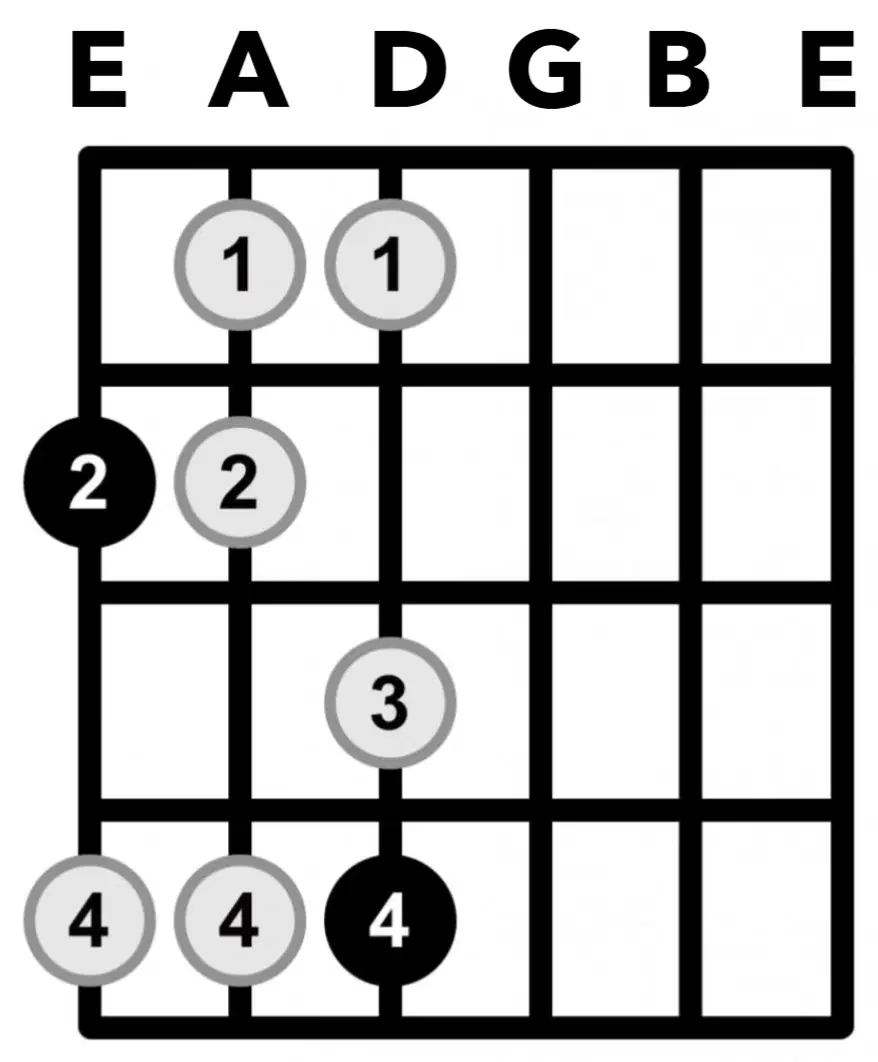
What does the diagram represent in terms of musical scales?
One octave of the major scale
A minor chord progression
A pentatonic scale
A blues scale
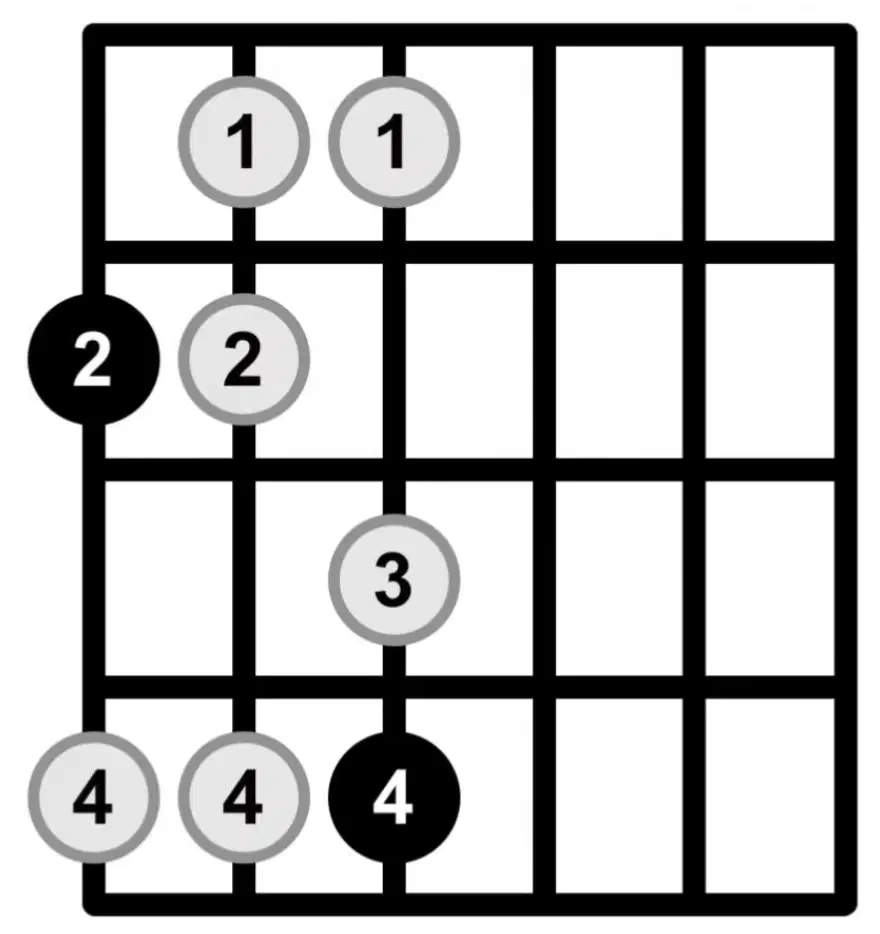
What do the numbers on the guitar diagram represent?
The strings to play
The fingers you should use
The frets to press
The notes to play
Where can you play this scale on the guitar neck?
Only at the top of the neck
Only at the bottom of the neck
Anywhere on the neck
Only in the middle of the neck
What is important to learn at this stage according to the text?
The individual names of the notes
The colour of the guitar
The distance between each note in the scale
The type of instrument
What relationship is crucial to understand in the scale?
The relationship between the 1st note and all the others
The relationship between the guitar strings
The relationship between different instruments
The relationship between the notes and their names
What is the term used to describe the musical distance between notes?
Degrees
Tones
Language
Root
What is the name given to a note in a scale based on its position relative to the 1st note?
Tones
Language
Degrees
Scale
What is another name for the 1st note in a scale?
Tones
Root
Degrees
Language
What is the interval between the 3rd and 4th degree in the sequence?
Tone
Semi-Tone
Whole Note
Half Note
How many semitones are in a Tone?
1
2
3
4
What is the interval between the 5th and 6th degree in the sequence?
Tone
Semi-Tone
Whole Note
Half Note
What is the interval between the 7th and 8th degree in the sequence?
Tone
Semi-Tone
Whole Note
Half Note

What does the symbol "T" represent in the diagram?
Root
Tone
Semi-tone
Note
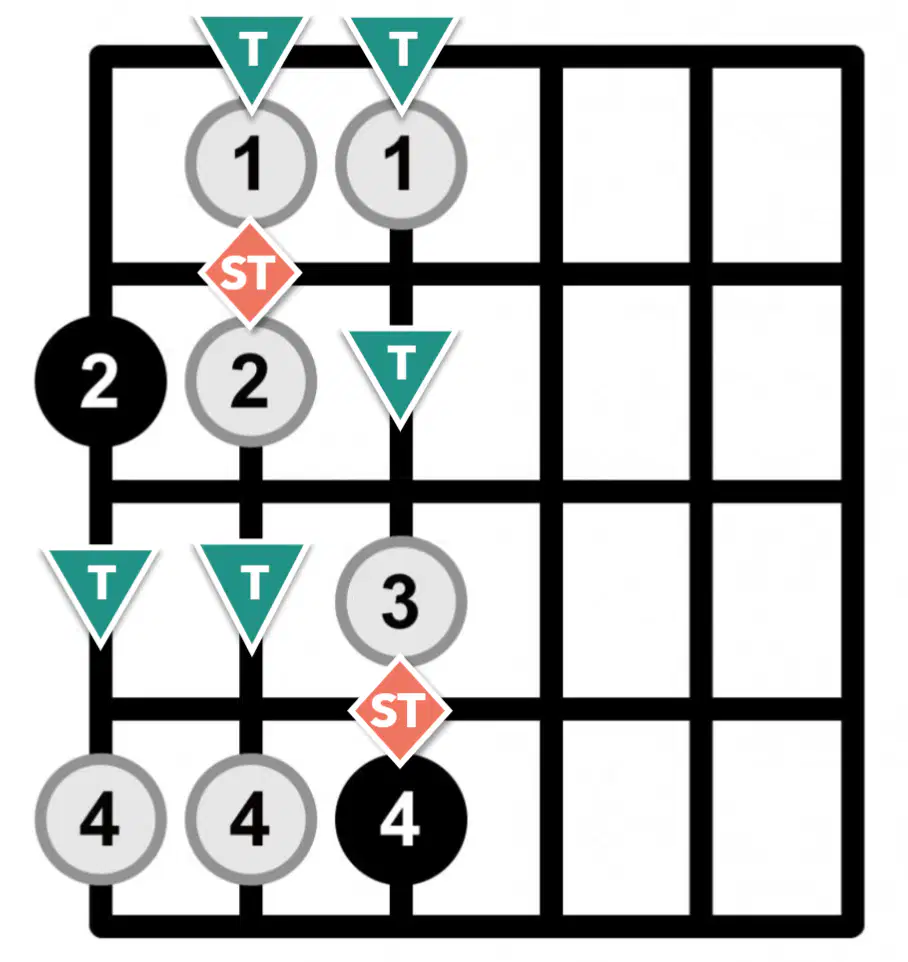
What does the symbol "ST" stand for in the diagram?
Root
Tone
Semi-tone
Scale
According to the text, what can you do once you know how to describe the scale?
Play any instrument
Describe any scale using the same language
Write music
Sing any song
What type of chord is associated with the 1st degree in a major key?
Minor
Major
Diminished
Augmented
Which degree in a major key is associated with a diminished chord?
3rd
5th
7th
2nd
What is the interval pattern for a major scale?
T, ST, T, T, ST, T, T
T, T, ST, T, T, T, ST
T, T, ST, T, T, ST, T
ST, T, T, ST, T, T, T
Which degree in a major key is associated with a minor chord?
1st
4th
6th
5th
What is the chord type for the 1st degree in a major key?
Minor
Major
Diminished
Augmented
Which chord corresponds to the 5th degree in a major key?
C
D
G
A
What is the chord type for the 7th degree in a major key?
Major
Minor
Diminished
Augmented
Which degree corresponds to the chord 'E' in a major key?
2nd
3rd
4th
5th
What is the chord type for the 1st degree in a major key?
Minor
Major
Diminished
Augmented
Which degree in a major key is associated with a diminished chord?
2nd
5th
7th
3rd
What is the chord for the 5th degree in the key of G major?
A
C
D
E
In a major scale, what is the interval between the 3rd and 4th degrees?
Tone
Semitone
Whole tone
Minor third

What can we learn by understanding the Major scale and the language used to describe it?
To play any of the 12 major scales and chords in each of the 12 Major Keys
To play only one major scale
To play minor scales only
To play any instrument without learning scales
How many minutes a day should you spend playing the major scale in different positions on the guitar?
5 minutes
10 minutes
15 minutes
20 minutes
What should you think about while playing the scale?
Root, Tone, and Semi-Tone relationships
Chord progressions
Tempo and rhythm
Lyrics and melody
What can you build once you have mastered the scale?
Major, Minor, or Diminished chords
Lyrics and melody
Tempo and rhythm
Chord progressions

