
 Worksheets
Science Q2 Review 2024-2025
Total questions: 35
Worksheet time: 35mins

When comparing fossil A to fossil B, which is most likely correct?
Fossil B is larger.
Only fossil B was once an organism.
Fossil B is older.
Only fossil B is metamorphic.
Which layer is thicker than the outer core?
Crust
Mantle
Outer Core
Inner core
Lava cools to form:
sandstone
metamorphic rock
igneous rock
sedimentary rock
How does metamorphic rock become igneous rock?
By heating and squeezing.
By squeezing and cementing.
By melting into magma or lava and then cooling and hardening.

Which term is represented by box B?
Metamorphic Rock
Sedimentary Rock
Igneous Rock
Sediments
Which term is represented by box C?
Metamorphic Rock
Sedimentary Rock
Igneous Rock
Sediments
Which term is represented by box E?
Metamorphic Rock
Sedimentary Rock
Igneous Rock
Sediments
What happens to the temperature within Earth as the pressure increases?
The temperature remains the same.
The temperature decreases and then increases.
The temperature increases.
The temperature decreases.
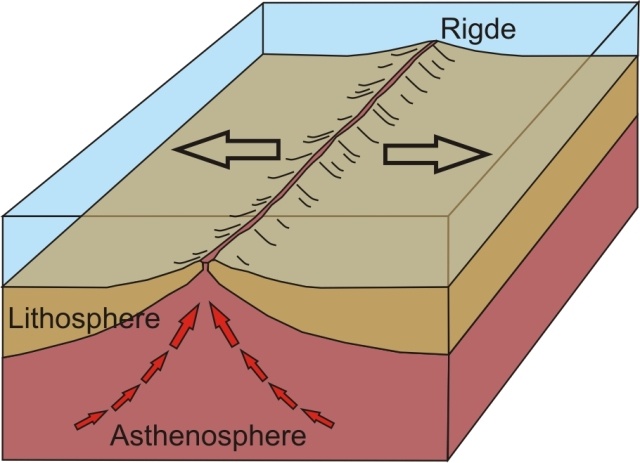
The ____is formed where two tectonic plates meet under the ocean.
trench
mountain range
mid-ocean ridge
fault
A natural process that slowly breaks down or changes rocks on the Earth's surface.
(a)
The Earth's outer core is made up of _____ and nickel.
rock
iron
magma
convection currents
Areas where the earth plates meet are called _____.
energy
boundaries
tectonic plates
trenches
The geological process where material is added to land.
ice
erosion
weathering
deposition
The process by which water, wind, and other natural forces cause rocks and earth to wear away.
weathering
erosion
deposition
water
Means "made of heat or fire". Formed when lava or magma cools and solidifies.
metamorphic
sedimentary
igneous
river rock
What nonrenewable energy source comes from the remains of ancient swamp plants?
biomass
natural gas
oil
coal
Non-renewable Energy sources -
never run out
are good for the environment
coal, oil, and natural gas
wind, solar, and geothermal
Renewable energy sources can be made up of living and nonliving things -
True
False

Coal is a
Renewable resource
Nonrenewable resource
Resources that naturally exist on Earth
Man made resources
Natural resources
Space resources

Natural gas is a...
Renewable resource
Nonrenewable resource

Hydropower (uses the motion of water to turn turbines, creating electricity) is a
Renewable resource
Nonrenewable resource

Solar energy (from the sun) is a...
Nonrenewable resource
Renewable resource
Richard designed an experiment to test different materials to determine if they were an insulator or a conductor. He tested a wooden Popsicle stick, a plastic spoon, a metal spoon, and an eraser. He set up a simple circuit connecting a battery to a light bulb with a small gap. One at a time he connected the circuit with the chosen test materials and recorded whether the light bulb came on.
Based on what you know about electrical conductors, which material made the bulb shine?
The wooden Popsicle stick
A plastic spoon
A metal spoon
An eraser

The diagram shows an electrical circuit with a buzzer.
The students noticed that the buzzer was not making any sounds.
What could be done to make this buzzer work?
Add another battery to the circuit
Replace the buzzer with a light bulb
Switch the wires to make a better connect
Close the switch to make a complete circuit
What is one disadvantage to having an electromagnet?
An electromagnet is a magnet that can be turned off and on.
An electromagnet is much less expensive than a permanent magnet.
An electromagnet is always stronger than a permanent magnet.
An electromagnet needs a power source to operate.

The image shows a magnet with iron filings on a piece of paper. Where is the magnetic field the strongest?
The magnetic fields are the strongest in the middle of the magnet.
The magnetic fields are the strongest under water.
The magnetic fields are strongest at the poles.
The magnetic fields only have strength at night.
In order for electricity to flow, the circuit needs to be ________________.
open
closed
simple
parallel




Cracks or breaks in earth's crust where plates slip past each other
subduction
faults
mid-ocean ridge
san andreas

