
 Worksheets
APES Unit 1-5 Review
Total questions: 185
Worksheet time: 2hrs 10mins
An ecosystem consists of
A physical environment within which a biological community lives
The species with which a biological community interacts
A biological community and its physical environment
the primary producers within a biological community
The length and complexity of a food web in the Arctic would be ____ when compared to one in the tropical rainforest.
Short and less complex
short and more complex
long and less complex
long and more complex
Producers rely on _____ to release chemical energy and consumers rely on ____ to release chemical energy.
Cellular Respiration; photosynthesis
Cellular Respiration; cellular respiration
photosynthesis; cellular respiration
photosynthesis; photosynthesis
Which biome has the lowest average Temperature, and the lowest Precipitation?
Tundra
Savanna
Rainforest
Taiga
Select the two characteristics that determine which type of biome an ecosystem is.
Climate
Temperature
Elevation
Precipitation
In a food pyramid, which organism can be found on the bottom?
Primary Consumers
producers
Secondary Consumers
Herbivores
One species benefits and the other is not affected is an example of which symbiotic relationship?
Parasitism
Commensalism
Mutualism
Predation
Human activities such as the ____ release large amounts of Carbon into our atmosphere.
Burning of fossil fuels
burning of wood
use of synthetic fertilizers
use of detergents
Which biome has warm temperatures, high precipitation, and little seasonal variation due to its location near the equator?
Boreal forest
Tropical rainforest
Woodland/shrubland
Subtropical desert
Which of the following are examples of wetlands?
swamps
marshes
bogs
all of these are correct
Terrestrial biomes are defined by ____ and ____ variables.
temperature; precipitation
temperature; animals
precipitation; plants
animals; plants
Which biome is characterized by the presence of permafrost?
temperate seasonal forest
woodland/shrubland
tundra
boreal forest
What factors are used to classify a biome?
average temperature
average precipitation
distinctive plants adapted to area
all of these are correct
The cattle egret follows herds of cattle and eat the insects that the cattle stir up as they move through the grassland. The cattle appear to be unaffected by the egrets. This is a _____ type of relationship.
Commensalism
Parasitism
Symbiotic
Mutualism
A tapeworm lives in the small intestines where it feeds and grows, robbing the human of essential nutrients. This is a _____ type of relationship.
Commensalism
Parasitism
Symbiotic
Mutualism
Place the ecology levels of organization in proper order (smallest to largest)
organism > population > community > ecosystem > biosphere
community > organism > ecosystem > biosphere > population
organism > community > biosphere > population > ecosystem
population > biosphere > ecosystem > community > organism
Living in a sustainable way refers to
recycling all paper, plastic, and metals
using resources in a way that does not deprive future generations
using Earth's resources efficiently
eating locally whenever possible
producer
The organism that takes sunlight and converts it into energy
The organisms that eat producers
The organisms that eat primary consumers
The organisms that eat secondary consumers
The ecological role that an organism plays in its environment and the factors that contribute to the species way of life
Mutualism
Abiotic factors
Niche
Biome
How species allocate resources in different ways to reduce competition.
Predaition
Competitive exlusion
Resource partitioning
Niche
Predation
All of the above.
When one organism uses another for energy; one benefits, one suffers
When both organisms benefit from eachother
When both organisms expereince a negative effect
What are the three main parts of Biodiversity? (Check all that apply)
Endangered
Species
Genetic
High Risk
Ecosystem
Species that are clearly critical to the functioning of an ecosystem are known as
biodiversity
keystone species
main species
native species
A species that is likely to become extinct if protective measures are not taken immediately is known as
threatened species
endemic species
keystone species
endangered species
a species that is not native to a particular region and has no natural predators and little competition
consumer species
producer species
invasive species
adapted species
An endemic species is
exotic and found everywhere
exotic and found only in certain regions
native and found only in a limited area
native and found everywhere
Succession that occurs in areas that previously didn't support life, such as on rocks or ice
tangential succession
primary succession
secondary succession
quaternary succession
A common type of succession that occurs where an event such as a forest fire has occurred, or a farmer's field has been abandoned is called
common succession
primary succession
secondary succession
Quaternary succession
Describes differences in DNA among individuals of a population or species.
Subspecies
Genetic Isolation
Species Diversity
Genetic Diversity
Biodiversity is greater
Near the poles
In the Tundra
In the desert
Near the equator

Which of these human actions impacts multiple nutrient cycles?
Deforestation
Driving gasoline cars
Burning sulfur- containing coal
Making fertilizers
HIPPCO means what?
A cool nickname for Mr. Hipp
A law that protects grasslands
Different invasive species
Threats faced by ecosystems & biomes
What is true about endemic species?
They are more vulnerable to extinction
They are less vulnerable to extinction
Which of the following statements is true?
Primary succession is followed by secondary succession
Primary succession occurs over a shorter time span
Forest fires and hurricanes lead to primary succession because a soil base still exists
Volcanoes creating igneous rock formations lay based for primary succession to take place
Pioneer species like moss and lichen are most likely to show up after
primary succession
secondary succession
Organisms that make physical changes and help create habitats are known as
Invasive species
Keystone species
Foundation species
Endangered species
Which of the following is true about island biodiversity?
Small islands are more likely to have more immigrated species
Small islands have more biodiversity
Small islands have more species
Small islands have less resources
What is the difference between primary and secondary succcession?
Primary succession already has soil
Lichen and moss come in for secondary succession
Secondary succession already has soil
Climax community is achieved quickly in primary succession
What prediction is correct about island biogeography?
Smaller islands have more resources, and will have more biodiversity
Larger islands have more space for resources, but will have less biodiversity due to competition
Animals Islands closer to mainland will migrate successfully and there will be more diversity
Animals will fly to far away mainland and there will be more diversity
Which of the following has a negative impact on biodiversity?
Accidental introduction of invasive species
Burning fossil fuels
Burning the Amazon forest
Population growth
Overconsumption
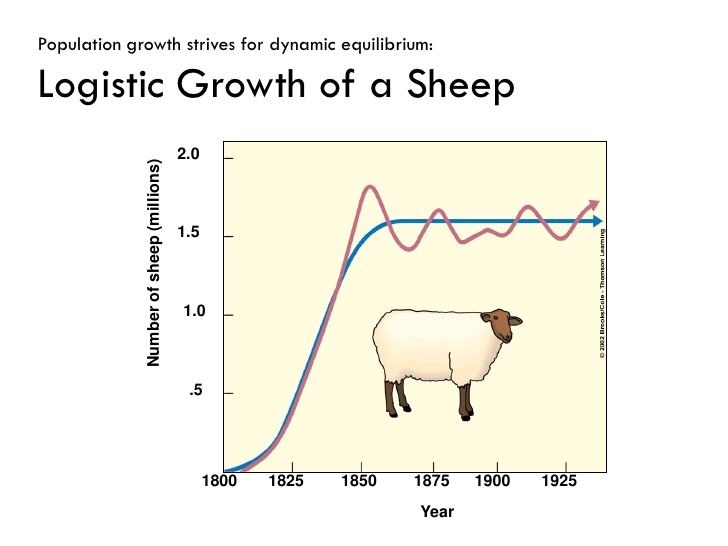
What growth model has an J-shaped curve?
Logistic
Exponential
What growth model has an S-shaped curve?
Logistic
Exponential
When a population has unlimited resources, and it continues to grow to its FULL LIVING POTENTIAL, it is called
Peak
Top shelf
Resource controlled limit
Biotic potential
factors that affect a population depending on its size
- these include food, predation, parasitism, and disease
Density-Dependent factor
Density-Independent factors
affect all populations similarly regardless of population size. Examples include: natural disasters, rapid climate changes (drought or floods), and human activity and disturbances
Density-Dependent factors
Density-Independent factors
Describes how many individuals of different ages make up a population
Age Structure
Age Layout
The youths collation
Age Spread
Which population has the greatest potential for rapid growth?
Populations with a large number of middle aged individuals
Older populations
Populations with large numbers of young offspring
None of these
Population pyramids measure:
Age and Gender
Gender and Race
Age and Race
Land size

What growth rate does this population pyramid represent?
Rapid Growth
Slow Growth
Negative Growth
Zero Growth
Lower birth rate
More developed
Less developed

Is this country Developed or Developing?
Developed
Developing
Which of the following are density dependent factors?
competition for resources
predation
disease
natural disasters
Which of the following are examples of a density independent factors?
forest fire
seasonal cycles
storms
disease

What factor describes when populations decrease because animals are moving out of a population?
Emigration
Limiting Factors
Immigration
Exponential Growth

What point on the graph represents the carrying capacity?
A
B
C
D


Tracks organisms that tend to live long lives (low death rate and high survivorship rate); toward the end of their life expectancies, however, there is a dramatic increase in the death rate.
Type I
Type II
Type III
Type IV
Describes organisms with a high death rate (or low survivorship rate) immediately following birth. Examples include bacteria, fishes, and invertebrates.
Type I
Type II
Type III
Type IV
These organisms typically live in unstable, unpredictable environments & are able to reproduce rapidly (exponentially). They do not take care of their young & are subject to predation.
k-strategist
r-strategist
m-strategist
s-strategist
These organisms occupy stable environments, are larger in size and have longer life expectancies. They produce, during their life spans, fewer offspring, but place a greater investment in each.
k-strategist
r-strategist
m-strategist
s-strategist
Click density dependent factor(s).
competition for resources
predator-prey relationships
parasitism and disease
weather
Click density independent factor(s).
competition for resources
predator-prey relationships
parasitism and disease
weather, natural disaster and man made disturbances

A pattern of survival over time in which there is high survival throughout most of the life span, but then individuals start to die in large numbers as they approach old age.
Type i survivorship
Type ii survivorship
Type iii survivorship

A pattern of survival over time in which there is a relatively constant decline in survivorship throughout most of the life span.
Type ii survivorship
Type i survivorship
Type iii survivorship

A pattern of survival over time in which there is low survivorship early in life with few individuals reaching adulthood.
Type III survivorship
Type II survivorship
Type I survivorship
A generalist species is a species that generally has a wide range of things in their diets as well as a relatively large area of habitat.
Generalists
Specialist
Organisms adapted to narrow habitats, limited food resources, or other specific environmental conditions.
Specialist
Generalist
Human population growth in 2020 was 0.98 %. If this growth were to remain constant in what year will the human population double?
2051
2091
2109
9120
Human population growth of Mozambique in 2021 was 2.8. If growth remains constant, in what year will the human population double? Hint: the rule of 70 - dt = growth rate70
(a)
In 2004 China's CBR was 11.8 the CDR was 6.3. what is the growth rate for China in 2004?
0.38%
0.49%
0.55%
0.68%
Which of the following is most typically associated with the transition form a rural to an urbanized society?
Reduced birth rates
Reduced need for sewage-treatment facilities
Increased rates of population growth
Increased air quality in urban areas
Increased stabilization of microclimate in urban areas.
High birthrate and high death rate means the total population is low
stage 1
stage 2
stage 3
stage 4
stage 5
Which describes the birth and death rate of Stage 3 of the DTM?
The death rate is decreasing and birth rate remains high
Both the death and birth rate are high
The death rate is low but the birth rate is high
Both the birth rate and death rate are decreasing
Which describes the birth and death rate of Stage 2 of the DTM?
The death rate is decreasing and birth rate remains high
Both the death and birth rate are high
The death rate is low but the birth rate is high
Both the birth rate and death rate are decreasing

In Stage 1, the birth rate is...
High
Falling
Low

In Stage 1, the death rate is...
High
Falling
Low

In Stage 2, the Total Population is...
Growing Slowly
Growing Quickly
Not Growing

In Stage 3, the Birth Rate is...
High
Dropping quickly
Low

In Stage 4, the Death rate is...
High
Rising
Low

In Stage 4, the Total Population is...
Growing Quickly
Leveling Out
Decreasing Quickly
In Stage 4, the Population Pyramid looks like...


What stage is this country in?
Stage 1
Stage 2
Stage 3

A characteristic of stage one of the Demographic Transition Model shows
High birth and death rates
Low death and high birth rates
Low birth and death rates
High death and low birth rates

Which correctly describes the term demographic transition?
The transition from low birth rates and death rates to high birth rates and death rates as a country develops.
The transition from high birth rates and death rates to low birth rates and death rates as a country develops.
The transition from high birth rates to low death rates as a country develops.
The transition from low birth rates to high death rates as a country develops.

Which is the correct order of the convection cells, starting from the equator?
The type of plate boundary where two plates come together is a .....
Convergent Boundary
Divergent Boundary
Transform Boundary
Agent Boundary

What type of event will occur at this boundary?
Earthquake
Volcano Eruption
Tornado
Mountain Building
A divergent boundary occurs when plates ....
Pull apart
Come together
Slide past each other
subducting

Horizon O

The rate at which water flows through the soil is called soil percolation or ______.
Groundwater
Permeability
Soil Pores
Porosity

Which soil component has the least capacity for holding water?
You dig a small hole in the soil and the next day it rains. The hole fills with water, but does not empty even after several days of dry weather. What is the soil most likely made of?

What are the proportions of sand, silt, and clay for the soil at point X ?
5% Sand, 95% Silt, 5% Clay
5% Sand, 20% Silt, 5% Clay
65% Sand, 30% Silt, 10% Clay
60% Sand, 30% Silt, 10% Clay
What is the correct sequence of layers of the earth's atmosphere from earth's surface to space?
troposphere, stratosphere, mesosphere, thermosphere.
mesosphere, stratosphere, thermosphere, troposphere.
troposphere, mesosphere, stratosphere, thermosphere.
stratosphere, troposphere, mesosphere, thermosphere.
Which two factors allow earth to experience four distinct seasons?
latitude & solar intensity
tilt of axis & rotation of axis
tilt of axis & rotation around sun
distance from sun & place in orbit around sun
Which of the following is the correct order of soil particles in order of increasing particle size?
Which of the following are an effect of El Niño?
warmer temperatures and more rain
warmer temperatures and less rain
cooler temperatures and less rain
cooler temperatures and more rain
How could La Niña affect weather during the summer on the east coast of the Americas?
It weakens trade winds.
It could increase rainfall.
It could decrease rainfall.
It decreases upwelling
Hurricanes move in opposite directions in the northern and southern hemispheres due to ___________________.
El Niño
The Coriolis Effect
La Niña
Uwelling

Examine the diagram. This is what occurs during ______________.
El Niño
La Niña
El Gato
La Gata
When cold water is pushed to the surface and brings nutrient rich sediments from the seafloor, this is called ___________________.
upwelling
downwelling
El Niño
La Gata
organic material means
plant or animal
plastics or artificial
rock
dirt
Which climate has the most productive soil for raising crops?
tropical rain forest
desert
temperate forest and grassland
artic


Why does sand have the least surface area compared to clay?
Clay has medium particle size and holds more particles per sand grain. Therefore it has more surface area.
Clay has small particle size and holds more particles per sand grain. Therefore it has more surface area.
Silt has Large particle size and holds less particles per sand grain. Therefore it has more surface area.
Clay has Small particle size and holds less particles per sand grain. Therefore it has more surface area.
What is meant by the cation exchange capacity of a soil
The capacity of a soil to exchange cations between the soil surfaces and the water
The ability of a soil to exchange cations
The capacity of water a soil can hold
The time when a soil is no longer able to exchange cations
Soils with a high percentage of large particles has less nutrient because:
The soil leaches easily
Too many plants are growing on it
The particles are not weathered
Father of Green Revolution of the world
Norman Berk
Norman Borlaug
Dr.Manmohan singh
M.S. Swaminathan
Deforestation has resulted in
more farmland in some places but more desertification in others
more farmland in some places and less desertification in others
less farmland in some places but more desertification in others
less farmland in some place and less desertification in others
no noticeable change in the amount of farmland or desertification
Between 1950 and 1990, wheat production in India in average pounds per acre more than tripled, which allowed India to meet its population's need for food. Which of the following best explains this change?
The elimination of poverty in India's rural regions
The use of genetically modified seeds
The increase of microloan programs that provide farmers with credit
The use of large farm tractors and combine harvesters
The use of improved plant hybrids and agricultural chemicals.
Green Revolution technology has resulted in which of the following in modern
agriculture?
The development of high-yield grains and the expansion of cultivated areas
The construction of new irrigation systems and a reduction in the use of fertilizers
An increase in the circulation of investment capital to help the poorest farmers
The loss of prime agricultural land and smaller yields from grain crops
The end of famine in the world
In less developed countries, pesticides are typically applied by hand, whereas pesticides are typically applied by tractors or aircraft in more developed countries. Which of the following best explains the risks associated with pesticide applications?
Crop dusters are at risk when applying pesticides with aircraft in more developed countries, whereas environmental pollution is a risk in less developed countries.
Farm animals used to plow fields are at risk from pesticides in more developed countries, whereas environmental pollution is a risk is less developed countries.
Farmers' health is at risk in less developed countries, whereas environmental pollution is a risk in more developed countries.
Crops are at risk in more developed countries, whereas environmental pollution is a risk in less developed countries.
Contract harvesters are at risk in more developed countries, whereas environmental pollution is a risk in less developed countries.
Which IPM control relies on predation and parasitism?
Biological Control
Mechanical Control
Cultural Control
Genetic Control
Which method of pest control can be dangerous for people?


Planting a different crop each season is called
Crop Planting
Changing Crops
Perennials
Crop Rotation
Which is an economic disadvantage of IPM?
Time consuming and costly than using traditional pest control methods
Harmful for human health
Harms the surrounding crops
Which of the following is an example of biological control?
Bees pollinating crops
Integrated pest management
Ladybugs eating aphids
The application of glyphosate

This is the picture of __________ irrigation method
A) Drip
B) Sprinkle
C) Surface
environmental advantage of no-till agriculture
less erosion
decrease in labor costs
increased use of herbicides and pesticides
increased need for irrigation
Which of the following is the leading use of water globally?
Domestic/Residential
Industry
Business/Commercial
Agriculture
Which methods of irrigation is the least efficient with the highest rate of evaporation?
spray irrigation
drip irrigation
furrow irrigation
flood irrigation
This type of irrigation uses a large system of sprinklers that must be manually moved from field to field and has very large evaporative losses.
Drip Irrigation
Flood irrigation
Furrow irrigation
Spray irrigation
Which of the following is a commercially used method for harvesting trees and is most likely to lead to a fragmented landscape with serious impacts on biodiversity?
Selective cutting
Clear-cutting
Shelter-wood cutting
Slash and burn clearing
Which of the following is a benefit of using organic fertilizer
Organic fertilizers do not require fossil fuels for production.
exact amounts of needed nutrients is not easily determined
more difficult to spread
help decrease the water retention ability of soil
When roots become saturated with water due to over-irrigation, it causes death in plant roots. This is called:
salinization
desertification
agroforestry
waterlogging
This method of forestry management involves the removal of certain trees with disease or trees of a desired height for use in industry.
clearcutting
selective cutting
controlled burning
reforestation
This method of forestry management reduces the probability of severe impacts from natural fires
clearcutting
selective cutting
controlled burning
reforestation
This method of forestry management may be the most economically efficient but can lead to the greatest level of soil erosion
clearcutting
selective cutting
controlled burning
reforestation
Soil, vegetation, & rocks that are removed to get to an ore deposit below
reserve
ore
overburden
tailings
Acid mine drainage results from the release of what element from the mineral pyrite?
sulfur
carbpm
chlorine
nitrogen
Which greenhouse gas is released by coal mining?
nitrous oxide
carbon dioxide
ozone
methane
Restoring land to its original state after mining has finished is called __.
reclamation
remediation
restoration
redemption
What may be added to acidic water to neutralize it?
sulfur nitrate
calcium carbonate
iron oxide
magnesium sulfate
Which is an advantage of surface mining?
topsoil erosion
habitat loss
efficient
increased stream turbulence
Commercially valuable deposits of concentrated minerals
tailings
ore
overburden
metals
Which of the following does NOT result from surface mining?
soil erosion
loss of habitat
lowered albedo
black lung disease
This type of mining is used to dissolve impurities and leave the gold ore
acid mine drainage
cyanide heap leaching
slurry
bioremediation
Which of the following is a result of surface mining?
primary succession
black lung disease
mountain top mining
increased albedo
Which of the following is the most destructive and most difficult to reclaim?
strip mining
open pit mining
mountaintop mining
subsurface mining
Which of the following best describes an environmental advantage of urbanization?
Individuals living in cities usually have a lower transportation carbon footprint than individuals living in rural areas
Individuals living in cities usually have greater access to fresh, local agricultural products than individuals living in rural areas.
Individuals living in cities have more varied employment opportunities than individuals living in rural areas.
Individuals living in cities have greater access to health care than individuals living in rural areas.
What causes an urban heat island?
large forested areas
pavement and concrete
climate change
mass transit
A sustainable solution to urban growth
suburban growth
stopping growth
building up
urban heat island
Why mine tailings can be dangerous
can cause miners to trip
can be full of sharp objects
can cause acid leaching into water bodies
are full of conflict minerals
Sustainability means
having enough resources to survive
living in a way that there is enough resource for now and future generations
living in a way that everyone is wealthy and has the lifestyle they deserve
An ecological footprint is
The amount of wilderness available on the earth
The amount of biologically productive land and water a person uses
A measure of the earth's biological capacity
A measure of a person's contribution to creating a sustainable environment
A person’s ecological footprint is
(a) the land that a person lives on.
(b) the amount of carbon dioxide a person contributes to climate change.
(c) the land required to produce a person’s food.
(d) the land needed to support all of a person’s activities.
(e) the amount of fossil fuel a person uses.
Type of pollution found in urban areas
light
noise
air
all of these
Which of the following methods could be used to reduce erosion in strip minning of coal?
Only remove the low grade ore
Increase use of open pit mining instead
Replant vegetation after mining.
Increase water use for mining purpose
The development of dangerous strains of disease organisms represents a significant consequence of which of the following agricultural practices?
Using herbicides in mechanized, large-scale grain farming
Using plant-based insecticidal compounds on vegetable crops
Growing crops that are genetically modified for increased yields
Including the use of legumes into croprotation protocols
Incorporating antibiotics into the feeding regimens of densely concentrated livestock
Because global fisheries have dramatically seen a reduction in fish numbers, this technique has been used recently to supplement that loss.
monocropping
IPM
contour farming
aquaculture
The practice of planting a nitrogen-using plant with a nitrogen-fixing plant is called
intercropping
contour farming
agroforestry
monoculture

The single most important source of water in the High Plains region, providing nearly all the water for residential, industrial, and agricultural use.
(a)

The extraction level of a resource which does not exceed its growth
(a)

An effective and environmentally sensitive approach to pest management that relies on a combination of common-sense practices
(a)

Cultivation in which different crops are sown in alternate strips to prevent soil erosion
(a)
Selective cutting differs from clear cutting in that selective cutting:
Increases surface runoff and erosion
Only removes a few trees
Takes out all the trees
Reduces the risk of forest fires
Which of the following is true of forest fires?
They improve nutrient cycling
Crown fires can helps to prevent worse fires in the future
They should be prevented at all costs
Only you can prevent them
What is full cost pricing?
driving up the cost of goods to discourage consumerism
Using subsidies to make goods more accessible to the poor
taxing goods to generate revenue for conservation efforts
including the environmental costs in the cost of a product
Why can forest fires be beneficial?
A) Minor disturbances increase biodiversity
B) helps to prevent nutrient cycling
C) allows conifers and other hard seeds to release & germinate
Both A and C

