
 Worksheets
Life is Cellular Review
Total questions: 27
Worksheet time: 41mins

The Cell Theory:
1. All living organisms are composed of one or more (a) . (Unicellular or Multicellular)
2. All cells arise from (b) cells. (Not from Spontaneous Generation)
3. Cells are the structural and functional unit of (c) . (Nothing living smaller than a Cell)


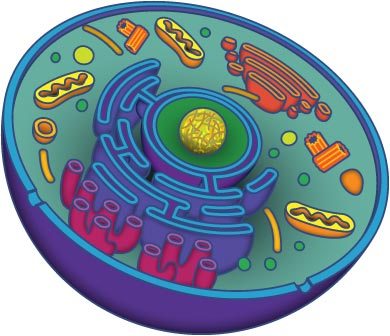
All cells -----
come from other dead cells
come from other living cells
crystallize out of the air


Uses electrons and computers to magnify specimens and produce two-dimensional images, cannot be used to observe living specimens, creates images that are computer colorized, and can clearly magnify specimens more than 100,000 times.
scanning electron microscope (SEM)
light microscope (LM)
transmission electron microscope (TEM)
magnetic resonance imaging (MRI)
Uses electrons and computers to magnify specimens and produce three-dimensional images, cannot be used to observe living specimens, creates images that are computer colorized, and can clearly magnify specimens more than 100,000 times.
magnetic resonance imaging (MRI)
scanning electron microscope (SEM)
light microscope (LM)
transmission electron microscope (TEM)


Which description best fits the image?
A low power scope used light to show details of the cell
A high power scope used electrons to show the surface of the cell
A medium power scope used light to show details of the cell
A high power scope used electrons to show inside the cell
Students use a compound microscope to view unicellular organisms collected from pond water. Which statement describes why using a light microscope is better to view the structures of these organisms than a dissecting microscopes?
Compound light microscopes use visible light
Compound light microscopes have higher magnification
Compound light microscopes allow living things to be viewed
Compound light microscopes use electron beams to generate images
John wants to see a mitochondria under a microscope. Which microscope(s) should he choose?
Dissecting Microscope
Compound Light Microscope
Scanning Electron Microscope
Transmission Electron Microscope
Match the following...
Une el siguiente

Dissecting

TEM

SEM
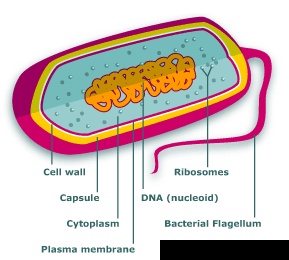
Prokaryotes are _______________ and include ______________.
single cells, DNA but not a nucleus.
multiple cells, a nucleus with DNA
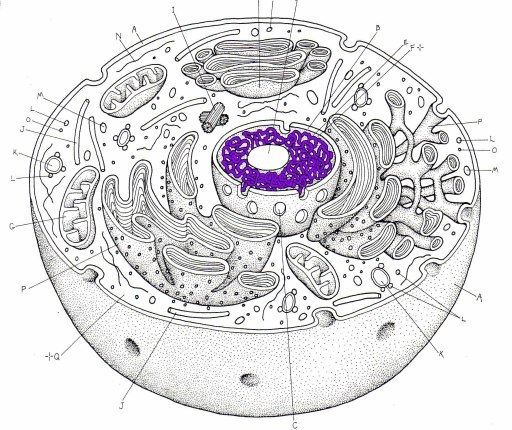
Eukaryotic cells have...
DNA but no nucleus.
a nucleus with DNA and organelles.
Which is true of prokaryotic and eukaryotic cells?
Prokaryotic cells are larger than eukaryotic cells.
Eukaryotic cells do not have nuclei, and prokaryotic cells do have nuclei.
Prokaryotic cells lack membrane-bound organelles, and eukaryotic cells contain membrane-bound organelles.
Eukaryotic cells are simpler than prokaryotic cells.

Which type(s) of cells contain DNA material?
Prokaryotic cells
Eukaryotic cells
Both prokaryotic and eukaryotic cells
True or false: prokaryotic cells store DNA material in their nuclei.
True
False

