
 Worksheets
Quiz: Plant and Animal Cells
Total questions: 27
Worksheet time: 19mins


What are the levels of organization in plants?
Plants have cells, but not tissues.
Plants are made up of cells, tissues, organs, and organ systems
Plants contain cells and tissues, but not organs.
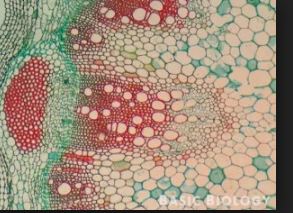
_____________________ is a vascular tissue that carries sugars and other foods throughout a plant.
stems
phloem
roots
xylem

Where does the process of photosynthesis occur?
in the root
in the stem
in the leaf
in the organ
What are the 3 organs of a plant?
veins, root hairs and xylem
stoma, stomata and root hairs
roots, glucose and leaves
roots, stem and leaves

What are the xylem and the phloem of a plant are examples of?
organs
tissues
cells
molecules

This vessel carries dissolved sugars from the leaves to all other parts of the plant.
Meristem
Xylem
Cambium
Phloem

This vessel makes up part of the vascular tissue of a plant. It carries water and dissolved ions from the roots to the stems and leaves.
Meristem
Xylem
Cambium
Phloem

Within the epidermis, thousands of pairs of bean-shaped cells swell and shrink to open and close _______, which are tiny pores that control the exchange of oxygen and carbon dioxide gases and the release of water vapor.
stomata
stamen
stigma
style
Water enters the plant through the ______________.
leaves
stems
roots
none of the above
What are the needs of plants?
Air
Sunlight
Water
Soil
All of the Above
Plants are _________________ which means they make their own food.
heterotrophs
chemotrophs
autotrophs
liveotrophs
Plants are both _____________ & _______________.
multicellular & eukaryotic
unicellular & eukaryotic
multicellular & prokaryotic
unicellular & prokaryotic
The tiny opening on the plant that lets air in and holds water in is called the ___________________.
guard cell
stomata
petal
cuticle


Small openings on plant leaves are called (a) .
Where does photosynthesis take place?
mitochondria
chloroplast
nucleus
nucleic acid
What is the difference between a prokaryotic cell and a eukaryotic cell?
Prokaryotes do not have a nucleus or organelles, but a eukaryotic cell does
Eukaryotic cells do not have a nucleus or organelles, but prokaryotes do
What are the products of photosynthesis? (What does the plant produce AFTER photosynthesis?)
Glucose (sugar), and oxygen
Light from the sun, water from the soil and carbon dioxide from the air
What does a plant NEED to perform photosynthesis?
glucose and oxygen
Light from the sun, water from the soil and carbon dioxide from the air
Which of the following does a plant cell ONLY have?
Vacuole
Chloroplast
Centrosome
Nucleus
An organism that is made up of many cells is called:
unicellular
multicellular
pluracellular
A living thing that is made up of organ systems.
cell
tissue
organ
organ system
organism
My main goal is to produce a lot of energy
Chloroplast
Mitochondria

