
 Worksheets
Algebra 1 EOC STAAR Practice
Total questions: 100
Worksheet time: 4hrs 51mins
Name
Class
Date
1.
The x-values of a relation.
a)
Range
b)
Domain
c)
Output
d)
Slope
2.
The y-values of a relation.
a)
Domain
b)
Range
c)
Input
d)
Vertical Line Test
3.
When each input of a relation has exactly one output, the relation is known as this.
(x does NOT repeat)
(x does NOT repeat)
a)
Function
b)
Output
c)
Domain
d)
Vertical Line Test
4.
Where the line crosses the y-axis.
a)
Slope
b)
X-Intercept
c)
Y-Intercept
d)
Range
5.
Where the line crosses the x-axis.
a)
Slope
b)
X-Intercept
c)
Y-Intercept
d)
Range
6.
The ratio of the change in y-values (rise) with the change in x-values (run).
a)
Slope
b)
Range
c)
Scientific Notation
d)
Rational
7.
A set of ordered pairs.
a)
Slope
b)
System
c)
Relation
d)
Domain
8.
y - y1 = m(x - x1)
is in what form?
is in what form?
a)
Slope-Intercept
b)
Point-Slope
c)
Standard
9.
y = mx + b
is in what form?
is in what form?
a)
Slope-Intercept
b)
Point-Slope
c)
Standard
10.
When lines have the same slope, they are said to be what?
a)
Parallel
b)
Perpendicular
11.
What makes two lines perpendicular?
a)
Same Slope
b)
Opposite/ Reciprocal Slope
c)
Opposite Slope
d)
Upside-down Slope
12.
Ax + By = C
is in what form?
is in what form?
a)
Slope-Intercept
b)
Point-Slope
c)
Standard
13.
Two or more equations or inequalities is referred to as what?
a)
System
b)
Function
c)
Rational
d)
Solution
14.
One solution to a system of equations is where the lines are ________.
a)
Intersecting
b)
Parallel
c)
Coinciding (same)
d)
Starting
15.
No solution to a system of equations is where the lines are ________.
a)
Intersecting
b)
Parallel
c)
Coinciding (same)
d)
Starting
16.
Infinitely many solutions to a system of equations is where the lines are ________.
a)
Intersecting
b)
Parallel
c)
Coinciding (same)
d)
Starting
17.
When multiplying exponents with the same base, you can keep the base and _____ the exponents.
a)
Add
b)
Subtract
c)
Multiply
d)
Divide
18.
When dividing exponents with the same base, you can keep the base and _____ the exponents.
a)
Add
b)
Subtract
c)
Multiply
d)
Divide
19.
When raising an exponent to another exponent, you can keep the base and ________ the exponents.
a)
Add
b)
Subtract
c)
Multiply
d)
Divide
20.

a)
Slope-intercept form
b)
Standard Form
c)
Point-slope form
d)
Slope Formula
21.
A change in the position, size, or shape of a figure or graph.
a)
Slope
b)
Transformation
c)
Sequence
d)
Rate of Change
22.
Like terms have the same ______ and _____
a)
numbers and letters
b)
coefficients and sign
c)
variables and exponents
d)
none of these
23.
f(x) represents
a)
x first because its in ( )
b)
f times x
c)
function notation
d)
no clue
24.
5x4- 3x3+12x2-x +5 represents a
a)
quadratic
b)
polynomial
c)
equation
d)
none of these
25.
Which vocabulary word best describes a polynomial consisting of two terms?
a)
Quadratic
b)
Binomial
c)
Discrete
d)
Coefficient
26.
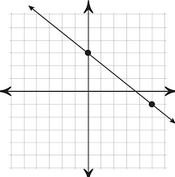
Is the graph linear, exponential, quadratic or absolute value?
a)
Linear
b)
Exponential
c)
Quadratic
d)
Absolute Value
27.

Is the graph linear, exponential, quadratic or absolute value?
a)
Linear
b)
Exponential
c)
Quadratic
d)
Absolute Value
28.

Is the graph linear, exponential, quadratic or absolute value?
a)
Linear
b)
Exponential
c)
Quadratic
d)
Absolute Value
29.
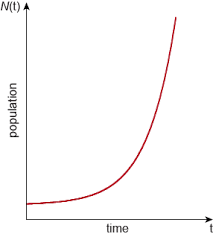
Is the pictured graph growth, decay, or linear or none?
a)
Exponential Growth
b)
Exponential Decay
c)
Linear
d)
None
30.

We see these symbols with an:
a)
Inequality
b)
Equation
c)
Expression
31.
A Special curve shaped like a "U" or "V" on a graph
a)
Arch
b)
Parabola
c)
Vertex
d)
Minumum
32.
A point on the graph where Y is Zero.
a)
Y -Axis
b)
X-Axis
c)
Y-Intercept
d)
X-Intercept
33.
A Point on the Graph Where X Is Zero
a)
X- Intercept
b)
X-Axis
c)
Y-Intercept
d)
Y-Axis
34.

The x-intercepts of a quadratic equation are known as the _____.
a)
Vertices
b)
Roots
c)
Squares
d)
Formulas
35.
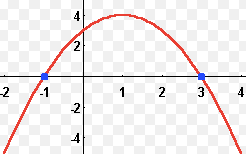
The x-intercepts of a quadratic equation are known as the _____.
a)
vertices
b)
squares
c)
zeros
d)
formulas
36.
What is the axis of symmetry?
a)
the slope of the graph
b)
the dividing line for a parabola
c)
a way to spin my pencil
d)
the x-axis
37.
If the graph of y = ax2 + bx + c opens down, which of the following must be true?
a)
a < 0
b)
a > 0
c)
c < 0
d)
c > 0
38.
If the graph of y = ax2 + bx + c opens up, which of the following must be true?
a)
a < 0
b)
a > 0
c)
c < 0
d)
c > 0
39.
If the graph of y = ax2 + bx + c is narrower, which of the following must be true?
a)
0 < a < 1
b)
a > 1
c)
c < 0
d)
c > 0
40.
If the graph of y = ax2 + bx + c is wider, which of the following must be true?
a)
0 < a < 1
b)
a > 1
c)
c < 0
d)
c > 0
41.
What is another word for zeros?
a)
y-intercepts
b)
roots
c)
vertex
d)
axis of symmetry
42.
Which answer choice describes
y = -3x2 +7x - 2 accurately?
y = -3x2 +7x - 2 accurately?
a)
opens up with a maximum
b)
opens up with a minimum
c)
opens down with a maximum
d)
opens down with a minimum
43.

Does this graph have a maximum or minimum value?
a)
maximum
b)
minimum
c)
neither
d)
both
44.

The point in which a graph hits the x-axis is know as the _____
a)
Solution
b)
x-intercept
c)
Root
d)
All answers are correct
45.
What is the slope in the equation: y=4x+3
a)
3
b)
4x
c)
4
d)
x
46.
What is the y-intercept in the following equation: y=-4x-5
a)
-4
b)
-4x
c)
5
d)
-5
47.
How would you write the equation with a slope of 2/3 and a y-intercept of -3
a)
y=3/2x+3
b)
y=2/3-3
c)
y=2/3x-3
d)
y=2/3x+3
48.

Write the equation for the line.
a)
y= -1x+3
b)
y= 4x+3
c)
y=1/4x+3
d)
y= -4x+3
49.
Find the slope of the line that passes through
(10, 1) and (5, 2)
(10, 1) and (5, 2)
a)
1/5
b)
-1/5
c)
5
d)
-5
50.
Find the slope of the line that passes through the points (2, 4) and (6, 12)
a)
1/2
b)
-1/2
c)
2
d)
-2
51.

Find the slope of the line.
a)
-2
b)
2
c)
-1
d)
1
52.

Find the slope of the line.
a)
Undefined
b)
0
c)
1
d)
-1
53.

At what rate did the rain fall?
a)
2 cm per hour
b)
1/4 cm per hour
c)
1/2 cm per hour
d)
4 cm per hour
54.

Which statement below accurately represents the graph?
a)
$100 is earned for each hour worked
b)
$100 is earned for every 2 hours worked
c)
$500 is earned for every 8 hours worked
d)
$200 is earned for every 3 hours worked
55.

Dev keeps a record in graph form of how far his car travels and the number of gallons of gasoline it uses.
What is the slope of the graph?
What is the slope of the graph?
a)
64
b)
128
c)
32
d)
16
56.

What is the solution to the system?
a)
(6, 8)
b)
(8, 6)
c)
(-6, 8)
d)
No solution
57.
Solve for x and y.
y = 2/3x - 2
y = -x + 3
y = 2/3x - 2
y = -x + 3
a)
(0,3)
b)
(0,-3)
c)
(3,0)
d)
(-3,0)
58.
-4x-2y=-12
4x+8y=-24
4x+8y=-24
a)
(5,6)
b)
(6,-6)
c)
(6,-2)
d)
(4,-3)
59.
x-y=11
2x+y=19
2x+y=19
a)
(10,-1)
b)
(-1,10)
c)
(3,-4)
d)
(6,7)
60.
What is the following called? x=(-b)/2a
a)
Axis of symmetry
b)
Quadratic Formula
c)
Vertex
d)
Discriminant
61.
Find the axis of symmetry for
f(x) = x2- 8x + 15.
f(x) = x2- 8x + 15.
a)
x = -4
b)
x = 4
c)
y = 4
d)
y = -4
62.
Find the vertex of
f(x) = -x2 - 4x + 12.
f(x) = -x2 - 4x + 12.
a)
(-2, 16)
b)
(2, 0)
c)
(2, 4)
d)
(-2, 4)
63.

What are the x- intercepts?
a)
x= 0 and x= -4
b)
x= 0 and x= 4
c)
y= 0
d)
x= 2
64.
An object in launched directly upward at 64 feet per second (ft/s) from a platform 80 feet high. Its height is represented by the equation
s(t) = –16t2 + 64t + 80. What will be the object's maximum height?
s(t) = –16t2 + 64t + 80. What will be the object's maximum height?
a)
2 ft
b)
80 ft
c)
144 ft
d)
64 ft
65.
If given the equation y = 3(x + 5)2 - 4, what is the vertex of the parabola?
a)
(5, -4)
b)
(-5, -4)
c)
(-15, -4)
d)
(15, -4)
66.

Identify the vertex and whether the graph opens up or down.
a)
(5, 2); opens up
b)
(5, 2); opens down
c)
(-5, 2); opens up
d)
(-5, 2); opens down
67.

What is the range of this function?
a)
all real numbers
b)
x > 0
c)
y > -2
d)
x < 6
68.

What is the range of this quadratic function?
a)
x > 0
b)
all real numbers
c)
x < 5
d)
y < 4
69.
Factor
r2 -16r + 60
r2 -16r + 60
a)
(r - 15)(r + 4)
b)
(r - 6)(r + 10)
c)
(r - 6)(r - 10)
d)
(r +30)(r - 2)
70.
Factor:
p2 - 14p
p2 - 14p
a)
p(1 - 14)
b)
2p(p - 7)
c)
p2(1-14)
d)
p(p - 14)
71.
Which is another way of correctly expressing
(x - 3)(x - 3)?
(x - 3)(x - 3)?
a)
(x2 - 32)
b)
(x2 - 3)
c)
(x + 3)(x - 3)
d)
(x - 3)2
72.
Factor:
x2 - 49
x2 - 49
a)
(x + 7)(x - 7)
b)
(x + 7)2
c)
(x - 7)2
d)
(x+7)(x-1)
73.
Factor completely:
3x2 + 18x +15
Hint: Factor GCF first.
3x2 + 18x +15
Hint: Factor GCF first.
a)
3(x2 + 6x + 5)
b)
(x + 5)(x + 1)
c)
3(x + 5)(x + 1)
d)
Not Factorable
74.
What is the first question you ask yourself when factoring a polynomial?
a)
How many terms does it have?
b)
Is there a GCF?
c)
What strategy should I use?
d)
Why do I have to learn this?!?!?!
75.
Factor completely: 16x2-24x+9
a)
(16x-3)(x-3)
b)
(16x+9)(x+1)
c)
(4x-3)(4x-3)
d)
(4x+3)(4x+3)
76.
Factor completely: 3x2-8x+4
a)
(3x-4)(x-1)
b)
(3x-2)(x-2)
c)
(x+1)(3x+4)
d)
(x+2)(3x+2)
77.
What type of function is f(x)=2(1/7)x ?
a)
Exponential Growth
b)
Linear
c)
Exponential Decay
d)
None of the Abovee
78.
If f(x) = 2x-9, what is f(3)?
a)
6
b)
-3
c)
3
d)
-6
79.
Suppose a culture of bacteria begins with 5000 cells and dies by 30% each year. Write an equation that represents this situation.
a)
y=5000(0.7)x
b)
y=30(5000)x
c)
y=5000(1.3)x
d)
y=5000xx
80.

Simplify the exponential expression.
a)
2x6y12
b)
2x5y7
c)
8x6y12
d)
8x5y7
81.
f(x) = 8x - 6, what is the value of x when f(x)=18?
a)
24
b)
138
c)
75
d)
3
82.
Jame's 70 in. giant peach doubles in size every week. Write an expression that would represent how big the peach is after 5 weeks.
a)
70(2)35
b)
70(2)5
c)
2(70)5
d)
5(70)2
83.
If g(x) = 17x - 8, what is f(x) when x = 9?
a)
135
b)
130
c)
140
d)
145
84.

What is the y-intercept of the function?
a)
2
b)
3
c)
1
d)
-2
85.

Simplify the exponential expression:
a)
10x-2
b)
2x2
c)
2x12
d)
10x12
86.
Simplify the following exponential expression:
(3x4)(5x3)
(3x4)(5x3)
a)
15x12
b)
8x7
c)
8x12
d)
15x7
87.

Simplify:
a)
√4√12
b)
4√12
c)
4√3
d)
2√3
88.

Simplify:
a)
5x√2
b)
100x√2
c)
10x√2
d)
10√2x
89.
Find f(2) if f(x) = 2x2- 5x
a)
6
b)
-6
c)
-2
d)
2
90.
find f(0) if f(x) = -3x2 + 5x + 1
a)
1
b)
-2
c)
3
d)
5
91.
Find f(0) if f(x) = 5x3 + 2x2 +3x
a)
3
b)
10
c)
-2
d)
0
92.
find f(-2) if f(x) = (x-3)2
a)
-25
b)
25
c)
1
d)
-1
93.
(3x + 4y - 3z) - (2x - 6y + 7z)
a)
x + 10y - 10z
b)
-x +10y - 10z
c)
x -10y - 10z
d)
-x -10y - 10z
94.
(4x3-5x2+3x)+(-2x3-x2+6x)
a)
2x3-6x2-9x
b)
2x3+6x2+9x
c)
-2x3-6x2+9x
d)
2x3-6x2+9x
95.
5(2x+5)
a)
10x + 5
b)
10x + 25
c)
7x + 10
d)
7x + 25
96.
(x+3)(x+1)
a)
x2+3x+3
b)
2x+4x+3
c)
x2+4x+3
d)
5x + 3
97.
(3x - 2)(6x + 1)
a)
21x2
b)
18x2 + 9x + 2
c)
9x2 - 9x - 2
d)
18x2 - 9x - 2
98.
(2x + 3)(x2 + 4x + 1)
a)
2x3 + 10x2 + 14x + 4
b)
2x3 + 11x2 + 14x + 3
c)
-2x3 - 11x2 + 14x + 5
d)
x3 - 11x2 + 14x + 3
99.

a)
x - 7
b)
x2 - 7
c)
x + 7
d)
x2 + 3x - 54
100.

a)
2a2b6
b)
1/2a2b6
c)
b6/2a2
d)
2b6/a2
100 %

