
 Worksheets
U8Q1 Carbon Cycle
Total questions: 32
Worksheet time: 8hrs 47mins
All of the carbon in existence is continually recycled in the carbon cycle.
How is the carbon cycle similar to the water cycle?
Both involve liquid substances falling to the Earth from the atmosphere?
Neither process works at low temperature.
Both involve the transfer of substances between animals, plants, and the Earth.
Both involve the transfer of substances between the earth and outer space.
All of these
Plants and Animals
This reservoir of carbon is made up of the ground and contains soil, rocks, fossil fuels, and other geological formations.
Atmosphere
Biosphere
Hydrosphere
Lithosphere
This reservoir of carbon is the air and gases that surround the Earth.
Atmosphere
Biosphere
Hydrosphere
Lithosphere
This reservoir of carbon is all the water on Earth including in the clouds, oceans, rivers, streams, and underground water supplies.
Atmosphere
Biosphere
Hydrosphere
Lithosphere
This reservoir of carbon contains all life on Earth.
Atmosphere
Biosphere
Hydrosphere
Lithosphere
Which gas do animals release, that plants depend on for survival?
Carbon dioxide
Oxygen
Sunlight
Water
Which of the following processes does NOT move carbon to the atmosphere?
Animal respiration (Breathing)
Volcanic eruption
Photosynthesis
Burning fossil fuels
Organisms that do not decompose can be buried and become what part of the lithosphere?
water
nutrients
air
fossil fuels
What is a way that carbon can move?
From hydrosphere to the biosphere through drinking water
From lithosphere to hydrosphere through weathering and erosion
From the atmosphere to lithosphere through diffusion
From the atmosphere to the biosphere through respiration (breathing)
Which one of these does not add CO2 to the atmosphere?
How do plants affect the air that animals and people breathe?
Plants use oxygen from the air to make their own food
Plants release pollution into the air
Plants take in carbon dioxide and release oxygen
Plants take in oxygen and release carbon dioxide
Why is burning fossil fuels harmful?
they cause cancer
They can get extremely hot
it increases the amount of carbon dioxide in the atmosphere
this would destroy fossils
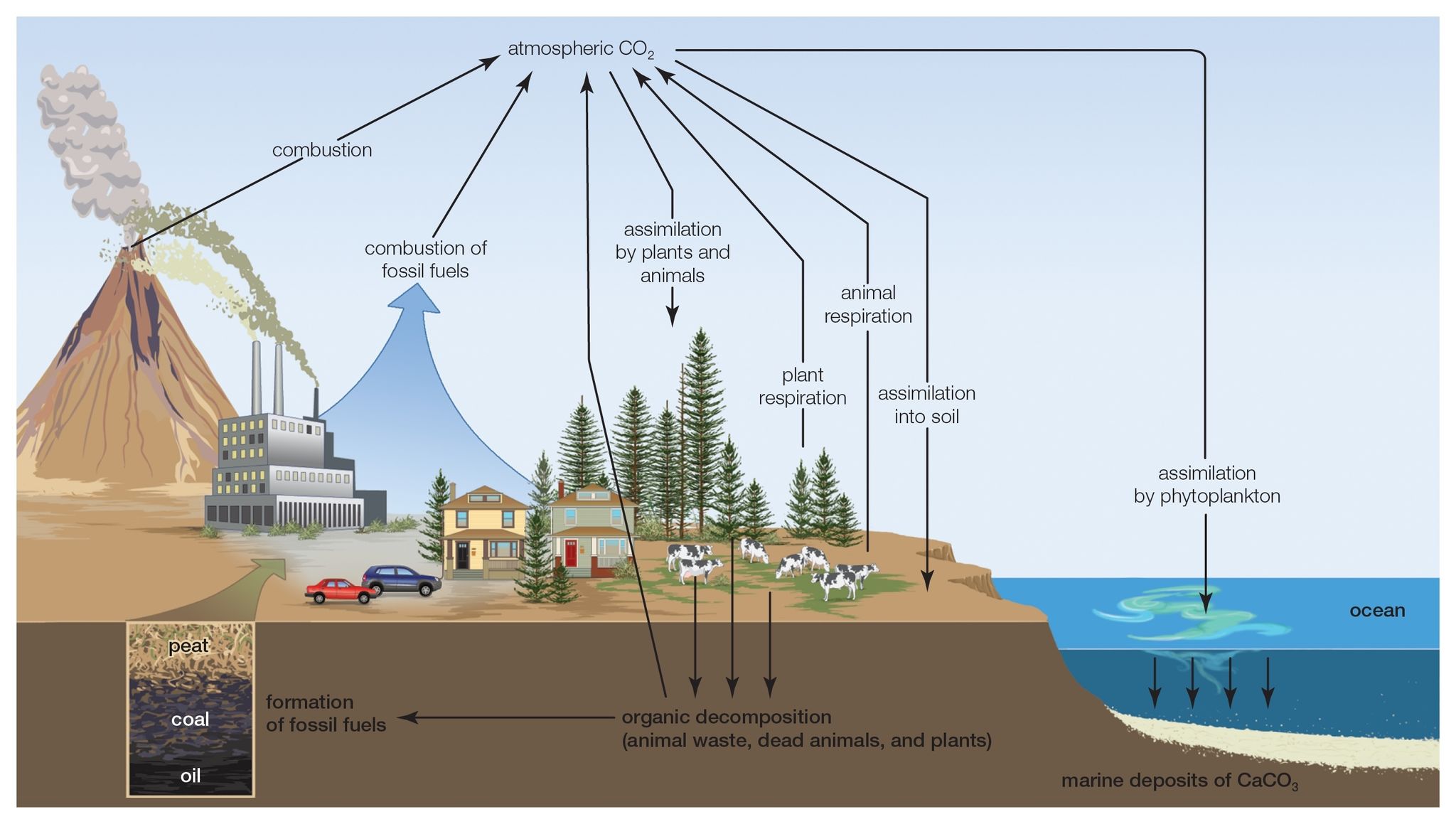
Which of the following add carbon dioxide to the atmosphere?
volcanoes
combustion of fossil fuels
animal and plant respiration
all of these
Which of the following is correct?
There is as much carbon on earth as when it was formed
Carbon is being created whenever it is recycled
Carbon is lost every time it is recycled
Carbon changes to different forms and is never recovered
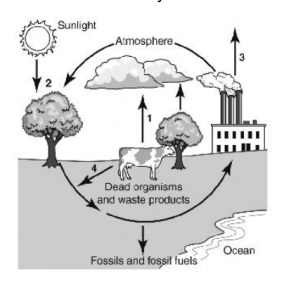
What is happening at 1?
respiration: releasing CO2
decomposing CO2 in the soil
photosynthesis: absorbing CO2
turning CO2 from the atmosphere into organic molecules
The diagram below shows the carbon cycle.
Press the hotspot for where you would find released carbon dioxide gas.
The diagram below shows the carbon cycle.
Press the hotspot for where you would find fossil fuels.

Fossil fuels include carbon rich materials such as (a) , (b) , and (c)
The diagram below shows a portion of the carbon cycle,
Select where photosynthesis takes place
The diagram below shows the carbon cycle.
Press the hotspot for where you would find glucose (sugar made in photosynthesis).
What are the main greenhouse gasses? (a) (b) (c)
nitrogen

What do 'plants' do with the carbon they receive?
They turn it into water
They don't need carbon
They turn it into food by photosynthesis
They keep it forever

The energy flow through living systems begins with sunlight and photosynthesis. An incomplete diagram of the process of photosynthesis is provided. What is the missing component that correctly replaces the question mark to complete the diagram?
Soil Nutrients
Oxygen
Glucose
Water

The diagram below shows parts of the carbon cycle. Which arrow represents the movement of carbon caused by cellular respiration?
A
B
C
D
Scientists in the island country of Singapore conducted long-term testing which showed that the amount of carbon dioxide in the atmosphere above their country was increasing. Which of the following actions would most likely help reduce the amount of carbon dioxide in the atmosphere?
Decrease the number of trees and other plants in their country.
Increase the population of animals in their country.
Decrease the combustion of fossil fuels in their country.
Increase the temperature of the atmosphere in their country.

According to the diagram, what are the places that store carbon? (Select more than one...)
Oceans
Vegetation, Soil, & Rock
Fossil Fuels (underground)
Atmosphere
Which of the following are examples of the combustion of fossil fuels? (Select all that apply...)



