
 Worksheets
Populations and Ecosystems Vocab
Total questions: 20
Worksheet time: 22mins
Name
Class
Date
1.
An example of a population is
a)
all trees in a forest
b)
all maple trees in a forest
c)
all plants in a forest
d)
all animals in a forest
2.
A group of different species that live together and interact in an environment are called a/an ________.
a)
community
b)
habitat
c)
population
d)
ecosystem
3.

The average number of people per square mile
a)
population distribution
b)
population density
c)
urbanization
d)
population rate
4.
Any thing or organism that regulates the size of a population of another organism is known as __________.
a)
a measure
b)
a limiting factor
c)
factorization
d)
predation
5.

In a forest ecosystem, which of the following is the best example of a limiting factor for a rabbit population?
a)
Squirrel Population
b)
Sunlight
c)
Grass available
d)
Fungi growth
e)
foxes
6.

What year is the zebra population the highest?
a)
1920
b)
2000
c)
1960
d)
2020
7.

According to the graph, What is causing the deer population to decrease
a)
They got sick
b)
The wolf population is decreasing
c)
The wolf population increased
d)
Nothing it's a coincidence
8.

What would the carrying capacity of this graph be
a)
530
b)
400
c)
500
d)
480
9.
One of the main characteristics of a population is its
a)
dynamics
b)
density
c)
change over time
10.
Examples of how humans negatively affect local ecosystems are
a)
Building dams, deforestation (cutting down trees), adding point sources to nearby streams to allow for run-off, building roads and structures, and salting roads.
b)
Creating laws to prohibit fishing from local streams.
c)
Planting trees and other plants to attract native species.
d)
Removing non-native species from the environment.
11.
How does energy enter an ecosystem?
a)
sunlight
b)
soil
c)
animals
d)
invasive species
12.
A nonliving element in an ecosystem is an
a)
animal
b)
abiotic factor
c)
biotic factor
d)
organism
13.
Which of the following is not an abiotic factor?
a)
sun
b)
temperature
c)
soil
d)
grass
14.
Which of the following is not a biotic factor?
a)
mushroom
b)
air
c)
elephant
d)
coyote
15.

A system made up of organisms interacting with one another
a)
biology
b)
abiotic
c)
biotic
d)
ecosystem
16.

Deserts, mountains, and rivers are all examples of ________.
a)
vacation spots
b)
tundra
c)
ecosystems
d)
wetlands
17.
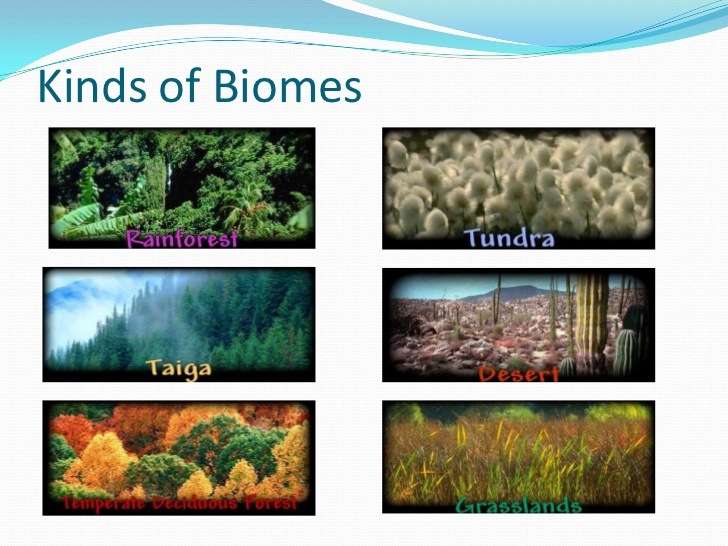
What is the main factor that separates the biomes?
a)
Land
b)
Water
c)
Climate
d)
Longitude
18.
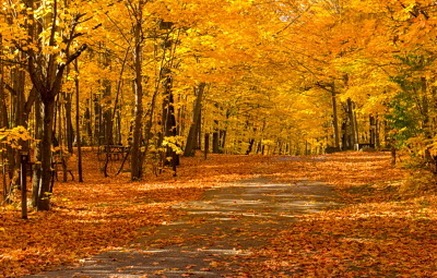
Which biome has deciduous trees (which lose their leaves)?
a)
Temperate Forest
b)
Rainforest
c)
Grasslands
d)
Taiga
19.
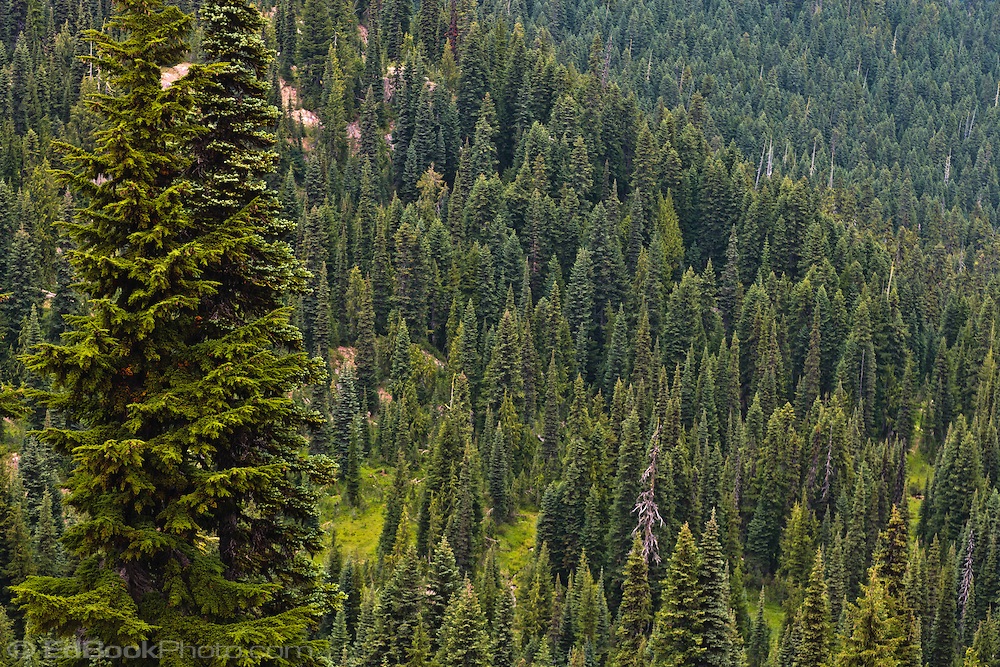
Which biome has evergreen trees (which don't lose their leaves)?
a)
Taiga
b)
Temperate Forest
c)
Tundra
d)
Grasslands
20.
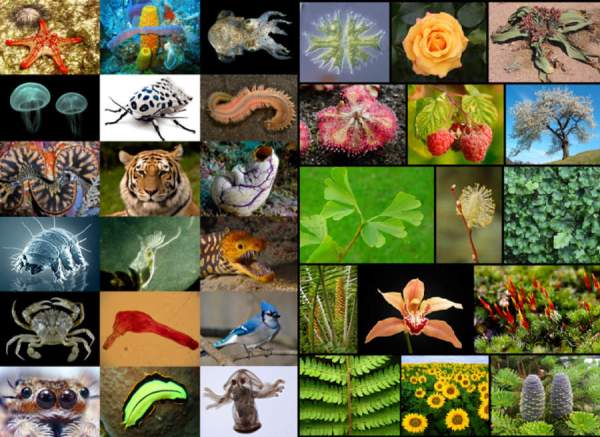
Which biome has the most variety of plants and animals?
a)
Temperate Forest
b)
Rainforest
c)
Tundra
d)
Grasslands
100 %

