
NEW
Font size
 Worksheets
Early Earth Biology
Total questions: 26
Worksheet time: 23mins
Which of the following has the monomer of amino acids?
Carbohydrates
Lipids
Proteins
Nucleic Acids
Miller and Urey's experiment suggests that...
organic compounds necessary for life (amino acids) could have arisen from simpler compounds
the sun powers all life
primitive compounds can be made from super complex compounds
applied pressure can form polypeptides
The belief that living things arise from non-living things is:
punctuated equillibrium
natural selection
spontaneous generation
microevolution

In the experiment below, maggots will probably appear in
Both Jars
Only the covered jar
Only the uncovered jar
Neither Jar
What was the result of the Miller-Urey Experiment? (the brown goo)
amino acids
nucleotides
lipids
glucose
Which of these are the ingredients NEEDED for life to form?
organic macromolecules/biomolecules
atoms
methane
inorganic molecules
Miller/Urey and other scientists studying the origin of life have shown that:
Formation of life on early Earth required material from space
Simple cells can be produced in a laboratory using spontaneous generation
Oxygen and water were present in the atmosphere to support life
Organic molecules like amino acids and nucleotides could be produced from abiotic/inorganic molecules
Which came first?
Oxygen
Photosynthetic bacteria (cyanobacteria)
Which of the following was probably not present in the atmosphere of the primitive Earth?
Methane
Oxygen
Water
Carbon dioxide

Cells without a nucleus are said to be _____________________.
Rod Cell
Tail cell
Prokaryotic
Eukaryotic
The Miller-Urey experiment of 1953 was designed to test the hypothesis that lightning supplied the energy needed to turn atmospheric gases into organic molecules such as amino acids. Which of the following describes why the Miller-Urey theory is widely accepted today?
Amino acids spontaneously form from molecules in the atmosphere today
Organic molecules are present today in extremely high concentrations
The process of making organic molecules from a mixture of gases has been successfully modeled in the laboratory
No other alternative hypotheses have been introduced


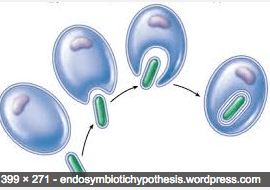
Which describes spontaneous generation?
All cells come from other cells
Prokaryotes endocytosed other prokaryotes to form eukaryotes
Creation of life from nonliving materials
Evolution through natural selection

Which rock layer most likely contains fossils of the oldest organisms?
1
2
3
4
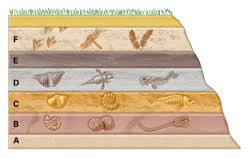
Which rock layer contains the newest fossils?
B
C
D
E
F

