
NEW
Font size
S
M
L
XL
 Worksheets
Bio
Total questions: 25
Worksheet time: 16mins
Name
Class
Date
1.

What term is given by scientists to the living parts of an ecosystem?
a)
Biotic Factors
b)
Abiotic Factors
c)
Community
d)
Population
2.

How does carbon dioxide leave the atmosphere?
a)
Through transpiration
b)
Through photosynthesis
c)
Through factory emission
d)
Sunlight
3.

What is one way that carbon enters the atmosphere?
a)
Sunlight
b)
Factory emissions
c)
Ocean uptake
d)
Rain
4.

When carbon combines with oxygen, what forms?
a)
Nitrogen
b)
Argon
c)
Carbon dioxide
d)
Sodium hydrogen
5.

Because of Earth's cycles, organisms can use what over and over?
a)
energy
b)
matter
c)
plants
d)
food
6.

Where do animals get nitrogen from?
a)
soil
b)
air
c)
water
d)
plants
7.

How do animals obtain carbon?
a)
decomposing
b)
combustion
c)
eating plants
d)
breathing it in
8.

Matter on Earth is limited, so it must be used ____________________________.
a)
only once
b)
over and over again
c)
by only animals
d)
at night only
9.

What is the original source of almost all energy in most ecosystems?
a)
carbohydrates
b)
sunlight
c)
water
d)
carbon
10.
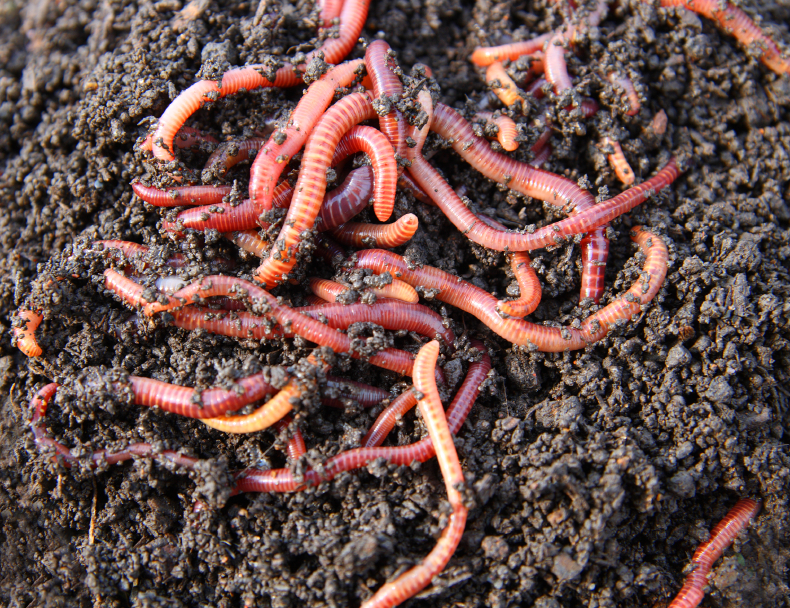
What role do these organisms play in their ecosystem as they break down matter?
a)
producer
b)
primary consumer
c)
secondary consumer
d)
decomposer
11.

What role in an ecosystem is this organism?
a)
producer
b)
primary consumer
c)
secondary consumer
d)
decomposer
12.

A graphic illustration that shows each trophic level and the amount of useable energy contained within.
a)
Food chain
b)
Food web
c)
Energy Pyramid
d)
All of these
13.

What do the Carbon Dioxide and Oxygen gases circulate among?
a)
Animals
b)
Plants
c)
The Atmosphere
d)
All of the above
14.

Where is most of the phosphorus stored in the biosphere?
a)
In rock and soil minerals and in ocean sediments.
b)
Dissolved in the water consisting within the atmosphere, lakes, rivers, and oceans.
c)
In living organism consisting within their nucleic acids such as DNA, RNA, and ATP.
15.

When bacteria in the soil change free nitrogen into nitrogen containing compounds, it is called
a)
Denitrification
b)
Nitrogen fixation
c)
ammonia
d)
decaying
16.

When organisms decay, the nitrogen in their bodies gets ________
a)
returned to the soil
b)
returned to the ocean
c)
fixed
d)
carbonated
17.

In the energy pyramid here, which organisms have the most energy available?
a)
Producers
b)
Carnivores
c)
Herbivores
d)
Top Predator
18.

In the energy pyramid here, how much of the energy in each level gets lost as heat or used by the organism for survival?
a)
80%
b)
90%
c)
10%
d)
20%
19.

The diagram is intended to show relationships in an ecosystem. What do the arrows represent?
a)
The direction of population migration
b)
Differences in dietary habits
c)
Progressively smaller organisms
d)
The direction of the energy flow
20.

Which of the following is not a decomposer
a)
Vulture
b)
Fungus
c)
Worm
d)
Bacteria
21.

True or False: In an ecosystem, there are more apex predators than prey.
a)
True
b)
False
22.
What do the carbon and nitrogen cycles ensure (allow)?
a)
human activities have no effect
b)
living organisms will not become limited to one nutrient
c)
nutrients will be circulated throughout the biosphere
d)
nutrients will not reach toxic levels
23.

What happens to the rest of the energy that doesn't move up to the next trophic level?
a)
it's released as heat
b)
it becomes nutrients for soil
c)
it becomes food
d)
it becomes less space
24.
Nitrogen is released from living things when they die in the form of...
a)
Nitrogen gas
b)
Nitrous oxide
c)
Ammonia
d)
Nitrites
25.

How many trophic levels?
a)
2
b)
3
c)
4
d)
5
Reset

