NEW
Font size
 Worksheets
Microspes
Total questions: 21
Worksheet time: 11mins

This pictures shows:
onion cells
elodea cells
cheek cells
liver cells

This picture shows that the microscope:
only flips images upside down
only flips images over backwards
flips the image upside down and backwards
doesn't flip the image at all

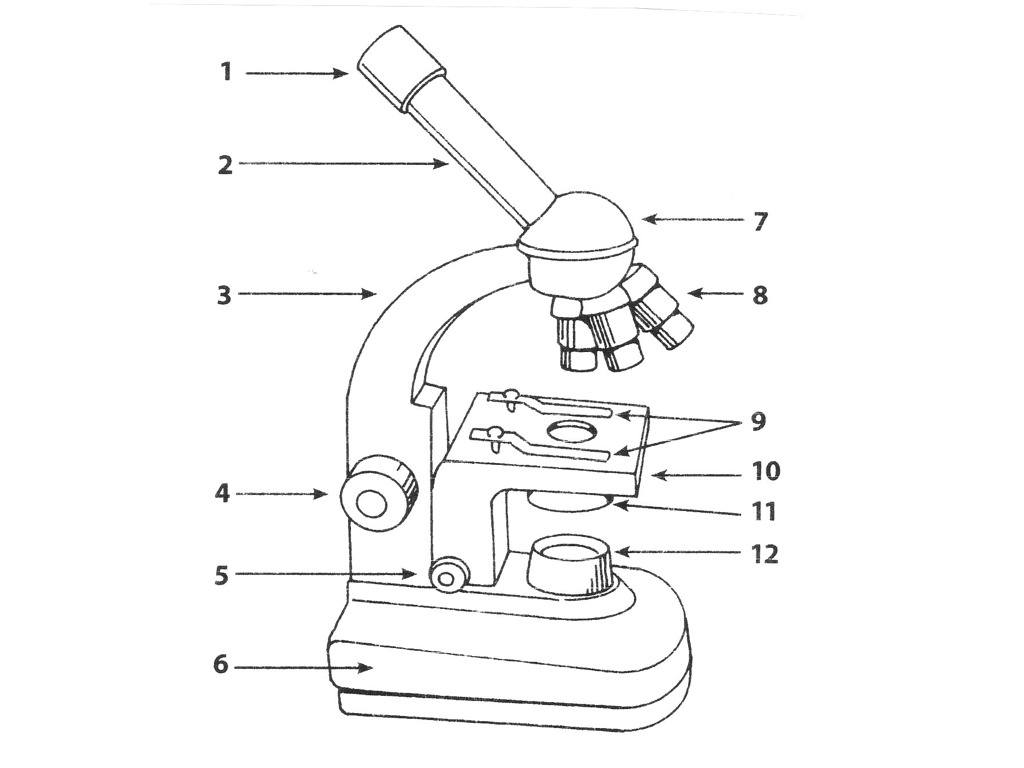
Item #8, the bottom one on the left side, is pointing to the:
diaphragm
light source
stage
base
When properly carrying a mocroscope you should have hands on:
the stage and arm
the base and the arm
the body tube and the base
the eyepiece and the stage
While moving the slide to the left while looking through the eyepiece it appears to be moving:
to the left
up
down
to the right
The best way to avoid air bubbles when making a wet mount slide is to:
drop the cover slip on at an angle
drop the cover slip on flat
squeeze the slide and cover slip after it is on
tap on the cover slip once it is in place
If you can no longer see the specimen when you get to high power you should:
use the coarse adjustment knob to help you focus
lower the stage, move the slide and go back to using high power
go back to low or medium power and begin again
lower the stage, move the slide around and then go back to high and use the coarse adjusment knob to focus
What can you do to help shine more light on the specimen you are abserving?
use a higher power
adjust the diaphragm
use direct sunlight
shine a flashlight on it
What should you never do when using the microscope?
swing it around while carrying it
use the coarse adjustment on high power
place it right next to the edge of the table
all of these
To ensure that you are able to view your specimen you should:
make sure the light is turned on
make sure the objective lense is clicked into place
make sure the diaphragm is clicked into place
make sure you have it clearly focused
all of these
Our microscopes magnify the specimen using two lenses therefore it is called:
a binocular microscope
a dual lense microscope
a compound microscope
an electron microscope
Which piece of the microscope is used for viewing a specimen?
nosepiece
eyepiece
earpiece
stage clips
These hold the specimen in place so it does not shift while viewing it.
diaphragm
nosepiece
stage clips
base
What is the scientific term for "making an image larger"?
resolution
rotation
magnification
magnetize
Which part of the microscope regulates the amount of light on the specimen?
diaphragm
nosepiece
light source
eyepiece