
 Worksheets
Elements, Compounds, Mixtures, Acids and Bases Solutions
Total questions: 27
Worksheet time: 20mins
Name
Class
Date
1.

How does a solution become supersaturated?
a)
dissolve lots of solute in it.
b)
dissolve a little solute in it.
c)
dissolve more solute than you should be able to.
d)
dissolve a super amount of solvent in it.
2.
Solution where more solute can still be dissolved at the given temperature.
a)
Saturated
b)
Unsaturated
c)
Supersaturated
d)
Homogeneous solution
3.

What is a mixture?
a)
elements chemically combined
b)
a combination of different things
c)
it is found on the Periodic Table
d)
it is made of chemical
4.
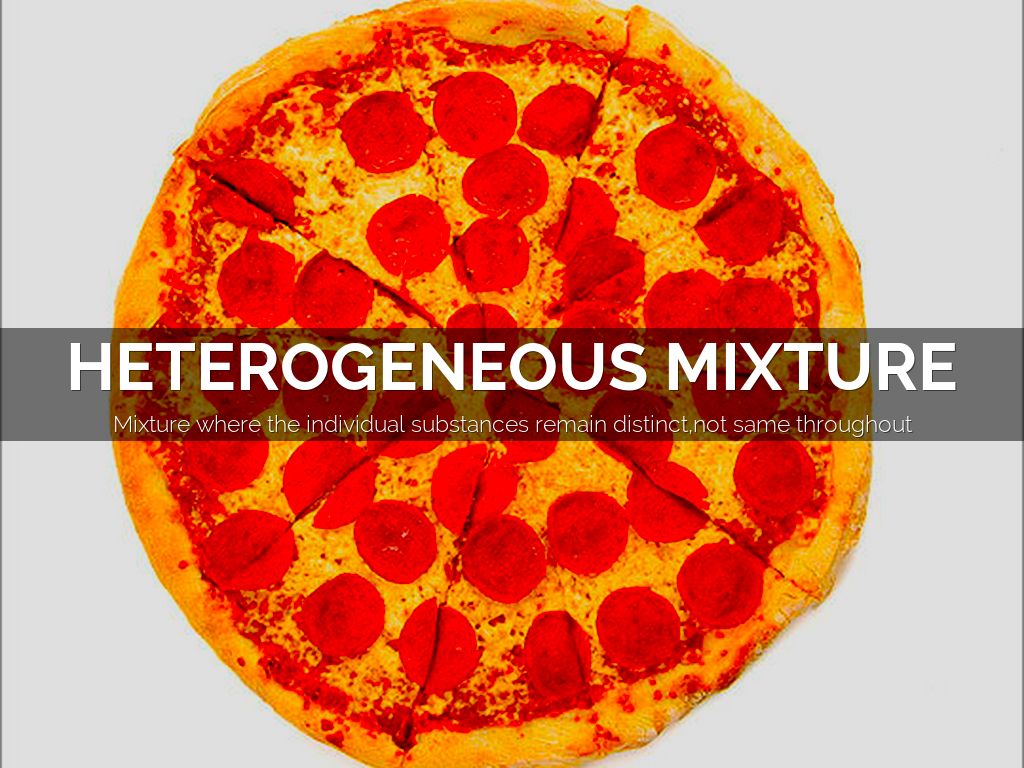
What does it mean if a mixture is heterogeneous?
a)
you can see the different parts
b)
cannot tell one part from another
c)
very well blended
d)
made of elements
5.

What does it mean if a mixture is homogeneous?
a)
you can see the different parts
b)
cannot tell one part from another
c)
chunks of particles
d)
made of elements
6.

What type of mixture is this?
a)
heterogeneous
b)
homogeneous
7.

What type of mixture is this?
a)
heterogeneous
b)
homogeneous
8.

To separate the sugar and lemonade what method should you use?
a)
filtration
b)
sorting
c)
magnet
d)
boiling
9.

To separate iron filings and sulfur what method should you use?
a)
filtration
b)
sorting
c)
magnet
d)
boiling
10.
substance that dissolves the solute
a)
solution
b)
solvent
c)
saturation
d)
so
11.
If a spoonful of sugar is mixed in a glass of water, what is the water called?
a)
solute
b)
solution
c)
solvent
d)
element
12.
Sugar water is a
a)
solution
b)
suspension
c)
colloid
13.
Milk is a
a)
solution
b)
suspension
c)
colloid
14.
What type of mixture separates upon standing?
a)
Solution
b)
Alloy
c)
Colloid
d)
Suspension
15.
Which are different types of mixtures
a)
suspension
b)
solution
c)
colloid
d)
all the above
16.
A colloid is a mixture that contains undissolved particles.
a)
True
b)
False
17.

The light is spread out by flour and water, and does not go through the mixture. What is the mixture called.
a)
Solution
b)
Suspension
c)
Colloid
18.
A neutralization reaction will always produce...
a)
water & salt
b)
water
c)
salt
d)
water & carbon
19.
If there is excess hydrogen ions, the solution will be...
a)
acidic
b)
basic
20.
If there is excess hydroxide ions, the solution will be...
a)
acidic
b)
basic
21.
Zn(OH)2 is an example of a...
a)
acid
b)
base
c)
salt
22.
H3PO4 is an example of a ...
a)
acid
b)
base
c)
salt
23.
Identify the salt in the following equation:
Zn(OH)2 + HNO3 ---> H2O + Zn(NO3)2
Zn(OH)2 + HNO3 ---> H2O + Zn(NO3)2
a)
Zn(OH)2
b)
HNO3
c)
H2O
d)
Zn(NO3)2
24.
NaCl is a ...
a)
acid
b)
base
c)
salt
d)
water
25.
If an acid has a pH of 1.4 will it be strong or weak?
a)
strong
b)
weak
26.
If an acid has a pH of 6.5 will it be strong or weak?
a)
strong
b)
weak
27.
At what pH is a solution neutral?
a)
0
b)
7
c)
14
100 %

