wayground logo

Free Printable Worksheets

Font size

S
M
L
XL
Worksheets

Planetary Orbits Gravity

Total questions: 28

Worksheet time: 32mins

Name
Class
Date
1.

Gravity pulls everything toward...

a)

The ground

b)

The largest mass

c)

The moon

d)

The Sun

2.

What are three things all planets have in common?

a)

They have at least one moon

b)

They are massive enough that their gravity controls all objects in the area

c)

They are spherical

d)

They orbit the sun

3.
Gravity attracts all objects towards one another.
a)
False
b)
True
c)
It depends
4.
Any object with mass has gravity.
a)
True
b)
Sometimes
c)
False
d)
Never
5.

As the distance between two objects increases, the pull of gravity...

a)

Increases

b)

Decreases

c)

Stays the same

6.
A person would weigh less on on the Moon than on the Earth because . . .
a)
Moon has more mass, and therefore more gravity
b)
Moon has less mass, and therefore more gravity
c)
Moon has more mass, and therefore less gravity
d)
Moon has less mass and therefore less gravity
7.

Two factors effecting the strength of the force of gravity between 2 objects are...

a)

mass and distance

b)

mass and matter

c)

distance and weight

d)

weight and mass

8.
The amount of matter in an object.
a)
force 
b)
mass
c)
weight 
d)
pressure 
9.
Which of the following never changes no matter where you are in the universe? 
a)
Pounds 
b)
weight 
c)
Force
d)
Mass
10.
__________holds all of the planets in orbit around the sun.
a)
Force
b)
Motion
c)
Weight
d)
Gravity
11.

Which of the following is required for planets to stay in orbit around the Sun? (choose all that apply)

a)

Gravity

b)

Weight

c)

Friction

d)

Inertia (Forward Motion)

12.

What prevents planets from pulled into and crash into the Sun?

a)

Gravity

b)

Weight

c)

Friction

d)

Inertia (Forward Motion)

13.

What prevents planets from drifting off into space and keeps it in the planets in our Solar System?

a)

Gravity

b)

Weight

c)

Friction

d)

Forward Motion

14.

Without gravity, the stars, planets and all objects in the universe would _______.

a)

continue to orbit each other

b)

move in a random direction

c)

move in a straight line

d)

stop moving

15.

A(n) _____ is the curved path of an object around a point/object in space.

a)

orbit

b)

rotation

c)

revolution

d)

phase

16.
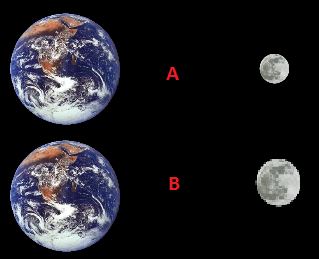
Which model has greater gravitational attraction (if any)
a)
Model A
b)
Model B
c)
Both Model A and Model B (same gravity)
17.
Which model has greater gravitational attraction (if any)
a)
Model A
b)
Model B
c)
Both Model A and Model B (same gravity)
18.
Which model has greater gravitational attraction (if any)
a)
Model A
b)
Model B
c)
Both Model A and Model B (same gravity)
19.
Which system has the greater gravitational attraction between the two objects (if any)?
a)
System A
b)
System B
c)
Same gravitational attraction fro System A and System B
20.

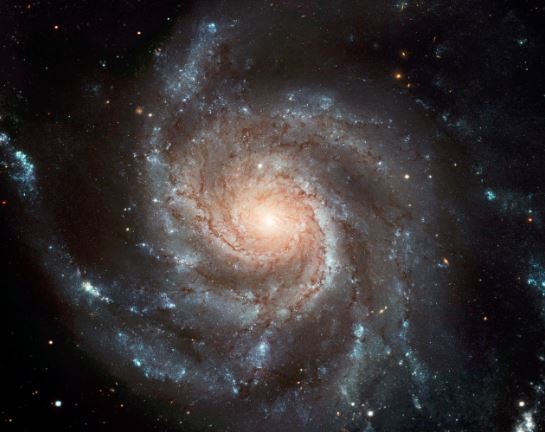
Choose the image that has the most gravitational pull:

a)
b)
21.

Is gravity a push, a pull, or both?

a)

push

b)

pull

c)

both

22.
The spinning of an object on its axis is called a(n) _?_.
a)
orbit
b)
rotation
c)
revolution
d)
phase
23.
A(n) _?_ is the time it takes an object to travel once in a one complete orbit.
a)
phase
b)
rotation
c)
revolution
d)
axis
24.
If you increase the mass of the Sun slightly, what happens to the time it takes the Earth to complete one revolution?  (experiment #1)
a)
It decreases.
b)
It stays the same.
c)
It increases.
25.
If you decrease the mass of the Sun too much, what happens to the Earth? (experiment #1)
a)
It leaves the Solar system.
b)
There is no apparent change in motion.
c)
It is pulled (crashes) into the Sun.
26.
If you increase the mass of the Sun too much, what happens to the Earth? (experiment #1)
a)
It leaves the Solar system.
b)
There is no apparent change in motion.
c)
It is pulled (crashes) into the Sun.
27.
If you increase the distance between the Sun and the Earth slightly, what happens to the time it takes it to complete a revolution? (experiment #2)
a)
It decreases.
b)
It remains the same.
c)
It increases.
28.
If you increase the mass of the Sun too much, what happens to the Earth? (experiment #1)
a)
It leaves the Solar system.
b)
There is no apparent change in motion.
c)
It is pulled (crashes) into the Sun.