
 Worksheets
AP Chemistry Bonds
Total questions: 24
Worksheet time: 2hrs 14mins
Name
Class
Date
1.
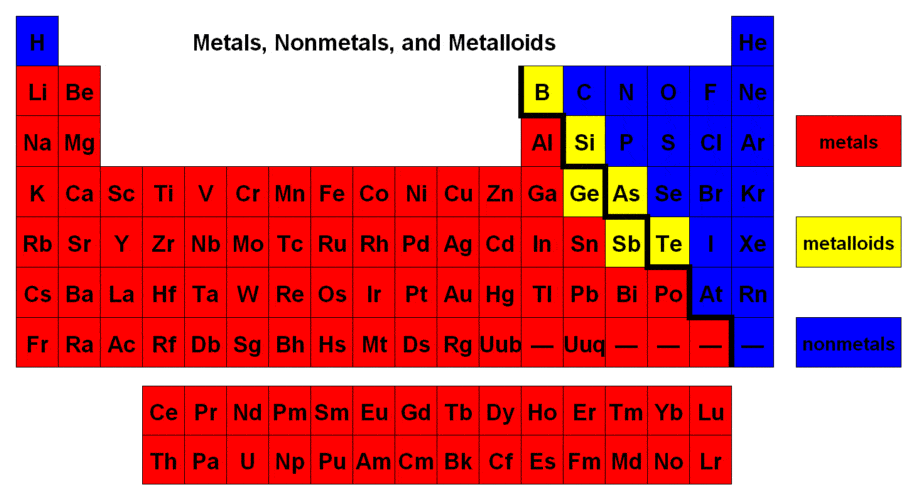
What elements generally make an ionic bond?
a)
metal and nonmetal
b)
2 or more nonmetals
c)
metal
d)
none of the above
2.
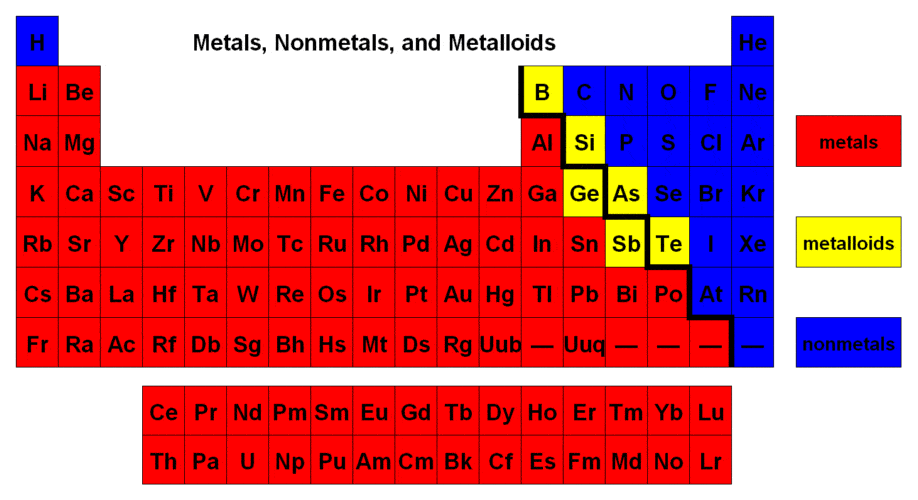
What elements generally make a covalent bond?
a)
metal and nonmetal
b)
2 or more nonmetals
c)
metal
d)
none of the above
3.
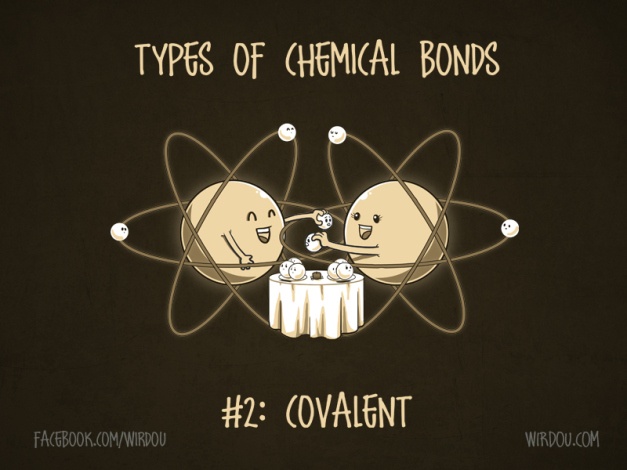
In chemical compounds, covalent bonds form when
a)
the electronegativity difference between two atoms is very large.
b)
electrons are completely transferred between two metals.
c)
pairs of electrons are shared between two nonmetal atoms.
d)
two nonmetal atoms are attracted to each other by opposite charges.
4.
An ionic bond forms when
a)
Valence electrons are shared
b)
a sea of mobile electrons surround the cations
c)
valence electrons are transferred between atoms
d)
none of the above
5.
Predict the bond that will form between Be and F.
a)
Ionic
b)
Covalent
6.
Predict the bond that will form between Se and Cl.
a)
Ionic
b)
Covalent
7.
Predict the bond that will form between Sr and S.
a)
Ionic
b)
Covalent
8.
What is a valence electron?
a)
an electron that is found in the outermost shell of an atom.
b)
an electron found in the innermost shell of an atom.
c)
an electron found in the middle shell.
9.
What is the number of valence electrons for Oxygen?
a)
8
b)
6
c)
2
d)
1
10.
What is the number of valence electrons for Beryillum?
a)
1
b)
4
c)
2
d)
7
11.
What is the number of valence electrons for Silicon?
a)
1
b)
2
c)
6
d)
4
12.
How are ions formed?
a)
Gaining or losing protons
b)
Gaining or losing neutrons
c)
Gaining or losing electrons
d)
Gaining of losing mass
13.
Which of the following elements is a metal?
a)
Sodium
b)
Oxygen
c)
Hydrogen
d)
Argon
14.
Why is water polar?
a)
It has ionic bonds
b)
It is partially charged
c)
It has a neutral charge
d)
It has a north and south pole
15.
When forming an ionic bond, a metal atom
a)
Gains electrons to form a cation
b)
Loses electrons to form a cation
c)
Gains electrons to form an anion
d)
Loses electrons to form an anion
16.
Which element can combine with oxygen to form a molecular compound?
a)
Fe
b)
Mg
c)
C
d)
Ne
17.
Which of the following elements has the weakest attraction for electrons in a chemical bond?
a)
S
b)
Cl
c)
O
d)
F
18.
The polarity of a bond between two elements can be best determined by
a)
The difference in electronegativity between the elements
b)
The difference in first ionization energy between the elements
c)
The number of electrons shared in the bond
d)
The difference in atomic radius between the elements
19.
Which compound contains only covalent bonds?
a)
NaOH
b)
Ba(OH)2
c)
Ca(OH)2
d)
CH3OH
20.
Which bond is most polar?
a)
H-F
b)
H-Cl
c)
H-Br
d)
H-I
21.
Which Group 15 element exists as diatomic molecules at STP?
a)
P
b)
N
c)
Bi
d)
As
22.
What occurs as two atoms of fluorine combine to become a molecule of fluorine?
a)
A bond is formed as energy is absorbed
b)
A bond is formed as energy is released
c)
A bond is broken as energy is absorbed
d)
A bond is broken as energy is released
23.

How many atoms of Oxygen are in this compound?
a)
4
b)
1
c)
12
d)
7
24.

How many elements make up this compound?
a)
6
b)
4
c)
2
d)
3
100 %

