Wayground logo

Free Printable Worksheets

Font size

S
M
L
XL
Worksheets

Atoms Ions Molecules

Total questions: 20

Worksheet time: 23mins

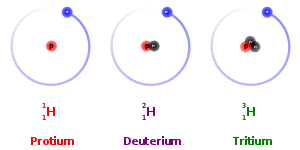
Name
Class
Date
1.
If an atom has an extra neutron, it is a(n)
a)
Positive ion
b)
Negative ion
c)
Isotope
d)
Neutral Atom
2.
If an atom gains an electron it is a(n)
a)
Positive ion
b)
Negative ion
c)
Isotope
d)
Neutral Atom
3.
If an atom loses an electron it is a(n)
a)
Positive ion
b)
Negative ion
c)
Isotope
d)
Neutral Atom
4.
Can an atom of Hydrogen have 2 protons?
a)
Yes, because it can be an ion
b)
No, because protons identify the atom
c)
Yes, because it can be an isotope
d)
No, because only neutral atoms exist
5.

What is the IUPAC name of the compound whose formula is (NH4)3PO4 ?

a)

ammonium phosphate

b)

triammonium monophosphate

c)

triammonium phosphate

d)

ammonium phosphide

6.
Sodium has an atomic number of 11, how many protons does this atom have?
a)
22
b)
11
c)
12
d)
2
7.
The following element key shows how many protons?
a)
16
b)
15.999
c)
Oxygen
d)
8
8.
Which two particles make up the nucleus of an atom?
a)
Protons and Electrons
b)
Protons and Neutrons
c)
Molecules and Compounds
d)
Neutrons and Electrons
9.

What is at the center of every atom?

a)

An electron

b)

A compound

c)

A molecule

d)

A nucleus

10.

Which statement correctly describes an electron in an atom?

a)

Electrons stay inside the nucleus and carry a neutral charge.

b)

Electrons circle the nucleus and have a positive charge.

c)

Electrons move around the nucleus and have a negative charge.

d)

Electrons stay inside the nucleus and have a negative charge.

11.

What is an isotope?

a)

A charged atom

b)

An atom with different amount of neutrons

c)

An atom with different amount of protons

d)

A neutral atom

12.
Different isotopes have...
a)
different masses
b)
different atomic numbers
c)
different electrons
d)
different protons
13.

What is the mass number of bromine?

a)

35

b)

45

c)

80

d)

79.904

14.

What type of atom is this?

a)

Neutral atom

b)

Cation

c)

Anion

d)

Isotope

15.

How many electrons does this magnesium ion have?

a)

24

b)

12

c)

10

d)

14

16.

What does it happen to this atom?

a)

It LOSES electrons

b)

It GAINS electrons

c)

It GAINS protons

d)

It LOSES protons

17.
A subatomic particle that has a positive electric charge
a)
Proton
b)
Neutron
c)
Electron
d)
Isotope
18.
The number of protons in an atom
a)
Atomic Number
b)
Atomic Proton
c)
Atomic Neutron
d)
Atomic Mass
19.
Atoms that have the same number of protons but different numbers of neutrons.
a)
Isotopes
b)
Neutron
c)
Proton
d)
Atomic Mass
20.
In an atom, what is the number of protons equal to?
a)
The number of electrons.
b)
The number of neutrons.
c)
The number of molecules.
d)
The number of nuclei.