
 Worksheets
Living Environment Unit 5 Review
Total questions: 24
Worksheet time: 17mins
Which of the following is NOT required in an organic compound?
Carbon
Hydrogen
Oxygen
Phosphorous
True or False
Macromolecules are very large organic (CHON) molecules.
True
False
Which of the following are macro-molecules?
(Remember they consist of organic molecules.) You can select more than one answer.
Carbohydrates (Sugar & Starch)
Lipids (fats)
Proteins
Nucleic Acids
Why is water considered an inorganic compound?
Water doesn't consist of carbon
water doesn't consist of nitrogen
water contains hydrogen
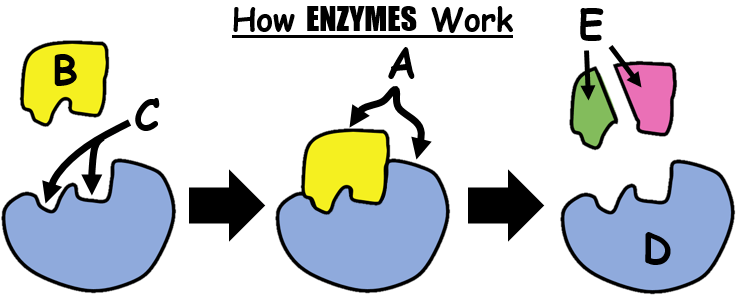
A starch molecule would break down into
glucose (simple sugar)
amino acids
nucleotides
fatty acids
Experiments revealed the following information about a certain molecule:
— It can be broken down into amino acids. — It can break down proteins into amino acids.
— It is found in high concentrations in the small intestine of humans.
This molecule is most likely
an enzyme
a hormone
an inorganic compound
an antigen
Which statement best describes enzymes?
They slow down the rate of breathing
They are the building blocks of polymers
They speed up the conduction of impulses along a nerve cell
They influence the rate of chemical reactions
Organic compounds are used as building blocks for
water, DNA, and starches
water, proteins, and oxygen
proteins, DNA, and carbon dioxide
proteins, starches, and fats
Which of the following statements about pH is correct ?
less than 7 is acidic, 7 is neutral, and greater than 7 is basic
less than 7 is neutral, 7 is basic and greater than 7 is acidic
less than 7 is basic, 7 is neutral and greater than 7 is acidic
Simple Sugars, Disaccharides and polysaccharides are all
carbohydrates
lipids
nucleic acids
proteins



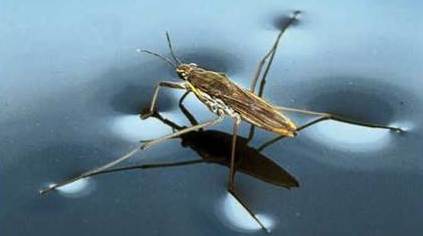
Refer to the picture; the water strider can walk over waters surface. This is occurring due to:
Adhesion
Cohesion

