
 Worksheets
Unit 9 Investigating the Characteristics of the Solar System
Total questions: 36
Worksheet time: 29mins
Name
Class
Date
1.
Appears as a streak in the sky.
a)
asteroid
b)
meteoroid
c)
comet
d)
meteor
2.
What is an asteroid?
a)
rocky, metallic bodies that orbit the sun
b)
a mixture of ices
c)
a dwarf planet
d)
a chunk of stony matter
3.
What tool would you use to study stars and space?
a)
microscope
b)
oscilloscope
c)
telescope
d)
nanoscope
4.
Which of the following is true?
a)
Earth is the center of the solar system
b)
The sun orbits the earth
c)
Gravity exists only on Earth
d)
The sun is the center of the solar system
5.
A pattern of stars is called what?
a)
constellation
b)
solar system
c)
galaxy
d)
bunch
6.
How long is Earth's revolution?
a)
one day
b)
one year
c)
one decade
d)
one hour
7.
How long is Earth's rotation?
a)
one day
b)
one year
c)
one decade
d)
one hour
8.

How many planets in our solar system?
a)
6
b)
7
c)
8
d)
9
9.
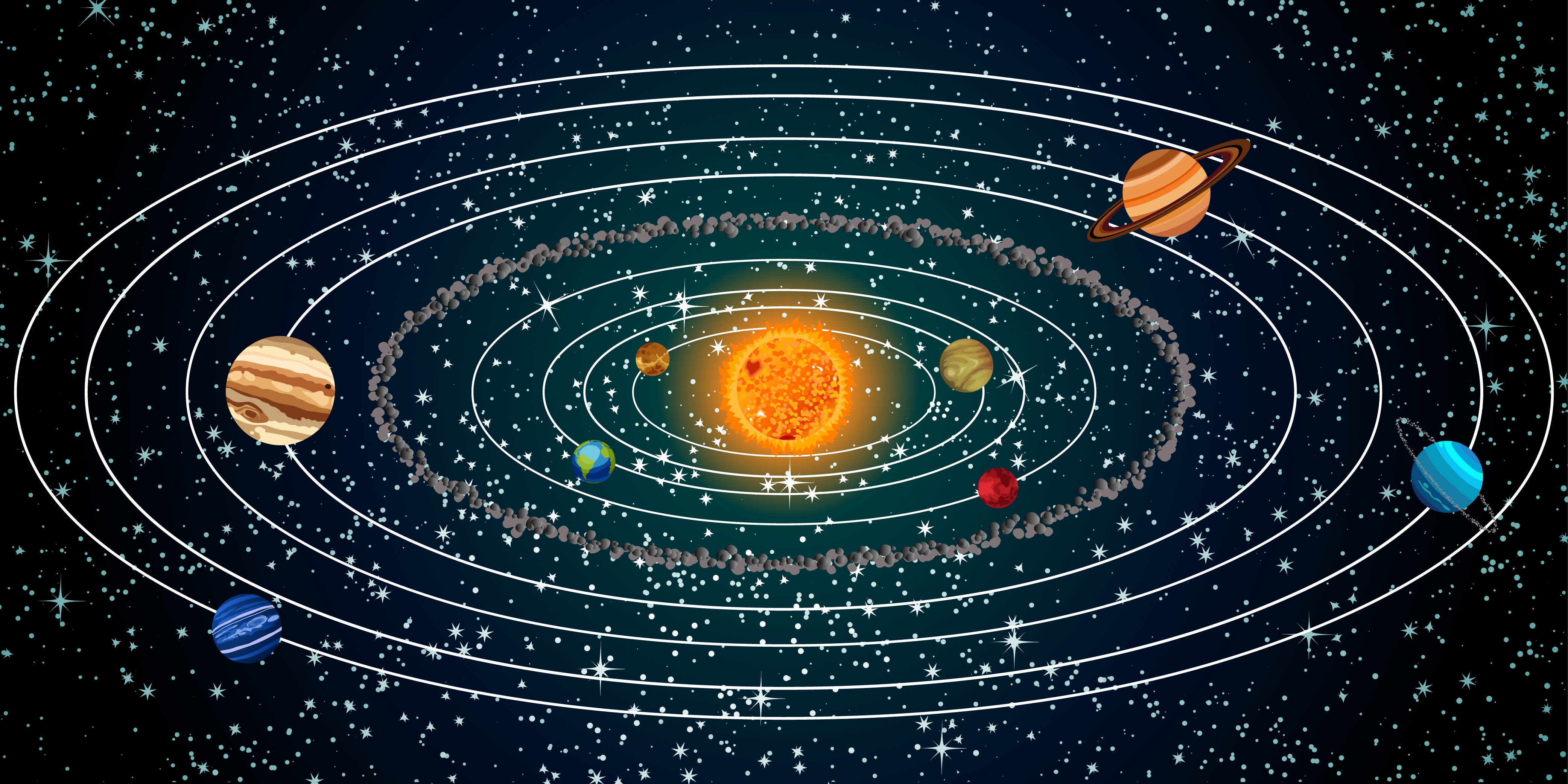
Why do planets orbit the sun (and not float around in space)?
a)
the moons are keeping them in place
b)
They were hit by an asteroid
c)
they were hit by a comet
d)
the sun's gravity keeps them in place
10.

The Sun is a ____________.
a)
planet
b)
star
11.
Pluto is a
a)
dwarf planet
b)
star
c)
comet
d)
giant planet
12.
What is the name of our Galaxy?
a)
Mily Galaxy
b)
Milky Way Galaxy
c)
Andromeda Galaxy
d)
Pinwheel Galaxy
13.
Which choice shows the correct order of the planets?
a)
Mars, Venus, Earth, Mercury, Jupiter, Saturn, Uranus, Neptune
b)
Earth, Venus, Mars, Mercury, Jupiter, Saturn, Uranus, Pluto
c)
Mercury, Venus, Earth, Mars, Jupiter, Saturn, Uranus, Neptune
d)
Saturn, Venus, Mars, Mercury, Jupiter, Neptune Mercury, Uranus
14.
A rocky body that orbits around a planet.
a)
moon
b)
star
c)
axis
d)
Sun
15.
The _________ of a constellation changes during the night.
a)
position in the sky
b)
shape
c)
name
d)
distance
16.
Asteroids "hang out" in the Asteroid Belt between the planets of:
a)
Earth and Mars
b)
Mercury and Venus
c)
Saturn and Neptune
d)
Mars and Jupiter
17.
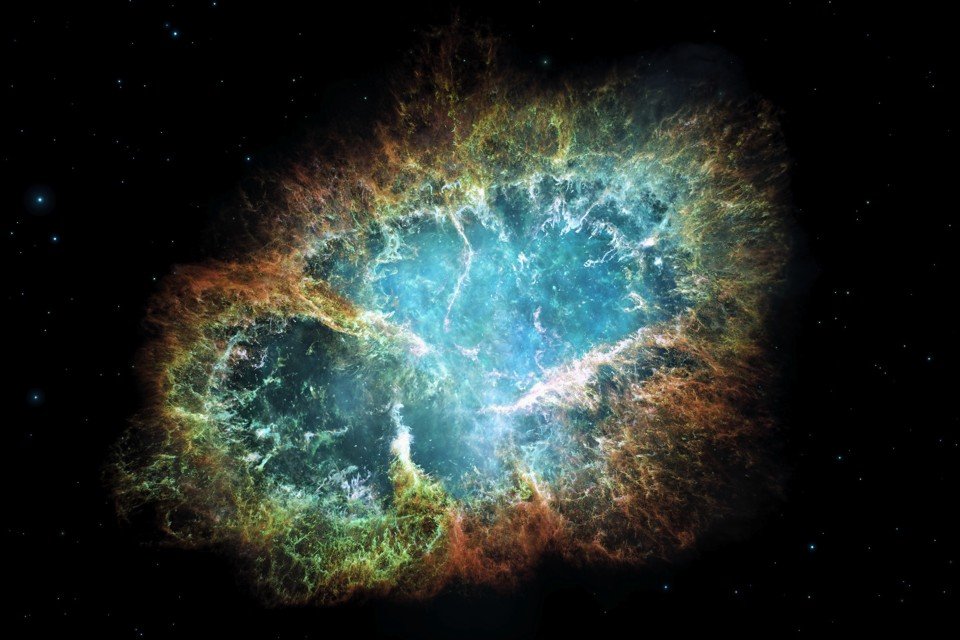
What is the name of the explosion at the death of a massive star?
a)
Supergiant
b)
Supernova
c)
Black Hole
d)
Nebula
18.
The only objects in our Universe that produces and emits its own light is
a)
Nebulas
b)
Comets
c)
Planets
d)
Stars
19.
What is an object that is so massive and dense that even light can not escape its gravity?
a)
Main-sequence
b)
black hole
c)
Apparent Magnitude
d)
Comet
20.
Which is the smallest of the following: Planets; Solar System; Galaxy; Universe
a)
Universe
b)
Solar System
c)
Planets
d)
Galaxy
21.

The only planet that we know of which can sustain life is ____________.
a)
mars
b)
earth
c)
the moon
d)
jupiter
22.
What is the 5th planet from the Sun?
a)
Mars
b)
Jupiter
c)
Venus
d)
Earth
23.
What is the farthest planet in our Solar System?
a)
Neptune
b)
Uranus
c)
Pluto
d)
Saturn
24.
Which planet has been re-classified as a dwarf planet?
a)
Mars
b)
Mercury
c)
Neptune
d)
Pluto
25.
Made of ice, dust and gas
a)
asteroid
b)
meteoroid
c)
comet
d)
meteor
26.

What celestial body is at the center of our solar system?
a)
Earth
b)
Moon
c)
Milky Way
d)
Sun
27.

What are two differences between planets?
a)
Outer planets take longer to revolve and are larger.
b)
Outer planets take longer to revolve and are smaller.
c)
Inner planets take longer to revolve and are smaller.
d)
Inner planets take longer to revolve and are larger.
28.

Stars are made mostly of which of the following?
a)
very hot metal
b)
hot gases of hydrogen and helium
c)
hot molten lava
d)
dust and ice
29.
What's the difference between asteroids and comets?
a)
comets are made of rock and asteroids are made of dust and ice.
b)
Asteroids are made of rock and comets are made of dust and ice.
c)
Asteroids orbit the sun while comets orbit a planet.
d)
comets are larger than asteroids.
30.
An object that revolves around another object in space (natural or manmade)
a)
mirror
b)
microscope
c)
oscilloscope
d)
satellite
31.
Why are many large optical telescopes located on mountains?
a)
it is cheaper to build on mountains
b)
to be above part of the atmosphere
c)
because it is easier to build telescopes on mountains
d)
to be closer to city lights
32.
A device that detects radio waves from objects in space is called a(n)
a)
radio telescope.
b)
reflecting telescope.
c)
refracting telescope.
d)
electromagnetic telescope.
33.
Why do we use the entire electromagnetic spectrum to study space?
a)
Because the visible spectrum is such a small part of light we are missing out by not doing so.
b)
So we can determine the direction galaxies are moving
c)
So we can understand the nature of time.
d)
So we can see the composition of galaxies
34.
Why is the Hubble telescope located in space?
a)
So it can be closer to the stars it magnifies
b)
They have very large optical lenses
c)
So its images arent distorted by Earth's atmosphere
d)
So it can be operated by astronauts
35.
If a star is being observed from Earth and it's light has shifted towards the blue side of the electromagnetic spectrum it would be...
a)
Moving towards the Earth
b)
Moving away from the Earth
c)
This is a trick question that cannot be answered
d)
It isn't a star, it is a very large blueberry.
36.
If a star is being observed from Earth and it's light has shifted towards the red side of the electromagnetic spectrum it would be...
a)
Moving towards the Earth
b)
Moving away from the Earth
c)
This is a trick question that cannot be answered
d)
It isn't a star, it is a very large strawberry.
100 %

