
 Worksheets
Constellations and Their Motion
Total questions: 63
Worksheet time: 35mins
Choose a word from the drop-down menu to complete the sentences below.
Early explorers used a(n) [CHOICE 1] to help locate magnetic North. A(n) [CHOICE 2] helped explorers to see the stars closer and in more detail.
(a)
Choose a word from the drop-down menu to complete the sentences below.
A(n) [CHOICE 2] helped explorers to see the stars closer and in more detail.
(a)
Why does the moon seem to change position in the sky every night?
because of the moon's orbit around the sun
because of the moon's rotation on its axis
because of the Earth's rotation on its axis
because of the sun's orbit around the Earth
On a particular night, the student observed the shape of the Moon to be a full circle. How many days would the Moon take to appear as a full circle again?
7 days
14 days
28 days
42 days
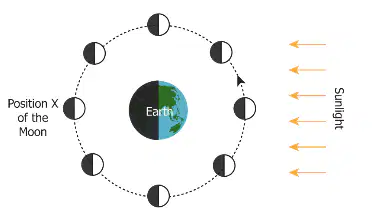
The image shows how the Moon revolves around the Earth. How would the Moon appear at position X?
full moon
new moon
waxing gibbous
waning crescent
How does the rotation of the Earth on its axis contribute to seasonal changes?
it elongates the Earth's shape
it alters the speed of Earth's revolution
it changes the angle of the sunlight at different points in the year
it causes the Earth to move closer and further away from the sun
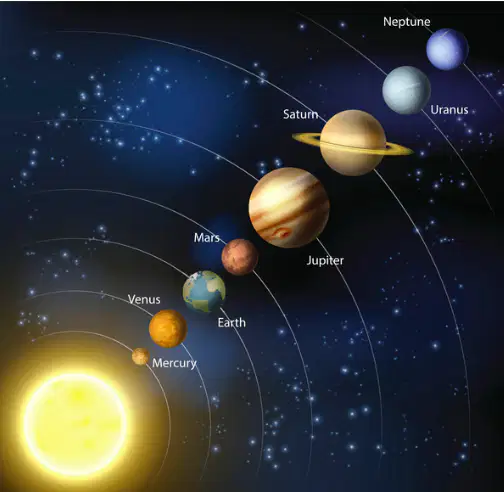
Examine the model below and answer the question that follows. Which historical people would consider this model a correct representation of the solar system? [Select only TWO choices]
Ptolemy
Nicolaus Copernicus
Aristotle
Plato
Galileo Galilei
The model of the solar system that focuses on the sun at the center is known as what?
galactic model
heliocentric model
terracentric model
geocentric model
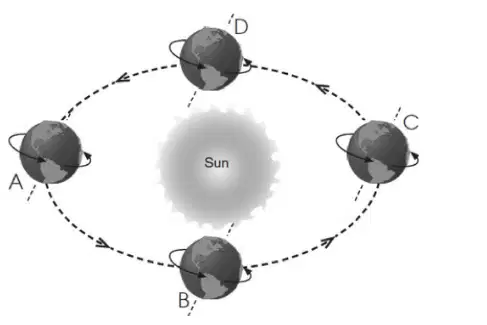
What season is the North Hemisphere experiencing in position A?
winter
summer
fall
spring
What season is the North Hemisphere experiencing in position B?
winter
summer
fall
spring
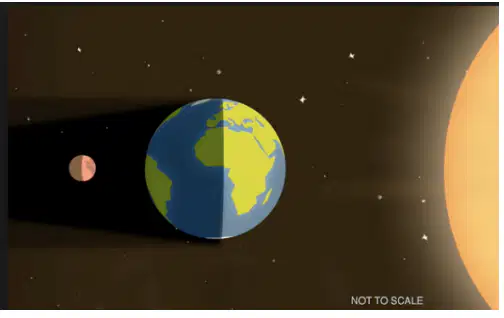
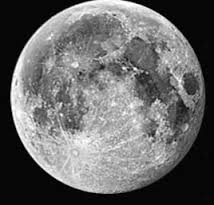
The moon phase shown is the ________.
Full moon
New Moon
Waxing Gibbous
Waning Gibbous
During the phase in Part A, it is possible for a(n) _______ eclipse to occur.
lunar
solar
elliptical
planetary
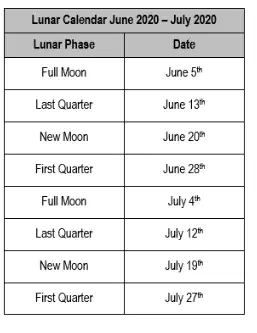
Based on the table, the Full Moon phase happens approximately [CHOICE 1] a month.
once
twice
What factor impacts the motion of constellations in our night sky from our viewpoint on Earth?
the Earth's rotation on its axis
the movement of asteroids
the orbit of Earth's moon
the progression of the solar system through space


Based on the diagram, which season would the northern hemisphere be experiencing?
Winter
Spring
Summer
Fall
How long does it take for Earth to complete one full revolution around the sun?
365 days
24 years
24 weeks
6 months
Earth experiences seasons as it revolves around the sun because of its
shape
tilt
speed
mass

What season would we be experiencing with Earth #3?
Winter
Spring
Summer
Fall
How many degrees is the Earth tilted on axis
3.5 degrees
23.5 degrees
35.2 degrees
235 degrees
The path an object takes as it revolves around another object in space
Orbit
Rotation
Axis
Moon
What is at the middle of a Heliocentric system?
Mars
Moon
Sun
Earth
What is at the middle of a Geocentric system?
Sun
Neptune
Earth
The Universe

What is the name of this model?
Heliocentric Model
Geocentric Model
Circle Model
Aristotle Model
The astronomer who was the first to say that Earth was a fixed object at the center of the universe.
Aristotle
Ptolemy
Copernicus
Galileo
The astronomer who was first to say that the sun was the center of the universe.
Aristotle
Ptolemy
Copernicus
Galileo


As the earth rotates on its axis and orbits the sun, the constellations and stars APPEAR (seem) to _________.
move across the sky
stay in place
move around each other
rotate or spin


Orion is visible during the winter night sky and is one of the most recognizable constellations – it contains some of the____stars that we can see and is named for the hunter from Greek mythology.
dullest
brightest
smallest
darkest


Which number is a waxing gibbous moon?
2
4
5
8

What moon phase comes after this one?
New Moon
Full Moon
First Quarter

Is this moon waxing or waning?
waxing
waning

What type of eclipse is this?
Lunar eclipse
Solar eclipse
Mr. Lowe eclipse
Giant eclipse

What Moon Phase is shown?
New Moon
Full Moon
First Quarter

What Moon Phase is shown?
New Moon
Full Moon
First Quarter

Lunar eclipse
solar eclipse
A lunar eclipse only happens during a ________ moon.
New
Full
Crescent
Gibbous

It happens when the Earth moves between the Sun and the moon, blocking part of the Sun's light from reaching the moon.
solar eclipse
lunar eclipse
neap tides
spring tides
What degree is the earth tilted?
24
25
23.5
25.5

At position A, what season is the Northern hemisphere experiencing?
Summer
Winter
Spring
Fall
Why do we experience the changing of the season on the earth? (choose 2 answers)
distance from the sun
rotation of the earth
revolution around the sun
tilt of the earth's axis
Day and night is caused by the _____________ of earth on its axis.
revolution
rotation

What is at the middle of a Heliocentric system?
Mars
Moon
Sun
Earth
Who supported the Geocentric system?
Ptolemy
Aristotle
Copernicus
Galileo
What does the Heliocentric system look like?


Which scientific instrument did Galileo use to change the world?
telescope
spyglass
mirror
magnifying glass
What causes constellations to appear to move across the sky at night?
The movement of the stars
The rotation of the Earth
The movement of the moon
The position of the sun
Why do constellations change with the seasons?
Because the stars move
Because the Earth orbits the sun
Because the moon changes position
Because the sun moves
What is the main reason constellations appear to rise from east to west?
The movement of the stars
The rotation of the Earth
The orbit of the moon
The position of the sun


