
 Worksheets
CUA 4 Review
Total questions: 60
Worksheet time: 1hrs 27mins
Primary succession occurs in an area that has:
soil
no soil
some soil
none of these
___ are the first organisms to colonize an area and begin the process of ecological succession.
foundational organisms
introductory organisms
primary organisms
pioneer species
What is an example of an area that is likely to undergo primary succession?
Glaciers melt and leave exposed rock
Plants die from drought and decompose
Land is bulldozed and soil remains
Which of the following is the correct order of ecological succession?
grass - shrubs - lichens - trees
lichens - shrubs - grasses - trees
lichens - grasses - shrubs - trees
grasses - lichens - shrubs - trees
What is the term that describes a steady and stable community?
peak community
turf community
climax community
disturbed community
Which is faster: Primary or Secondary Succession?
Primary Succession
Secondary Succession
Both Take The Same Amount of Time
Which of the following is NOT a pioneer species?
Shrubs
Lichen
Mosses
Grass
T or F: Succession increases biodiversity.
true
false
The Final stage of ecological succession is...
Mature Tree Growth
Climax Community
Pioneer Community
Primary Succession

What is formed during primary succession that doesn't need to be formed during secondary succession?
pioneer species
soil
climax community
grasses
Which experiences the least change over time?
Pioneer Species
Primary Succession
Aquatic Succession
Climax Community


SC.912.L.17.9 Food Webs and Energy Transfer
A team of ecologists observed feeding patterns of several populations in the desert. The energy pyramid shown below depicts the feeding patterns the ecologist observed.
Which of the following best explains the difference in the amount of available energy in the trophic levels of the desert ecosystem?
There is less energy available in the producers because their tissues are less dense than those at higher trophic levels.
There is more energy available in the second trophic level because less energy is needed for hunting compared to the higher trophic levels.
There is more available energy in the birds of prey because they have greater muscle mass for storing energy than organisms in lower trophic levels have.
There is less available energy in the fourth trophic level because of the loss of energy through metabolism in each of the lower trophic levels.

SC.912.L.17.9 Food Webs and Energy Transfer
A diagram of a food web is shown below.
Which organism receives the least amount of energy from the producers?
Hawk
Rabbit
Grasshopper
Mouse

SC.912.L.17.9 Food Webs and Energy Transfer
The diagram below shows the flow of carbon in a terrestrial ecosystem.
Which will most likely happen if the decomposers are removed from the carbon cycle?
The amount of carbon dioxide in the atmosphere will increase.
The amount of carbon dioxide in the atmosphere will decrease.
The amount of carbon dioxide used by producers will increase.
The amount of carbon dioxide needed by consumers will decrease.
SC.912.L.17.9 Food Webs and Energy Transfer
Complete burning of plant material returns carbon primarily to the
herbivores.
water.
vegetation.
atmosphere.

SC.912.L.17.9 Food Webs and Energy Transfer
The diagram below shows the cycling of nutrients in an ecosystem.
The removal of which of the following groups would cause an immediate decrease in the amount of energy flowing through the system?
Producers
Consumers
Decomposers
Inorganic nutrients
What role do decomposers play in a food web?
They produce their own food through photosynthesis
They help recycle nutrients by breaking down dead organisms
They consume live plants
They capture solar energy
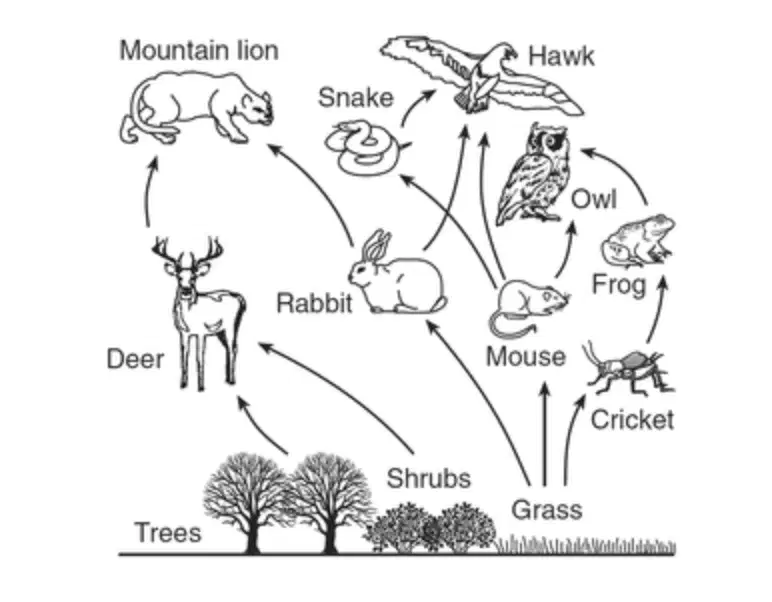
If frogs disappear from this food web what animal would probably decrease in population?
owl
deer
grass
dinosaurs

Which animal is a secondary consumer?
grasshopper
tree
snake
Patrick

Which is a primary consumer?
Hawk
grasshopper
tree
corn dog

What happens to chemical energy as you move up the energy pyramid?
more and more is created
it is used by each level and you get less as you move up
there is no such thing
Mario
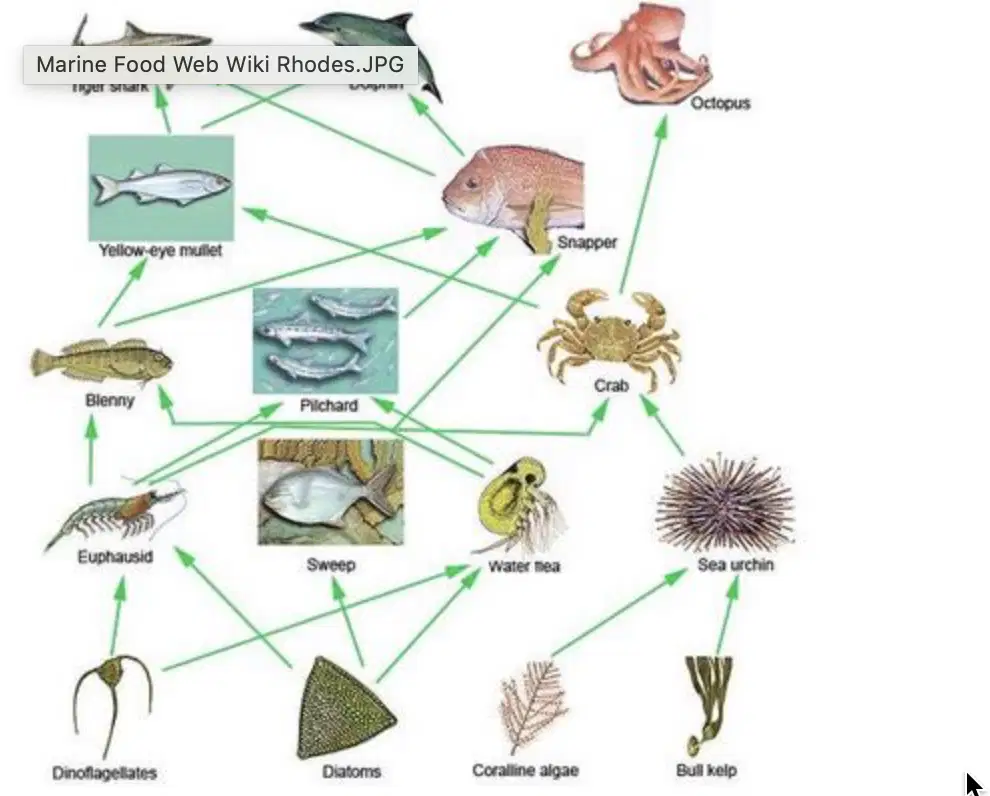
What would happen if the mullet dissapeared?
more belini because of predetor loss
more dolphins because of more food
crabs would be happy
What is the ultimate source of energy for a food web?
producers
plants
The Sun
consumers
How much energy is transffered between each trophic level?
90%
10%
50%
1%
What do the arrows represent in a food web/food chain?
They point to the organism that is being eaten
How sunlight flows within an ecosystem
The direction of energy flow between organisms
How water is transferred within a habitat
Which ecosystem has the greatest biodiversity?


How do biodiversity and sustainability work together?
The higher the biodiversity, the greater the sustainability.
The lower the biodiversity the greater the sustainability.
The higher the biodiversity, the less sustainable the ecosystem.
Biodiversity has nothing to do with sustainability.

Why is biodiversity in an ecosystem so important?
Because it can help humans where to determine good places to develop farm land.
Because places that have a healthy biodiversity are unaffected by major disturbances.
Because having a high biodiversity allows for fewer opportunities of competition for similar resources.
Because having a high biodiversity allows ecosystems to withstand disturbances (major changes).


What is happening to the biodiversity of the aquatic ecosystem as a result of the Great Barrier Reef dying?
Increased
Decreased
Stayed the same
Great Biodiversity = Great Sustainability
True
False

After a volcanic eruption the lava cools and becomes rock. Which succession must take place in order for vegetation (plants) to return?
Primary Succession
Secondary Succession

What is the main difference between primary and secondary ecological succession?
Primary begins WITHOUT soil; Secondary begins WITH soil
Primary is the first state and secondary is the second stage
Primary builds plant community; secondary builds animal community
Primary begins WITH soil; Secondary begins WITHOUT soil

Whish habitat has the highest biodiversity?
Area A
Area B
Area C
Area D
Recently, a family of bobcats moved into an area with a large rabbit population. What changes may occur in the ecosystem?
The rabbit population may increase.
The rabbit population may increase first, then decrease.
The rabbit population may decrease.
The rabbit population will remain the same.

Identify the correct food chain that demonstrates the energy flow of this food web.
plant >grasshopper >mouse >snake
plant >eagle >mouse> snake
plant >deer > squirrel >coyote
plant >coyote >snake >eagle

What is a producer?
an organism that gets energy from eating other organisms
an organisms that uses sunlight to make its own food
an organism that gets energy from eating dead organisms, non-living material or waste

What happens as you move higher in the energy pyramid?
more organisms
fewer organisms
number of organisms does not change
organisms die

What are all the terms that can be used to describe the Orca whale? Check all that apply!
Producer/Autotroph
Consumer/Heterotroph
Carnivore
Top predator
Primary Consumer
How do you feel about the content that is going to be on CUA 5?
What score do you think you will get?

Which of the drawings above represents the climax community in this succession pattern?
Q
R
S
T

