
 Worksheets
The Moon Sun and Earth
Total questions: 20
Worksheet time: 14mins
Name
Class
Date
1.
About how many days does it take to moon to go through a complete cycle?
a)
7 days
b)
365 days
c)
29 days
d)
20 days
2.
Why do we always see the same side of the moon from Earth?
a)
because the phases change
b)
because it rotates and revolves at the same rate
c)
because half of the moon always receives sunlight
d)
The moon changes positions
3.
Mrs. Smith says "the moon looks larger than the stars!" What explains this?
a)
The moons soaks up the star's light
b)
The moon is larger than Earth
c)
The moon is larger than stars
d)
the moon is closer to Earth than stars
4.
Define Waxing
a)
Moon is increasing and light part appears to be growing
b)
Completely illuminated
c)
dark side is facing earth
d)
Moon is decreasing and light part appears to be shrinking
5.
Define Gibbous
a)
Less than half of moon visible
b)
More than half of moon visible
c)
All of moon visible
d)
None of moon visible
6.
Define Full Moon
a)
None of moon is visible
b)
Half moon phase is visible
c)
Complete moon face is visible
d)
Less Than half of moon is visible
7.
Define New Moon
a)
None of moon is visible from Earth
b)
All of moon visible from Earth
c)
Moon is 1/2 visible from Earth
d)
Moon is more than Half Visible from Earth
8.
Define Quarter Moon
a)
None of moon visible
b)
Less than Half the moon is visible
c)
More than half of moon is visible
d)
Half of the moon is visible
9.
As the moon's shape appears to get smaller, we say that the moon is _.
a)
swelling
b)
waxing
c)
waning
d)
disappearing
10.
Phases of the moon in which the moon appears to be getting larger are referred to as _.
a)
waxing
b)
waning
c)
new
d)
eclipse
11.
What is the difference between a gibbous moon and a crescent moon?
a)
The gibbous shows more than half of the bright side of the moon.
b)
The crescent shows more than half of the bright side of the moon.
c)
The gibbous shows less than half of the bright side of the moon.
12.
Tides are caused by ___________
a)
wind
b)
gravitational pull of moon
c)
waves gravitation toward land
d)
rain
13.
What is illuminating the Moon?
a)
Nuclear Fusion
b)
Sunlight
c)
Mirrors
d)
Flood Lights
14.
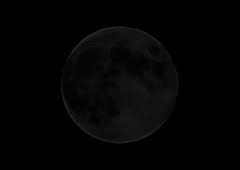
Name the moon phase
a)
First Quarter
b)
Last Quarter
c)
New Moon
d)
Full Moon
15.
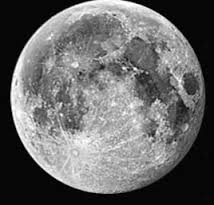
Name the moon phase
a)
First Quarter
b)
Last Quarter
c)
New Moon
d)
Full Moon
16.
Where does the sun rise?
a)
North
b)
South
c)
East
d)
West
17.
Where does the sun set?
a)
North
b)
South
c)
East
d)
West
18.
What time of day are shadows the shortest?
a)
Early morning
b)
Late Morning
c)
Noon
d)
Sunset
19.
True or False: The shadows are longest in the early morning and late afternoon.
a)
True
b)
False
20.

What causes the seasons to change?
a)
The warming and cooling of Earth's core.
b)
The distance from the sun.
c)
Earth's tilt in relation to the sun.
d)
Earth's rotation on its axis.
100 %

