
NEW
Font size
 Worksheets
Evidence of Chemical Reactions
Total questions: 29
Worksheet time: 59mins
Which of the following examples shows that a chemical reaction has occurred?
A rock breaks into smaller pieces when it is struck with a hammer.
Rust forms on a hammer that has been left outside to long.
A cup of water turns pink when a few drops of red food coloring are added.
A solid is formed when heat is removed from a sample of water.
___________________ are the elements or compounds that are formed in a chemical reaction.
Polymers
Bonds
Reactants
Products
Evidence of a chemical reaction is anything that shows -
a new substance has formed
a solid dissolved in a liquid
interaction between 2 gases
a change in the state of matter
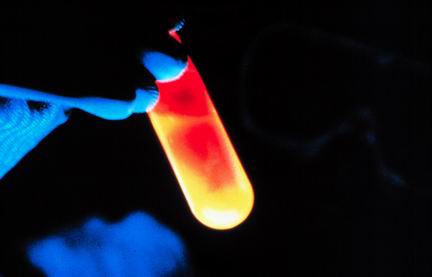
Which of the following is NOT evidence that that a chemical reaction has occurred?
produces light/heat
production of a gas
formation of a solid
melting
Which of these is NOT a sign that a chemical reaction occurred?
A loss of transparency
An unexpected color change
A temperature change
The formation of a solid
Which of the following examples shows that a chemical reaction has occurred?
water freezes to form ice
sugar dissolves in water
gasoline burns in a car engine
a piece of metal expands when it is heated
A change in the shape of an object is an example of a chemical reaction.
true
false
Which of the following examples shows that a chemical reaction occurred?
cutting a piece of paper with scissors
cooling a mixture of air and kerosene vapor to obtain liquid kerosene
burning a piece of notebook paper in the presence of oxygen
heating water over a flame to its boiling point
In which of the following examples did a chemical reaction NOT occur?
souring milk
mixing baking soda and vinegar
rusting metal
mixing oil and vinegar
Which of the following examples shows that a chemical reaction has occurred?
the rusting of iron
dissolving salt in water
melting an ice cube
bending a copper wire
Which of the following examples shows that a chemical reaction has occurred?
rusting of a bicycle
painting a house
washing a dog
tearing up a newspaper
Which example shows that a chemical reaction did not occur?
sodium and chlorine form salt
a copper ring turns white and green
a log burns in a fire
using sand and water to build a sand castle on a beach
Which of the following is an not an example of a chemical reaction?
wood burning
ice melting
food digesting
iron rusting
Which of the following could indicate that a chemical reaction occurred?
All of the answers
a color change has occurred
bubbles appear
identifying one or more new chemical products
A change in the size, shape, or state of matter is an indication of a chemical reaction.
true
false
A solid forms
when a gas is bubble through a liquid
a lighter taper causes a gas to burn
in a liquid or gas after a reaction and causes cloudiness (caused by a solid forming)
Why is tearing a piece of paper not an example of a chemical reaction?
It changes the paper.
It is hard to tear.
It only changes its size, but it's still paper
None of the above
WHY is burning a campfire a chemical reaction?
It created a new substance with new properties
It changes in size
There is a lot of smoke
The logs get smaller

Why is ice freezing not an example of a chemical reaction?
The ice is colder than water.
It can stay cold when you put it in the freezer.
The molecules of water do NOT change. They only slow down and vibrate in position.
Its physical appearance does NOT change.
A student observes some sugar as it is heated and burns. The student concludes that a chemical reaction has occurred. Which of the following observations about the burning sugar provides evidence of a chemical reaction?
Heat is added to the sugar crystals.
The sugar melts and becomes a liquid.
Gas is produced as the sugar turns brown.
No evidence of chemical reaction is present.
You place a white solid in a beaker and hold the beaker over a fire. The white solid shrinks and a clear liquid forms. Is this a chemical reaction and why?
Not a chemical reaction - this is a state change
Yes - is a chemical reaction because a liquid forms.
Yes - this is a chemical reaction because the solid disappears
Yes - this is a chemical reaction because the solid forms and the liquid disappears

