wayground logo

Free Printable Worksheets

Font size

S
M
L
XL
Worksheets

Enthalpy and Specific Heat

Total questions: 20

Worksheet time: 9mins

Name
Class
Date
1.
What unit do you use to measure Thermal Energy?
a)
J/Kg ºC
b)
Kg
c)
ºC
d)
J
2.

What letter is used to represent specific heat capacity?

a)

H

b)

P

c)

C

d)

T

3.

What is Specific Heat Capacity?

a)

The  amount of thermal energy required to increase the temperature of 1kg of a material by 1°C.

b)

The  amount of radiant energy required to increase the temperature of 1kgof a material by 1°C

c)

The  amount of energy required to increase the temperature of 1kgof a material by 1°C.

d)

The  amount of friction  required to increase the temperature of 1kgof a material by 1°C.

4.
A high specific heat means...
a)
It heats up quickly with energy added
b)
It requires more energy to change temperature
5.
What  is the formula to calculate heat energy required to raise the temperature of any substance?
a)
Q=mc∆t
b)
Q=mc
c)
Q= ½mv
d)
m=QC
6.

The specific heat of platinum is 0.133 J/g°C. How much heat(Q) is released when a 10 g piece of platinum cools from 100°C to 50°C?

a)

66.5 J

b)

665 J

c)

0.0266 J

d)

0.665 J

7.
The temperature of an unknown piece of metal with a mass of 30.00 g changes from 25.0 °C to 35.0 °C when the metal absorbs 350.0 J of energy. What is the specific heat of the metal?
a)
1.17 J/g°C
b)
-1.17 J/g°C
c)
0.857 J/g°C
d)
-0.857 J/g°C
8.
Specific heat of water is  4.18 J/g°C. Specific heat of wood is 1.760 J/g°What material needs more heat energy to raise the temperature?
a)
Water
b)
Wood
c)
Both are same
9.
A pot of 2400g of water at a temperature of 25˚C is heated on a stove until the water boils (100˚C).  The specific heat of water is 4.18 J/(g˚C).
Determine the heat energy needed to heat the water in the pot to boiling.
a)
133.76J
b)
43,062.2J
c)
752,400J
d)
1,003,200J
10.
Copper, Stainless Steel, Carbon Steel, and Zinc were all heated using the same thermal energy.  What material would be the coolest after being heated?
a)
Copper
b)
Carbon Steel
c)
Zinc
d)
Stainless Steel
11.

The specific heat(c) of copper is 0.39 J/g °C. What is the temperature change(∆t) when 100 Joules of heat(Q) is added to 20 grams?

a)

12.82 °C

b)

24.12°C

c)

1.95 °C

d)

5128 °C

12.

20 g of water. specific heat of water is 4.18 J/g°C. temperature changes from 25° C to 20° C, how much heat energy (Q) moves from the water to the surroundings?

a)

418 J

b)

209 J

c)

83 J

d)

4.18 J

13.
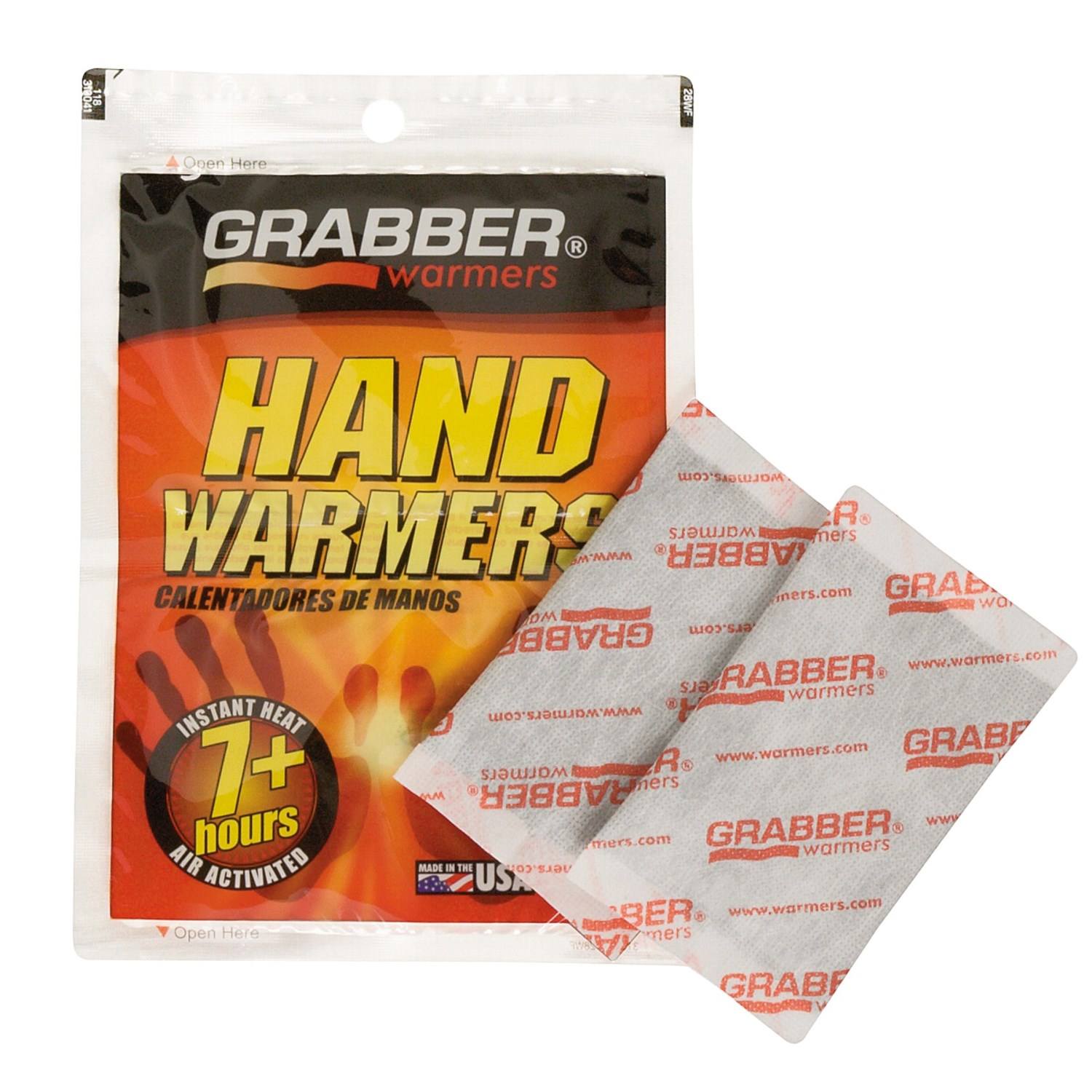
What type of reaction occurs in a hand warmer
a)
exothermic
b)
endothermic
14.
Exothermic reactions...
a)
Absorb energy
b)
Release energy
c)
Release Color
d)
Absorb Color
15.
In an endothermic reaction, heat is ...
a)
taken in or absorbed
b)
given out or released 
16.

O2(g) + 2 H2 (g)  2 H2O (g) + EnergyO_2\left(g\right)\ +\ 2\ H_2\ \left(g\right)\ \rightarrow\ 2\ H_2O\ \left(g\right)\ +\ Energy  

a)

endothermic

b)

exothermic

17.

6 CO2+ 6 H2O + Energy  C6H12O6 + 6 O26\ CO_2+\ 6\ H_2O\ +\ Energy\ \rightarrow\ C_6H_{12}O_6\ +\ 6\ O_2

a)

endothermic reaction

b)

exothermic reaction

18.

_____ reactions usually feel hot!

a)

endothermic

b)

exothermic

19.

____ reactions usually feel cold.

a)

endothermic

b)

exothermic

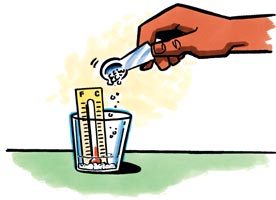
20.

What type of reaction is this?

a)

Exothermic

b)

Endothermic

c)

Energy Producing

d)

No way to tell