
 Worksheets
Human Growth and Population
Total questions: 20
Worksheet time: 13mins

The largest number of individuals in a species that an environment can support long term
carrying capacity
emigration
immigration
population density

When a population grows past the ecosystem's carrying capacity, what happens to the population?
Continues to grow
The population starts to die off to return to carrying capcity
The population will go extinct due to lack of resources
The population grows then finds a new carrying capacity

Which has NOT been a major cause of the population explosion?
modern preventive medicine
increase in life expectancy
improved sanitation
increase in recycling and reusing prodcuts

Which of the following is likely to be affected by a growing human population?
amount of land for agriculture
amount of clean water
amount of air pollution
all of the above

All of the following are demographic figures used in determining the total population of a country EXCEPT...
immigration.
birth rate.
death rate.
marriage rate.
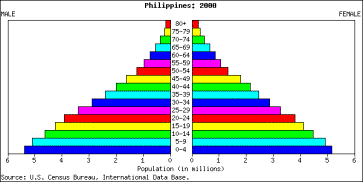
According to the age structure of this country, its population is most likely...
growing slowly.
growing rapidly.
decreasing.
not changing.

The average number of people living in a square kilometer is called...
urbanization.
internal migration.
population density.
pull factors.


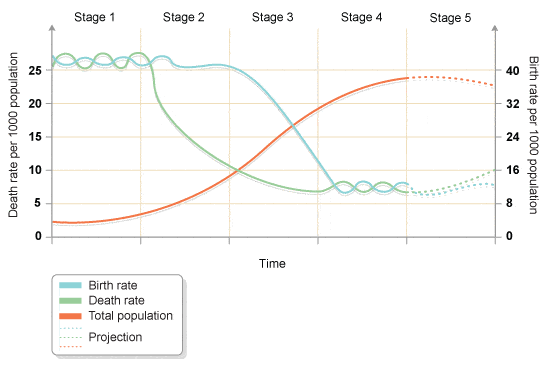
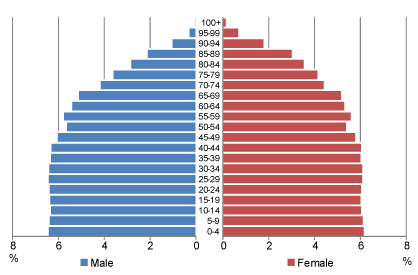


How many demographic transition stages are there?
1
2
4
5
Stage one in the demographic transition model occurred during:
the late 1800's until 1955
the 1900's until present day
1 CE until the late 1800's
the 1700's until the 1800's
Stage two in the demographic transition model is best described as:
the death rate begins to fall, but the birth rate remains high.
the death rate and the birth rate begin to fall.
the birth rate falls, but the death rate remains high.
the birth rate and death rate are in balance.
What demographic stage is Canada currently in?
Stage One
Stage Three
Stage Five
Stage Four

