
Font size
 Worksheets
Allele Frequency and Evolution
Total questions: 20
Worksheet time: 11mins
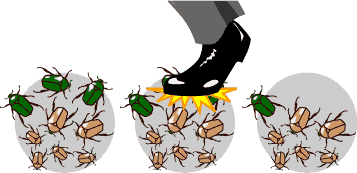
Someone steps on some bugs and randomly removes their alleles from the population. This is an example of
gene flow
genetic drift
speciation
allele frequency
There are 3 T alleles and 7 t alleles in a population. Calculate the frequency of the recessive allele.
30%
70%
10%
4%
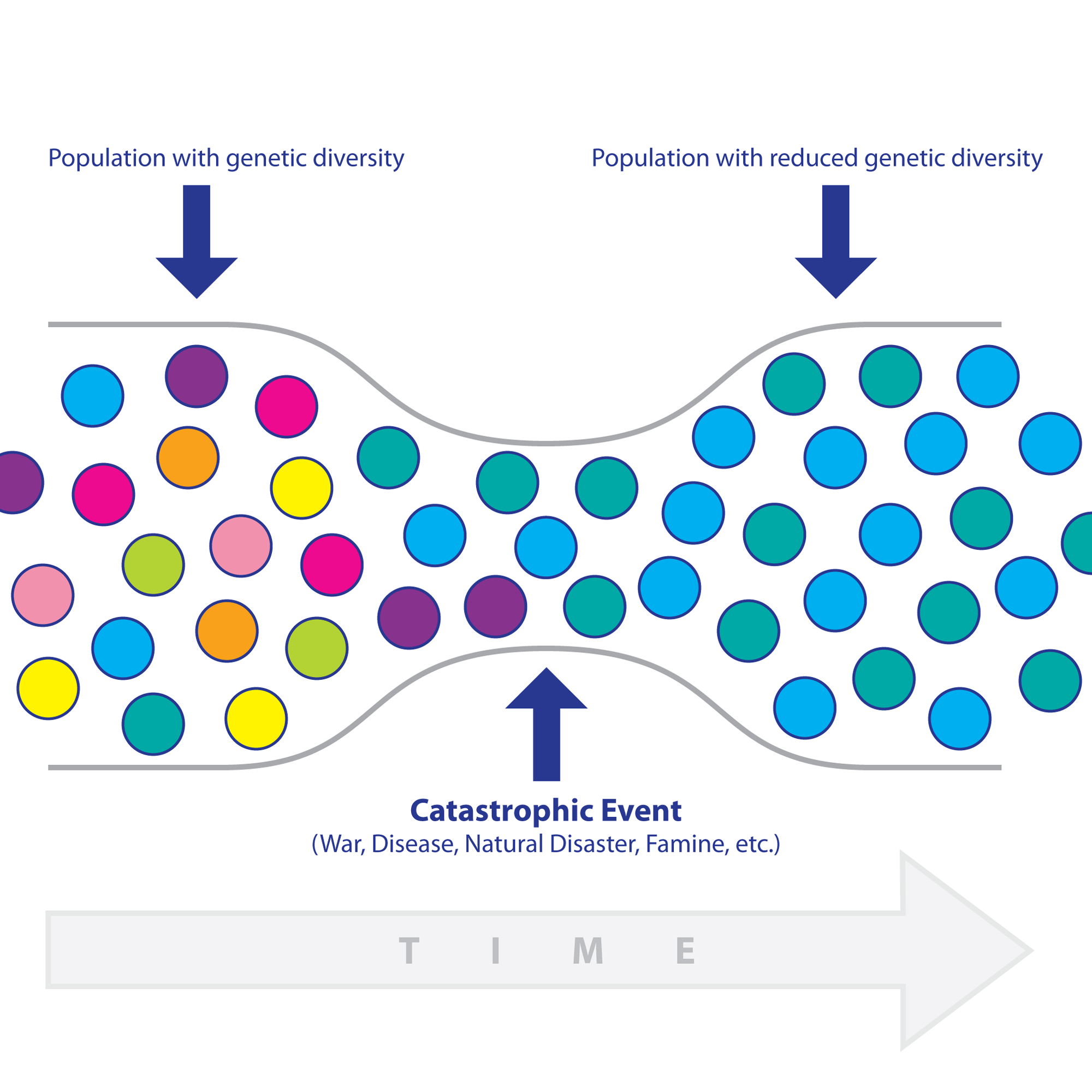
A drastic reduction in the size of a population that can change allele frequencies is called
the bottleneck effect
the founder effect
the gene flow effect
the Thanos effect
Which is not true about cheetah populations?
They have experienced bottlenecks in their evolutionary history.
They have high levels of genetic variation.
They are prone to extinction.
They are not likely to survive environmental changes due to their similarities.
Alleles that improve survival will decrease in frequency in the next generation.
True
False
Which is NOT an assumption of Hardy-Weinberg?
natural selection
large populations
no mutations
no migration
random mating
The Amish have a higher frequency of polydactyly (extra fingers) in their community than the general population. This is due to the allele for extra fingers being present in the group that started the Amish community.
The difference in allele frequency is due to genetic flow.
The difference in allele frequency is due to the founder effect.
The difference in allele frequency is due to a bottleneck.
The difference in allele frequency is due to speciation.
If a population of lizards is isolated on an island, with no new immigrants over many years, any new genetic variations are most likely to come from
recessive alleles
natural selection
mutations
speciation
Which of the following is incorrect?
TT - homozygous dominant
Bb - heterozygous
aa - homozygous recessive
Nn - heterozygous recessive
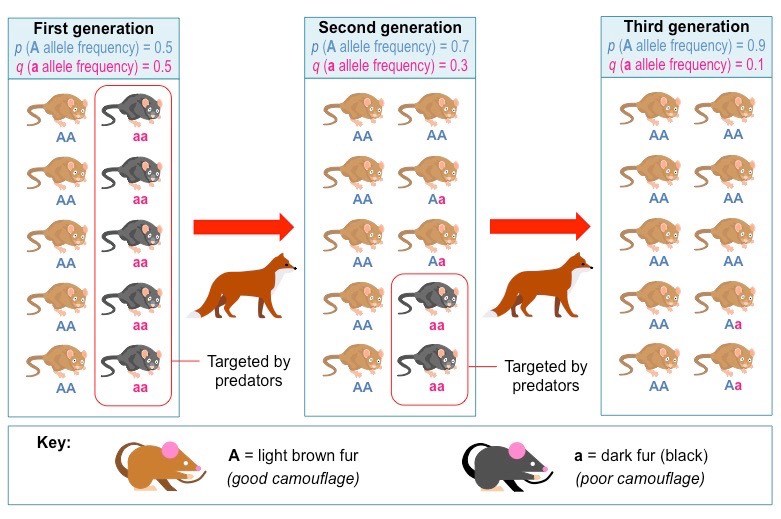
The allele frequencies of the mouse population in the picture are changing over time. Which is true?
The population is evolving.
The population is not evolving.
The population will go extinct.
The population's genetic variation is increasing.
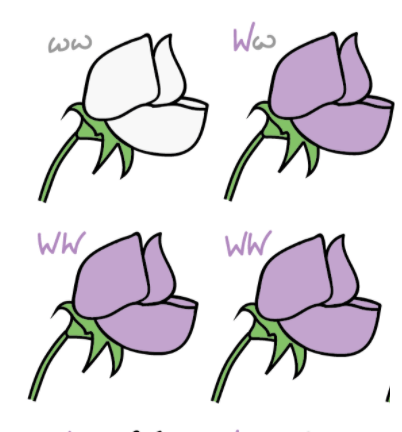
What is the frequency of the dominant allele in this population?
30%
50%
63%
37%
If all 5 Hardy-Weinberg assumptions are true, a population is said to be in genetic equilibrium. This means
it is evolving
it is not evolving
An allele combination (BB, Bb, or bb) is called a
phenotype
genotype
mutation
gene flow
The movement of alleles from one population to another is called
genetic drift
the bottleneck effect
the founder effect
gene flow
Small populations are more prone to genetic drift than large populations.
True
False
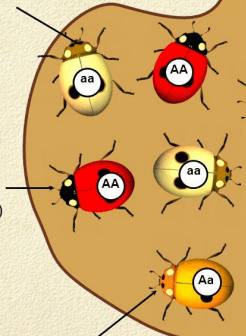
Calculate the frequency of the dominant allele in this population of beetles. Make sure to write your answer in percent form with the percent sign and no numbers after the decimal. (example: 24%)
(a)
Select ALL of the following that violate the Hardy-Weinberg assumptions and would lead to a change in allele frequencies in a population.
natural selection
large population
no mutations
nonrandom mating
no migration
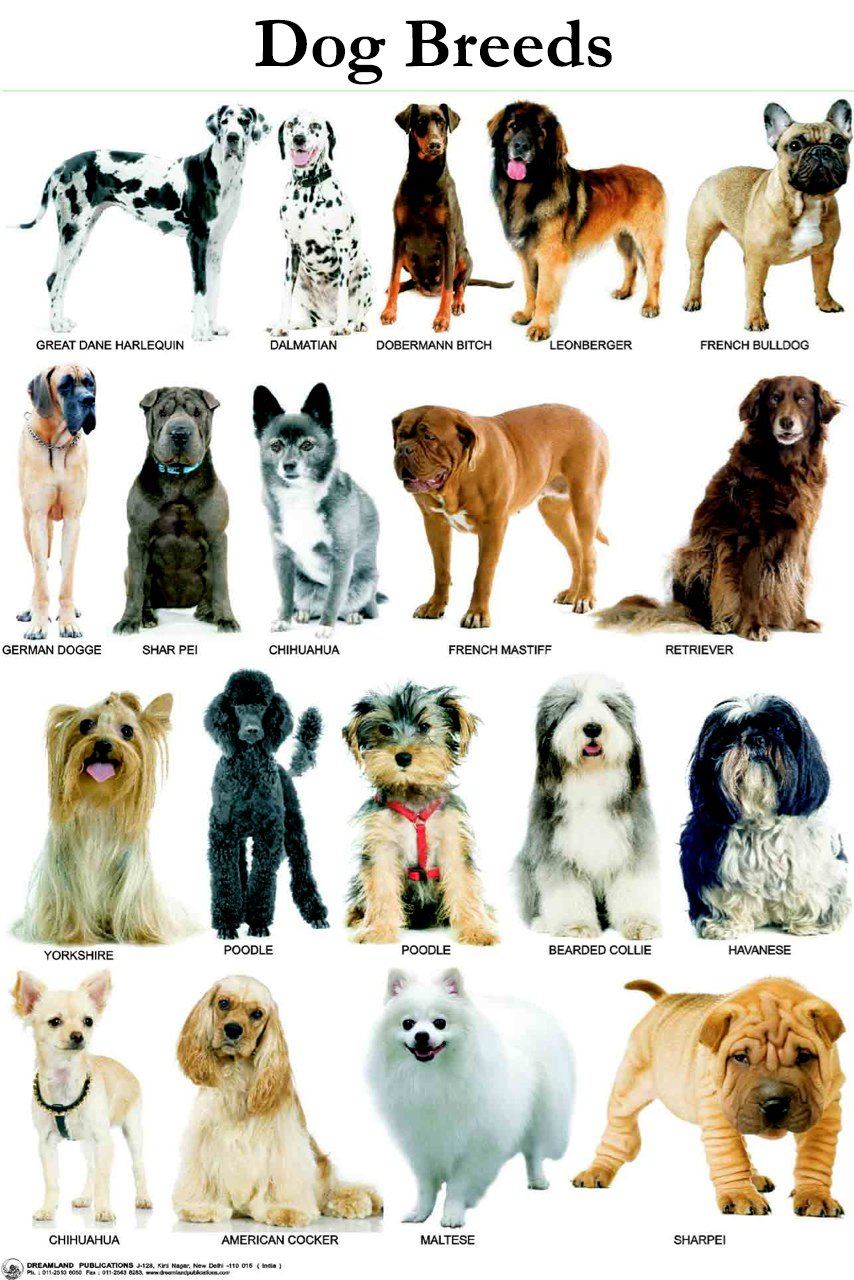
Dog breeding is an example of
natural selection
genetic drift
speciation
artificial selection
Adaptations are features you are born with that either help you or hurt you in your environment.
True
False
When allele frequencies remain constant, a population is evolving.
True
False

