Wayground logo

Free Printable Worksheets

Font size

S
M
L
XL
Worksheets

Chemical Octet Rule Lesson

Total questions: 26

Worksheet time: 23mins

Name
Class
Date
1.

The octet rule states that atoms are more stable when they

a)

have more protons than electrons

b)

have more electrons than protons

c)

have a full outer shell

d)

have a partial outer shell

2.

What type of elements tend to form anions?

a)

metals

b)

nonmetals

c)

metalloids

3.

What type of atoms tend to form cations?

a)

metals

b)

nonmetals

c)

metalloids

4.

Anions have a ________ charge.

a)

positve

b)

negative

c)

neutral

5.

Cations have a __________ charge.

a)

positive

b)

negative

c)

neutral

6.

This atom will

a)

lose 2 electrons

b)

gain 2 electrons

c)

lose 6 electrons

d)

gain 6 electrons

e)

do nothing

7.

This atom will

a)

lose 1 electron

b)

gain 1 electron

c)

lose 7 electrons

d)

gain 7 electrons

e)

do nothing

8.
How many valence electrons are elements trying to reach in their outer shells?
a)
1
b)
2
c)
5
d)
8
9.
How do you determine the number of valence electrons an element has?
a)
Look at its period
b)
Look at its group
c)
Look at its atomic number
d)
Look at its atomic mass
10.
How many electrons does Calcium (Ca) need to lose to become stable?
a)
1
b)
2
c)
3
d)
4
11.
How many electrons does oxygen (O) need to gain to become stable?
a)
1
b)
2
c)
3
d)
4
12.
What group of elements is stable?
a)
halogens
b)
noble gases
c)
alkali metals
d)
alkali earth metals
13.
Valence electrons are the...
a)
Innermost electrons
b)
Middle electrons
c)
Outermost electrons
d)
Any electrons
14.

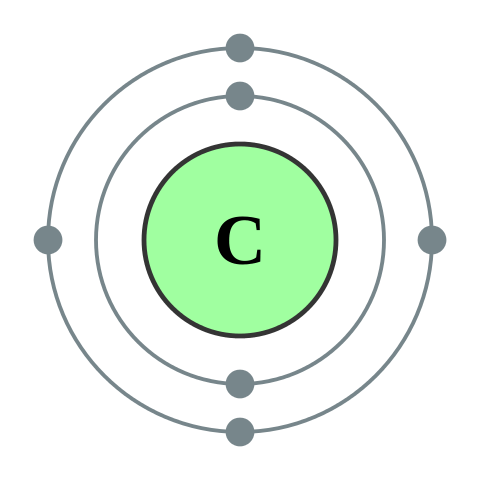
How many valence electrons does carbon have?

a)

4

b)

5

c)

6

d)

7

15.

What is the goal of the Lewis Dot Structure?

a)

To determine the electron position.

b)

To show the element's valence electrons & bonding capabilities.

c)

To find the atomic mass of an element.

d)

To search for the number of electrons in an individual atom.

16.
How many valence electrons are found in atoms of group 14?
a)
4
b)
3
c)
14
d)
16
17.
Which group has the greatest number of valence electrons?
a)
1
b)
14
c)
18
d)
16
18.
How many valence electrons are found in atoms of group 15?
a)
4
b)
5
c)
2
d)
3
19.
How many valence electrons are found in atoms of group 1?
a)
7
b)
6
c)
4
d)
1
20.

What are valence electrons?

a)

The total number of electrons in an atom

b)

The number of electrons in the outermost shell

c)

The number of electrons in the second shell

d)

The number of protons in the outermost shell

21.

Which elements have the most similar chemical properties?

a)

boron and carbon

b)

oxygen and sulfur

c)

aluminum and bromine

d)

argon and silicon

22.
Valence electrons are: 
a)
Electrons farthest away from the nucleus
b)
Electrons closest to the nucleus
c)
Electrons that just come and go - they don't stay with the atom
d)
Electrons in the second shell
23.

What groups are the most reactive metals?

a)

2 and 3

b)

1 and 18

c)

1 and 2

d)

16 and 17

24.

Why are halogens so reactive?

a)

They want to get rid of their only valance electron

b)

They only need one more electron

c)

They are non reactive, they have a full shell

25.

How many valence electrons does Helium have?

a)

1

b)

2

c)

3

d)

8

26.
How many valence electrons does Neon have?
a)
18
b)
8
c)
10
d)
2