
 Worksheets
Module 20 Introduction to Animals
Total questions: 20
Worksheet time: 11mins
Name
Class
Date
1.
hollow-bodied organisms; two body forms - polyp and medusa
a)
Cnidarians
b)
Ctenophores
c)
Arthropoda
d)
Porifera
2.
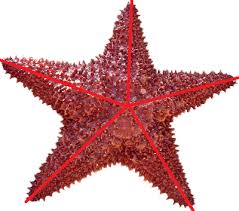
What type of symmetry is displayed in the picture?
a)
asymmetry
b)
bilateral symmetry
c)
radial symmetry
d)
photosynthesis
3.

What type of symmetry is pictured?
a)
bilateral symmetry
b)
radial symmetry
c)
asymmetry
d)
cellular respiration
4.
jointed appendages; exoskeleton
a)
Arthropoda
b)
Echinoderms
c)
Platyhelminthes
d)
Porifera
5.
use comb-like rows of cliia on their bodies to move around
a)
Ctenophores
b)
Cnidarians
c)
Annelida
d)
Mollusca
6.
spiny-skinned organisms; have plates with spines and a water vascular system
a)
Echinoderms
b)
Platyhelminthes
c)
Cnidarians
d)
Arthropoda
7.
jointed appendages; exoskeleton
a)
Arthropoda
b)
Annelida
c)
Porifera
d)
Ctenophores
8.
segmented worms
a)
Annelida
b)
Cnidarians
c)
Porifera
d)
reptiles
9.
What system is responsible for how organisms respond to the environment?
a)
muscular
b)
excretory
c)
respiratory
d)
nervous
10.
What type of symmetry is organized around a central point?
a)
radial
b)
assymetry
c)
bilateral
11.
Animals are different from protists and fungi because they are _____________ and they can _______________.
a)
autotrophic, move
b)
heterotrophic, sessile
c)
autotrophic, sessile
d)
multicellular, move
12.
mammals, amphibians, reptiles, and birds are ____________ (have a backbone)
a)
vertebrates
b)
invertebrates
c)
exoskeleton
d)
endoskeleton
13.
A jellyfish is an example of the ___________ body form found in Cnidarians.
a)
polyp
b)
medusa
c)
larvae
14.
Which animal below is assymetrical?
a)
Dog
b)
Fish
c)
Sponge
d)
Jellyfish
15.
Which animal is an example of bilateral symmetry?
a)
sponge
b)
butterfly
c)
Sea Anemone
16.
Which animal is an example of radial symmetry?
a)
sea sponge
b)
Cat
c)
Horse
d)
Starfish
17.
Which phylum do Humans belong to?
a)
Chordata
b)
Arthropoda
c)
Mollusca
d)
Annelida
18.
The head region of an animal is referred to?
a)
anterior
b)
posterior
c)
dorsal
d)
ventral
19.
Why is a paramecium not an animal?
a)
it is eukaryotic
b)
it is heterotrophic
c)
it is not multicellular
20.
The major degree of your science teacher is...
(a)
100 %

