
 Worksheets
Sound Energy Medium
Total questions: 27
Worksheet time: 9mins
Name
Class
Date
1.

Sound travels through solids.
a)
True
b)
False
2.
1. Sound can’t travel through liquids.
a)
True
b)
False
3.
1. Without matter, sound waves could not travel.
a)
True
b)
False
4.
1. Sound travels through gas.
a)
True
b)
False
5.
1. Sound travels fastest through gases (air).
a)
True
b)
False
6.
1. Sound can be transmitted through objects.
a)
True
b)
False
7.
Sound is caused by?
a)
force
b)
vibrations
c)
instruments
8.
I am an astronaut, floating in my spacesuit in outer space. I see another astronaut, floating in her spacesuit. I want to communicate with her. Which method would be successful?
a)
shine a light in Morse code to represent letters
b)
shout at her
c)
make a loud bang
d)
run over to her
9.
Sound travels FASTEST through which of these materials?
a)
Air
b)
Empty space
c)
Metal
d)
Water
10.
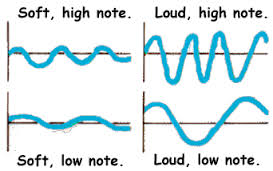
Measure of how high or low a sound is
a)
amplitude
b)
compression
c)
speed of sound
d)
pitch
11.
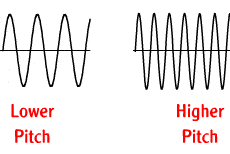
Which of the following best describes how a sound wave travels?
a)
a branch moving back and forth
b)
a car speeding up and down hills
c)
a baseball hit by a bat
d)
a marble dropped in a bowl of water
12.
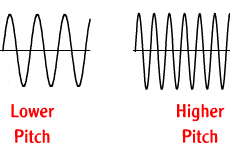
The pitch of a stringed instrument can be affected by
a)
an object called a hammer
b)
the size of a player's fingers
c)
the length of its strings
d)
how hard it is struck or plucked
13.

Why does cupping your hands around your mouth when you shout make the sound travel further?
a)
The sound spreads out.
b)
Your voice gets louder.
c)
You are screaming.
d)
The sound energy is directed in one direction.
14.
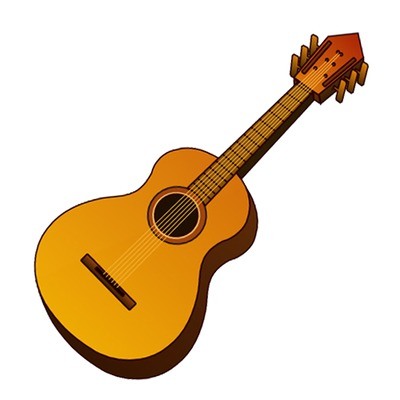
What would happen if you tighten the strings on a guitar?
a)
it would make a low pitch sound
b)
it would make a high pitch sound
c)
it produces a slow vibrations
d)
it produces low frequency
15.
What is volume?
a)
how high or low a sound is
b)
the loudness or softness of a sound
c)
the number of vibrations per second
d)
vibrations
16.
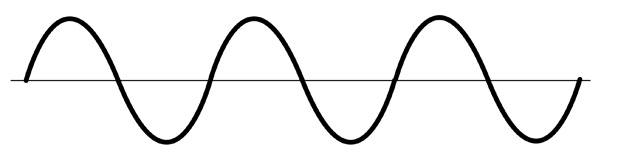
What is frequency?
a)
the number of vibrations per second
b)
how high or low a sound is
c)
the loudness or softness of a sound
d)
the back and forth movement of matter
17.
What is vibration?
a)
how loud a sound is
b)
the back and forth movement of matter
c)
how high or low a sound is
d)
the loudness or softness of a sound
18.
What is pitch?
a)
the back and forth movement of matter
b)
how loud a sound is
c)
how high or low a sound is
d)
the number of vibrations per second
19.
What causes an echo?
a)
sound waves bouncing off large, hard surfaces
b)
sound waves bouncing off carpet
c)
sound waves bouncing off tables and chairs
d)
you repeating yourself
20.
1. Without matter, sound waves could not travel.
a)
True
b)
False
21.
From fastest to slowest, what is the order sound waves would travel through a medium?
a)
solids, liquids, then gases
b)
gases, liquids, then solids
c)
solids, gases, then liquieds
d)
liquids, solids, then gases
22.
What determines the energy of a mechanical wave
a)
speed
b)
frequency
c)
amplitude
d)
wavelength
23.
What are the two main types of mechanical waves?
a)
amplitude and frequency
b)
electromagnetic and mechanical
c)
longitudinal and transverse
d)
sound and light
24.
What is necessary for a mechanical wave to travel
a)
medium
b)
source
c)
space
d)
vacuum
25.
A student placed her ear on a student desk and listened to a second student tapping lightly on the desk. The experiment was repeated with the same tapping but the first students kept her ear 3 cm above the desk surface, and the sounds were different. What is the best explanation for the different sounds?
a)
The sound waves travel through the desk, but not the air
b)
The sound waves travel slower through the air than the desk.
c)
The sound waves travel faster through the air than the desk
d)
There is no explanation for the change in sound.
26.
A sound wave is traveling through a medium. The intensity of the sound is most affected by the
a)
Transparency of the medium
b)
Material of the medium
c)
length of the medium
d)
color of the medium
27.
Placing your ear to the wall allows you to hear sounds from the next room more easily. This is because
a)
The wall supports your ear better
b)
you are paying more attention
c)
The wall transmits sound better than air
d)
sound is reflected by the walls
100 %

