
 Worksheets
Plate Tectonics Geology Review
Total questions: 22
Worksheet time: 14mins
Name
Class
Date
1.

The youngest material of the ocean floor is found at mid-ocean _________.
a)
ridges
b)
trenches
c)
basins
d)
rifts
2.

The presence of the same ________ on several continents supports the idea of continental drift.
a)
rocks
b)
fossils
c)
both fossils and rocks
d)
neither fossils nor rocks
3.

A lack of evidence for continental drift prevented many scientists from believing a single supercontinent called _________ existed.
a)
Glossopteris
b)
Pangaea
c)
Gondwanaland
d)
Mesosaurus
4.

The theory of _______ states that Earth’s crust and upper mantle are broken into sections that are in constant, slow motion.
a)
plate tectonics
b)
continental drift
c)
seafloor spreading
d)
divergent boundaries
5.

Matching ________ on different continents are evidence for continental drift.
a)
weather systems
b)
river systems
c)
rock structures
d)
wind systems
6.

Many scientists think hot plastic-like rock in the mantle is forced upward toward the surface, cools, and sinks. This process is called a(n) _________.
a)
earthquake
b)
convergent boundary
c)
volcano
d)
convection current
7.

The _________ is the thinnest layer of Earth.
a)
outer core
b)
inner core
c)
mantle
d)
crust
8.

_______ are formed when two continental plates collide.
a)
Mountain ranges
b)
Transform faults
c)
Rift valleys
d)
Volcanoes
9.
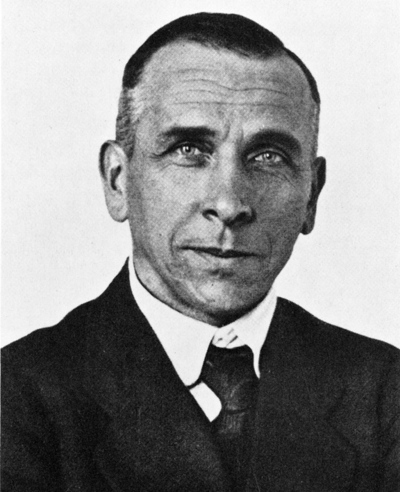
The theory of continental drift was first proposed by __________.
a)
Thomas Edison
b)
Alfred Wegener
c)
Benjamin Franklin
d)
Harry Hess
10.

What is the correct order (starting from the surface) of Earth’s layers?
a)
mantle, outer core, inner core, crust
b)
crust, mantle, outer core, inner core
c)
outer core, inner core, crust, mantle
d)
crust, outer core, inner core, mantle
11.

Which layer of Earth is made up partly of crust and partly of mantle material?
a)
lithosphere
b)
mantle
c)
asthenosphere
d)
crust
12.

The layer of caramel-like consistency that flows and moves the plates of the Earth is called the ________.
a)
mantle
b)
lithosphere
c)
crust
d)
asthenosphere
13.

The _______ is the thickest layer of the Earth at 1800 miles thick. This layer contains most of the mass of the Earth.
a)
crust
b)
mantle
c)
outer core
d)
inner core
14.

The _________ is so hot that the metals in it are all in the liquid state.
a)
crust
b)
mantle
c)
outer core
d)
inner core
15.

_________ currents carry heat from the hot inner core to the cooler outer mantle and back again.
a)
River
b)
Radiation
c)
Convection
d)
Conduction
16.

Plates move apart at _________ boundaries.
a)
volcanic
b)
divergent
c)
convergent
d)
transform
17.

The San Andreas Fault in California is an example of a ________.
a)
divergent boundary
b)
convergent boundary
c)
transform fault
d)
subduction zone
18.

Which type of plate boundary occurs at B?
a)
convergent
b)
divergent
c)
transform
d)
country
19.

The feature labeled C represents some of the deepest spots on the ocean floor. These areas are called ___.
a)
mid-ocean ridge
b)
trenches
c)
deep-sea vent
d)
abyssal plain
20.

The feature labeled D is part of the continuous underwater mountain range that circles Earth. It is called ___.
a)
mid-ocean ridge
b)
trenches
c)
deep-sea vent
d)
abyssal plain
21.

Which type of plate boundary is shown at A?
a)
transform boundary
b)
convergent boundary
c)
divergent boundary
d)
fractured boundary
22.

When plates slide past one another, _________ occur.
a)
divergent boundaries
b)
convection currents
c)
subduction zones
d)
transform faults
100 %

