
NEW
Font size
 Worksheets
Restriction Enzymes
Total questions: 9
Worksheet time: 5mins

1. If the recognition sequence of the restriction enzyme HindIII is AAGCTT, then how many covalent bonds (i.e., fragments) will be broken by the enzyme in the following DNA molecule?
1
2
3
4
0
1. The DNA base sequences recognized by Endonuclease are called
Restriction Site
Recognition Site
Fragmentation Site
Cutting Site
Pairing Site
The sequence that that restriction Enzymes recognizes contains how many bases?
1
3
6
12
5
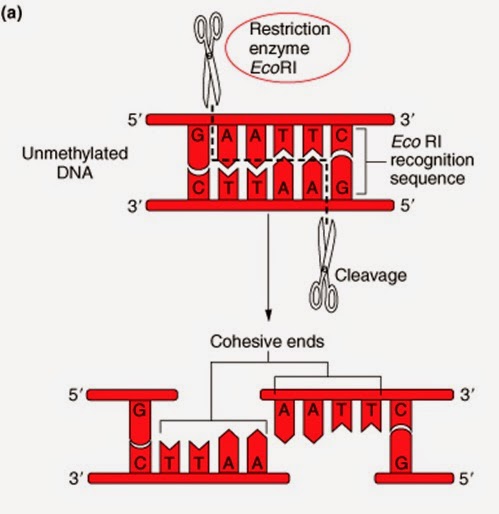
The recognition sites for restriction enzymes are :
Tautomer
Palindrome
Metamere
Acronym
Polymer
Restriction enzymes are isolated from :
Protozoa
Bacteria
Virus
Fungi
Bacteriophage
Which of the following statements is true regarding DNA cloning?
rDNA is formed when bacterial cells reproduce asexually.
Plasmids are used because they are extremely complex.
DNA ligase recognizes one or a few target sequences in DNA before cutting occurs.
DNA targets are recognized and cut by restriction enzymes.
Human cells are used during the process of transformation.

Which of the following best describes the result of this process, labeled X?
Vaccination
Recombinant DNA
Mutant restriction enzyme
Gel electrophoresis
Transfection
A scientist wants to insert a human gene into bacteria, but she accidentally uses a different restriction enzyme on the human gene than she does on the plasmid.
The restriction enzyme will be unable to cut the human DNA.
The bacterial DNA will not be cut open by the restriction enzyme.
The plasmid will not contain the human gene.
The bacteria will be unable to host the plasmid.
The plasmid will contain the human gene.
Plasmids used in cloning contain an antibiotic resistance gene. How does this help scientists?
Only bacteria with the plasmid will grow on antibiotic containing nutrient plates.
It prevents the bacteria from infecting the scientists during the cloning process.
All of the prepared bacteria will be resistant to antibiotics.
Bacteria without the plasmid will be easier for scientists to identify.
The antibiotic resistance gene is neutral so it will do nothing to the cell.

